
Regional Training Strengthens Flood Forecasting in Central Africa
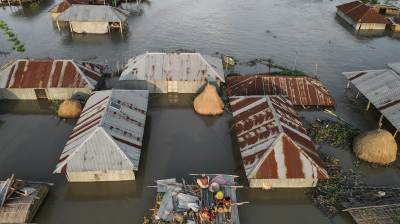
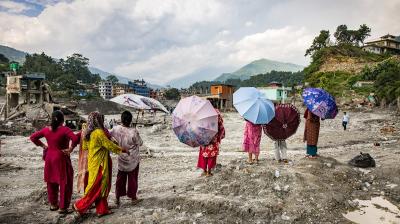
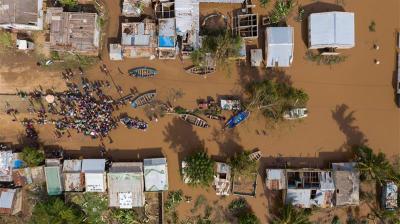
Over the years, floods in Central Africa have been increasing in frequency and intensity, causing significant damage and losses.
In 2024, Chad and the Democratic Republic of Congo experienced major floods, impacting 1.9 million and 1.2 million people, respectively (OCHA, 2024). To strengthen Central Africa's capacity in identifying, forecasting, and assessing risks and warnings of floods, the World Meteorological Organization (WMO) is working closely with AGRHYMET Regional Center and the Swedish Meteorological and Hydrological Institute (SMHI) on the development and adaptation of the FANFAR river flood forecasting system in the countries in the region.
FANFAR is a hydrological system that publishes information on flood risk, providing river flood forecasts for the next 10 days. The system is based on modeling the hydrographic behavior of river basins (e.g., Volta, Niger, Senegal, Chad, Tanganyika, Congo, etc.), as well as meteorological forecasts.
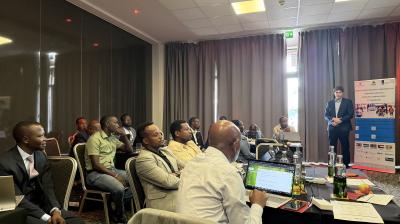
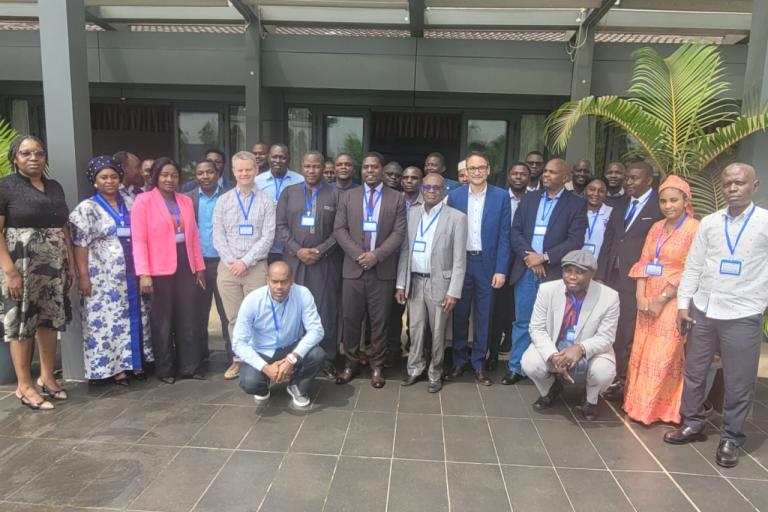
Financed by the CREWS Central Africa project, a three-day regional workshop on management and exchange of hydrometeorological data to support the development of the FANFAR system was held from 10 to 12 March 2026 in Yaoundé, Cameroon.
The workshop, which was the first of its kind in the region, was jointly organized by WMO, the Direction of National Meteorology (DMN) and the Institute of Geological and Mining Research (IRGM) of Cameroon. It brought together 35 participants from the National Meteorological and Hydrological Services of The Economic Community of Central African States (ECCAS), the International Commission of the Congo-Ubangi-Sangha Basin (CICOS), the Regional Specialized Meteorological Center (RSMC) Yaoundé (under demonstration), and the Central African Climatological Application and Forecasting Center (CAPC).
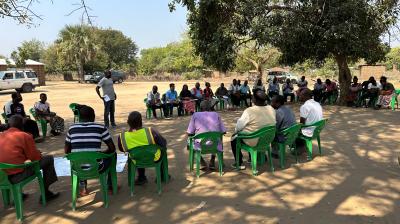
The workshop provided participants with an understanding of the value of data used to ensure FANFAR development and operation, and had them work together to define next steps for data exchange and management. It provided an in-depth understanding of FANFAR structure, data requirements, and modelling process to simulate riverine floods. Additionally, it underscored the critical need to work in a coordinated manner between regional and national institutions to jointly monitor hydrological situations and contribute to building efficient flood warning systems based on reliable forecasting.
Participants agreed on follow-up actions, including the provision of station metadata and historical hydrometeorological time series to support the tailoring and development of FANFAR to Central Africa. They also highlighted the need to adopt a data management framework that ensures proper quality control, and accessibility of hydrometeorological data from national observation networks.
The development of FANFAR for Central Africa builds on successful implementation of the system in West Africa. It will ensure that countries in the region can also benefit from modern and tailored tools for flood monitoring, forecasting, and support for warning decisions. To advance efficient implementation, the AGRHYMET and SMHI development team are working together with WMO staff, countries and River Basin Organizations (RBO) to ensure efficient and harmonized data management aligned with WMO Integrated Global Observing System (WIGOS), the WMO Information System (WIS) and the WMO Hydrological Observing System (WHOS) and supported by the Meteorology, Climatology and Hydrology Database Management System (MCH). Further support will be provided through the project over the next two years.
- Region:
- Region I: Africa