Pacific HydroMet and Disaster Managers Set 2026 Priority Activities for New Regional Project
On 9 March 2026, Directors of National Meteorological and Hydrological Services (NMHSs) and Disaster Management leaders from across the Pacific met in Apia, Samoa, for the first Project Steering Committee (PSC) meeting of the Scale-up Inclusive Early Warning and Action in the Pacific (SIEWAP) Project.
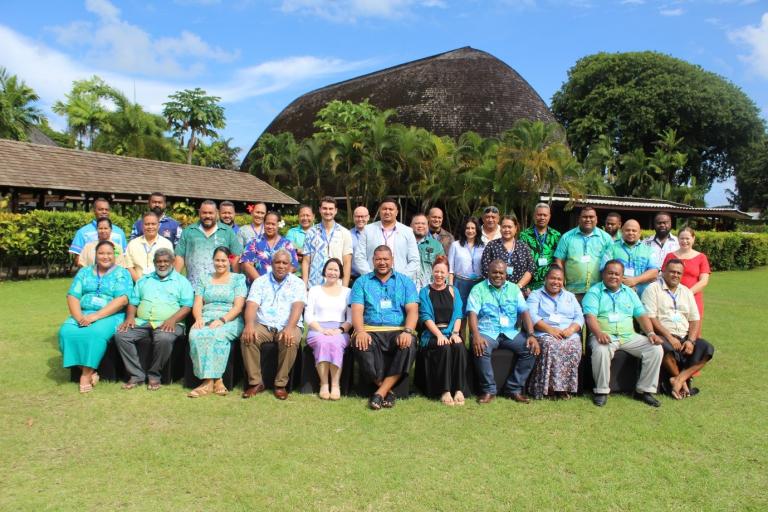
The SIEWAP Project, funded by the Climate Risk and Early Warning Systems (CREWS) Initiative, is a four-year regional project (2025–2029) designed to strengthen people-centered, end-to-end multi-hazard early warning systems across Pacific Island countries and territories. Participating countries include the Cook Islands, the Federated States of Micronesia, Fiji, Kiribati, the Republic of Marshall Islands, Nauru, Niue, Palau, Samoa, Solomon Islands, Tokelau, Tonga, Tuvalu, and Vanuatu.
The one-day meeting brought together regional partners and technical lead agencies to discuss priority activities for 2026, endorse the project’s governance structure, and agree on the annual workplan and budget that will guide implementation across the Pacific.
The meeting formally established the PSC, including the endorsement of its Terms of Reference and the selection of a Chair, Vice-Chair, and Gender Focal Point. The PSC will provide strategic oversight and ensure strong coordination between meteorological services, disaster management agencies, and regional partners throughout the project’s implementation.
The meeting further explored opportunities to align SIEWAP activities with other regional programmes, including the United Nations Environment Programme (UNEP) CIS-Pac5 Programme, the Weather Ready Pacific (WRP) Programme, and the Mobile Cell Broadcast Early Warning System project supported by the Groupe Speciale Mobile Association (GSMA). Strengthened collaboration across these programmes will help maximize impact and avoid duplication of efforts.
Participants reviewed progress made during the first year of the project and discussed key risks, challenges, and opportunities for scaling up early warning systems across the region.
“This steering committee provides an important platform for countries and partners to align efforts and ensure that investments in early warning systems deliver real benefits for Pacific Islands communities,” stated Mr. Laitia Fifita, Tonga Meteorological Services Director and WMO President of Regional Association V.
In addition to the PSC, participants took part in an Early Warnings for All (EW4All) peer learning exchange, where countries shared experiences in developing and implementing their national EW4All roadmaps. These discussions highlighted practical lessons on improving coordination between meteorological services, disaster agencies, and communities.
“Early warning systems work, but they have to work for everyone, everywhere. The SIEWAP project demonstrates how we can achieve this by ensuring strong collaboration and partnerships across the Pacific so that communities receive timely information and can act before disasters strike,” said Ms. Karla Hershey, United Nations Resident Coordinator in Samoa.
The meeting concluded with a summary of key decisions and next steps for 2026. Participants reaffirmed their commitment to strengthening early warning systems and improving disaster preparedness across the Pacific. By working together through the SIEWAP project, Pacific countries are taking important steps to ensure that early warnings reach the last mile, helping to protect lives and improve resilience across the region.
- Region:
- Region V: South-West Pacific