
From reactive to resilient: How Steamatic, a Barbados-based company, strengthened business continuity with UNDRR support
News was produced by: UNDRR, Barbados Chamber of Commerce & Industry
For service-based small and medium-sized enterprises (SMEs) on the Caribbean island of Barbados, disruption is not a question of if, but when. For Steamatic, a specialist cleaning and restoration company serving banks, insurance firms, and hotels, downtime can be devastating—both financially and reputationally. Before joining the UNDRR-led project in partnership with the Barbados Chamber of Commerce (BCCI) to strengthen SME disaster resilience, Steamatic operated with experience, commitment, and ingenuity—but without a formal roadmap for business continuity.
The challenge: High stakes, limited structure
Before developing a Business Continuity Plan (BCP), Steamatic’s primary concern was how to respond swiftly and effectively to major disruptions such as flooding or severe structural damage. These incidents demand immediate action, tight coordination, and uninterrupted communication. Any delay could result in significant losses for clients and for Steamatic itself.
Like many SMEs, the company relied on practical, informal solutions. Drivers took fully equipped vehicles home overnight to ensure rapid response at first light. Teams were reshuffled on the fly, with night crews reassigned to daytime work when needed. While these measures offered flexibility, they were reactive rather than strategic. As the business grew and risks became more complex, it became clear that improvisation alone was no longer enough.
The turning point: A structured approach to resilience
Participation in the UNDRR-BCCI project marked a shift. Through tailored BCP templates and guided planning, Steamatic was encouraged to step back from day-to-day pressures and assess the business holistically.
The process helped management map responses to different types of disruptions, evaluate inventory and supplier reliability, and document procedures that had previously been undocumented and existed only as tacit knowledge.
The risk assessment was particularly eye-opening. Steamatic began distinguishing between minor and major disruptions and planning accordingly. This led to concrete decisions, including the need for a secondary warehouse and the exploration of alternative communication tools such as Starlink—solutions that could keep operations running even if traditional networks failed.
The process built confidence for the management. Rather than reacting under pressure, management began preparing strategically, with a clearer sense of priorities and options.
Testing the plan: From document to daily practice
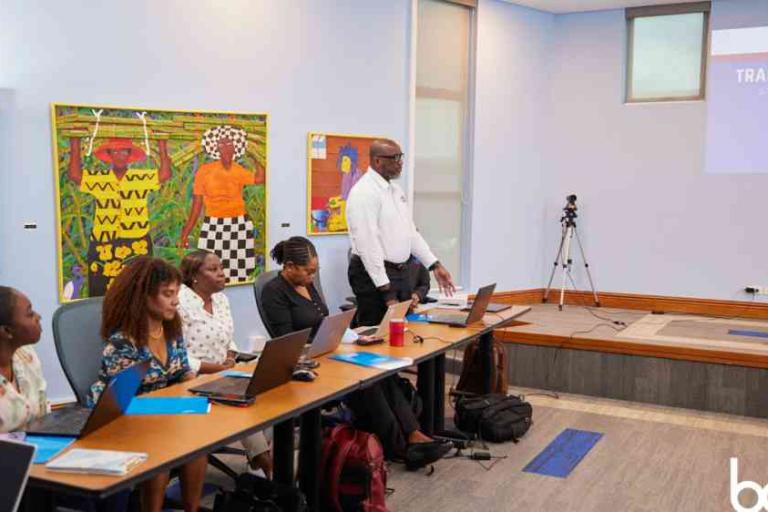
Training and simulation exercises reinforced the value of the BCP. By walking through realistic disruption scenarios, the team identified where decision-making might slow, where communication could break down, and where responsibilities needed clarification.
This practical testing helped transform the BCP from a static document into a living tool, building confidence that the business could functioning under stress.
Early impacts: Practical gains with long-term value
Even at an early stage, the BCP has delivered tangible benefits. One immediate outcome was a rethink of equipment management. Previously, repairs were tracked informally, increasing the risk of delays during peak demand. Steamatic is now developing a structured inventory system and maintenance checklist to ensure critical equipment is repaired and returned to service quickly—an essential factor in maintaining continuity.
More broadly, the company’s understanding of resilience has evolved. Steamatic now views resilience as the ability to pivot. If a client must close early, or if a national shutdown limits access, the company adapts its services—providing rapid cleaning when time is constrained, with plans for comprehensive cleaning once normal operations resume. This flexibility keeps the business functioning, protects cash flow, and supports faster recovery.
The BCP supports these decisions, ensuring flexibility without compromising quality or safety.
Looking ahead: Strengthening trust and sustainability
While the BCP has not yet been rolled out to all staff, management anticipates that its clear, practical structure will strengthen staff awareness, customer trust, and stakeholder confidence. Clients depend on Steamatic during their most vulnerable moments. Being able to demonstrate preparedness is a competitive advantage.
Steamatic plans to keep the BCP alive by updating it as new risks emerge and as the business evolves. Communication remains the most critical element. In a sector where constant coordination between drivers, custodians, and clients is essential, a breakdown in communication would severely compromise the company’s ability to operate.
How small businesses in Barbados stay open when disasters strike
When disaster strikes, some businesses close their doors — and never reopen. Others are ready.
Beyond the business: Why resilience matters for Barbados
In a small island economy, business continuity has national implications. Every day a hotel remains closed means lost foreign exchange. Every delayed bank reopening slows commerce. In disaster recovery, even a single broken extractor or dehumidifier can delay reopening of a hotel or bank.
By strengthening its own preparedness, Steamatic is helping support faster recovery across the island keeping businesses operational, protecting livelihoods and contributing to national resilience.
Resilience that spreads
For Reginald Worrell, Technical & Quality Assurance Manager at Steamatic, the impact has gone beyond the workplace.
“Resilience now feels real,” he says. “I’ve started applying the same principles at home—water storage, equipment, preparedness. It’s not just about protecting the business anymore. It’s about protecting families and communities too.”
This is how resilience grows in the Caribbean: from business to household, from community to national stability. Steamatic’s journey shows what is possible when SMEs move from survival mode to resilience leadership. With the right planning tools and guidance, small businesses can become anchors of stability in island economies.
As Reginald Worrell puts it:
“Resilience means being able to pivot and adjust to the circumstances before us. The BCP gives us a roadmap not just to recover, but to move forward strategically.”
Through the SME resilience project, Steamatic is no longer just cleaning up after disasters—it is helping Barbados stay open for business, protect jobs and livelihoods, and recover faster when the next disaster hits. In a region where one storm can undo years of progress, resilience is not optional. It is a matter of survival.
- WMO Member:
- Barbados