
ESCAP Disaster Resilience Week showcases Early Warning Systems
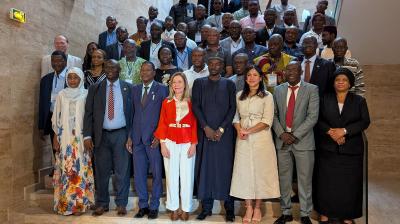
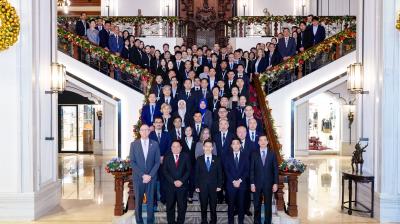
Early Warnings for All (EW4All) took centre stage as delegates from the WMO Regional Office for Asia and the South-West Pacific (RAP) and representatives from National Meteorological and Hydrological Services (NMHSs) across Asia and the Pacific attended the 5th Disaster Resilience Week, organized by the United Nations Economic and Social Commission for Asia and the Pacific (ESCAP).
This biennial gathering of governments, UN agencies, experts, civil-society, and regional partners serves as a platform to enhance resilience in a region highly vulnerable to natural hazards and climate change impacts.
As the key event during the week, ESCAP convened the Ninth Session of its intergovernmental Committee on Disaster Risk Reduction from 26 to 28 November 2025 to accelerate regional action against escalating disaster risks and climate threats – from scorching heat to shifting ocean patterns.
ESCAP launched the Asia-Pacific Disaster Report 2025: Rising Heat, Rising Risk and the third-generation of the ESCAP Risk and Resilience Portal (RRP 3.0). ESCAP Executive Secretary, Ms Armida Salsiah Alisjahbana, emphasized that “the Asia-Pacific region is at the frontline of climate change. Strengthening early warning systems and investing in resilience are not optional—they are essential for safeguarding our shared future.”
The global EW4All initiative, co-led by the World Meteorological Organization (WMO) and the United Nations Office for Disaster Risk Reduction (UNDRR), was at the heart of discussions and was repeatedly cited as a cornerstone for resilience.
“Science and technology are our strongest allies. Advances in impact-based forecasting, artificial intelligence, and geospatial analytics now allow us to anticipate not just hazards, but their impacts, enabling targeted, life-saving action. WMO, through its 193 Members provides the backbone for these capabilities, while platforms such as ESCAP’s Risk and Resilience Portal help translate data into decisions and actions.” said Ben Churchill, WMO Regional Director for Asia and the Pacific.
He said that extreme heat is rapidly emerging as a leading cause of climate-driven disasters, and there is an urgent need for enhanced climate services to deal with this challenge. With only 54% of Meteorological Services issuing warnings for extreme temperatures, expanding heat-health warning systems in just 57 countries could save approximately 100,000 lives each year, the Asia-Pacific Disaster Report notes.
In delivering the WMO statement, Ben Churchill highlighted the new Extreme Heat Risk Governance Framework and Toolkit, launched at COP30 and developed by WMO, UNDRR, and the Global Heat Health Information Network (GHHIN) and the renewed Memorandum of Understanding between ESCAP and WMO, covering areas including tropical cyclone forecasting, regional climate outlooks, and early warning.
WMO and its EW4All partners, including ESCAP, UNDRR, the International Telecommunication Union (ITU) and the International Federation of Red Cross and Red Crescent Societies (IFRC), organised a side event/webinar on Science, Technology and Innovation for MHEWSs, showcasing the MAZU AI tool for early warning developed by the China Meteorological Administration (CMA) and Cell Broadcasting in Thailand.
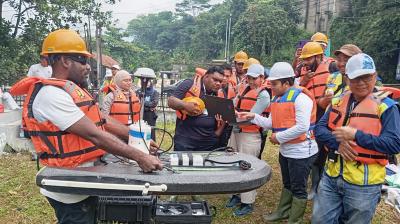
The discussions also spotlighted ocean-related risks: rising sea levels, warming seas, changing storm patterns and coastal flooding threaten low-lying coastal and island communities. Experts called for integrating ocean and coastal monitoring data into early-warning and disaster-resilience frameworks to better anticipate and manage these growing threats. In this regard, highlights of projects funded by the ESCAP Trust Fund for Tsunami, Disaster and Climate Preparedness were presented, which welcomed the renewed contributions e.g. by the Government of Switzerland.
Participants delivered a renewed pledge to scale up cooperation, harness science and technology, and mobilize resources. National governments and development partners must urgently increase investments in resilient early-warning architecture: sustainable meteorological and hydrological observing networks and monitoring and forecasting systems that integrate ocean-climate data. Community-level alert systems and inclusive preparedness measures are a must.
- Region:
- Region II: Asia ,
- Region V: South-West Pacific