

WMO honors 110th anniversary of Spain’s Izaña Observatory
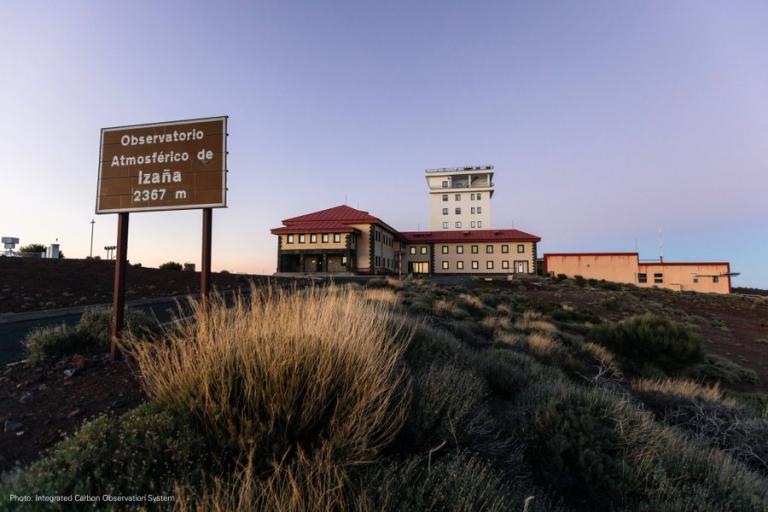
GAW Global Stations are of immense importance to scientific monitoring of greenhouse gases, ozone, aerosols and a variety of other compounds. The Izaña Observatory, a subtropical high-mountain station at 2 300 meters above sea-level, provides measurements largely unaffected by local pollution, and so it can detect large-scale atmospheric change.
“Izaña’s observations are not only long-term, they are trusted,” WMO Secretary-General Celeste Saulo told a ceremony during the Global Atmosphere Watch symposium.
“We know that the longer the record, the greater its value. Long time series are essential to detect trends, variability and change. We need to remember the past to understand the present and predict the future,” she said. “With each additional year of observations, the value of these records has grown—transforming data into one of the most reliable foundations for understanding long-term climate evolution.”
“The Izaña Observatory, managed by the AEMET's Izaña Atmospheric Research Center (IARC), was inaugurated in 1916 and has carried out uninterrupted meteorological and climatological observations ever since,” said its director, Carlos Torres. “Since 1989, it has been integrated as a Global Station of the GAW Network and thanks to the dedication of its staff and collaboration with other institutions, it has maintained a high-quality program for monitoring the composition of the atmosphere.”
Global Atmosphere Watch stations monitor changes in the chemical composition and related physical characteristics of the atmosphere that may have adverse affects upon our environment. This includes greenhouse gases, ozone and ultraviolet radiation, as well as certain reactive gases and aerosols.
Izaña is also one of WMO’s recognized centennial observing stations, under a scheme which recognizes the importance of long-term meteorological observations which provide high quality climate records and which promotes sustainable observational standards and best practices.
The ceremony at the GAW symposium also paid tribute to Emilio Cuevas-Agullo, former director of Izaña Observatory and one of the world’s leading atmospheric research experts. He passed away earlier this year.