WMO marks a new chapter in public-private engagement
On 22 June 2026, the World Meteorological Organization (WMO) brought together government representatives and private sector leaders for the Seventh High-Level Session of its Open Consultative Platform (OCP-HL-7) — a landmark session that marked a shift from dialogue to action.
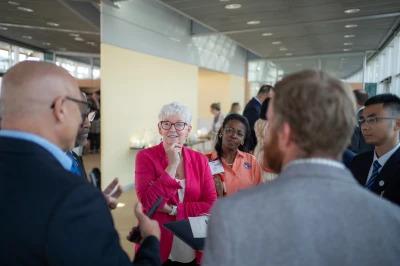
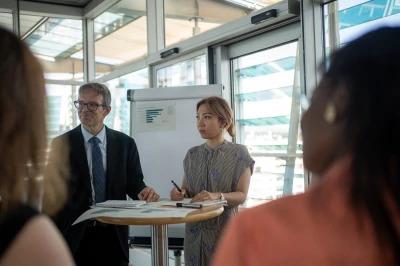
Held in Geneva in the margins of WMO's Executive Council, the session gathered around 50 participants: national weather service directors from across the globe alongside representatives from leading companies in technology, finance, insurance and weather services.
Why this session mattered
Opening the session, Secretary-General Prof. Celeste Saulo set the tone:
"Six years ago, when WMO convened the first OCP session, the goal was simple: to open a door. Today we want to take concrete steps on a more productive journey to navigate an increasingly complex context with increasing demands and opportunities."
The session was grounded in evidence: ahead of the event, all participants completed a pre-consultation survey. The results showed strong common ground — observations, data sharing and AI emerged as the top priorities for collaboration, with both sectors agreeing that WMO should serve as the global provider of guidelines and standards for public-private engagement.
| 
|
What the discussions revealed
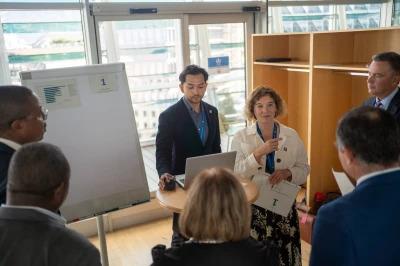
Using a World Café format for the first time, participants rotated between tables for small-group conversations. Key insights included:
1. Priority areas for collaboration
- Public-private collaboration is already happening informally. Private companies are already maintaining weather observation infrastructure used by national services to issue warnings — at no cost to the public sector. The challenge is to formalize and scale these arrangements.
- Infrastructure-as-a-service models emerged as a potential area for collaboration, with national weather services expressing interest in leveraging private-sector capabilities while ensuring continued access to and stewardship of observational data.
- Quality controlled, standardized and open data is a key enabler for partnership, allowing the private sector to build risk and resilience products that serve both governments and communities. AI and emerging technologies are becoming central to forecasting, requiring stronger cooperation to maximize their impact.
2. Barriers to effective PPE
- The private sector is not homogeneous. Any engagement framework must reflect the diversity of actors — from tech giants to insurers to agribusinesses — and the different contexts in which they operate.
- Policy frameworks vary by country. Rather than seeking a single approach, Members should share experiences and lessons learned about what works in different national contexts.
- A shared objective has not yet been defined. As one participant put it: "We are trying to work out the 'how do we do this?' before we understand the 'what are we trying to deliver?'"
3. WMO's role in facilitating PPE
- WMO's greatest asset is trust. As one participant noted: "We already operate in a highly trusted system. We just need to understand the risks of collaborating with each other." WMO's ability to set global standards and convene across sectors is its most valuable contribution.
- Structured engagement pathways are needed. The private sector sometimes lacks clear entry points into WMO — a more action-oriented "playbook" would help both sectors navigate collaboration in practice.
- WMO as convener: bringing together national weather services, the private sector and development partners through platforms for dialogue, matchmaking and collaboration.
4. Preferred engagement mechanisms
- A shared vision must come first. Both sectors agreed that the goal — not just the mechanism — must be defined together. The objective should be a win-win situation that serves both commercial realities and the public good.
- Trust and transparency are foundational. WMO should foster a culture of "coopertition" — where private sector actors can compete among themselves in some areas while collaborating with the public sector in others.
- The OCP must evolve beyond periodic sessions into a more sustained, action-oriented engagement platform — including through a regional approach that brings collaboration closer to the needs of Members on the ground.
| 
|
What comes next
Closing the session, Assistant Secretary-General Thomas Asare called on participants to carry the conversation forward:
"The weather does not respect borders. It does not distinguish between the public and the private. And the infrastructure that protects lives, powers forecasts and underpins economic decisions cannot be sustained by any single actor working alone."
OCP-HL-7 was not an endpoint — it was the beginning of a process. The findings will inform WMO's future approach to public-private engagement, with a view to substantially advancing the discussion at the Twentieth Session of the World Meteorological Congress (Cg-20) in 2027.
For more information, contact: ppernunez wmo [dot] int (@wmo.int)