
Early Warnings for All – Defining Success, Lao PDR
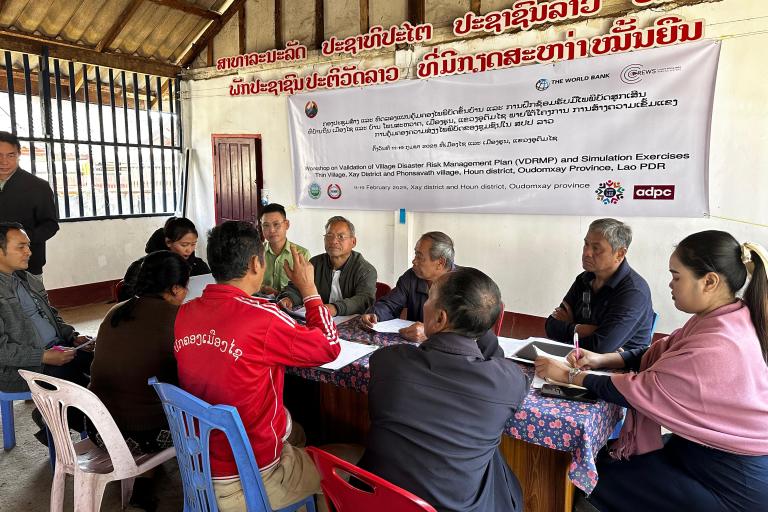
Early warning success in the Lao DPR will come in 2027, when people most-at-risk – especially women, persons with disabilities, ethnic minorities, children and the elderly in the most vulnerable communities – have access to timely early warnings to protect their lives and livelihoods. Our goal is for at least 80% of the population to have access to reliable, accurate, understandable and actionable early warnings, whether they live in the capital, Vientiane, or in a remote mountain village.
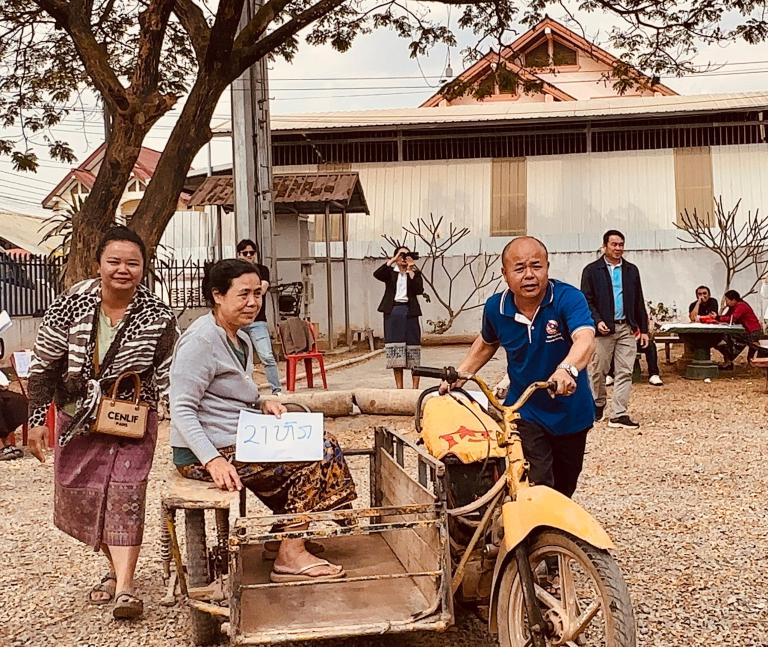
By then, we also aim to have significantly upgraded our hydrometeorological infrastructure, including weather and river monitoring stations, the installation of an additional radar in the south, and the use of forecasts that show not just what the weather will be, but what it means for people. This includes integrating hazards and impacts, location, protective actions, warnings of the start and duration of risks, such as seasonal flooding, and clear specifications of what action is required when. We want early warnings to be part of daily life, something people trust, understand and act upon. Our implementation of the global Early Warnings for All initiative in Lao PDR, which is supported by the Climate Risk and Early Warning Systems (CREWS) Initiative, encompasses all essential components of an effective multi-hazard early warning system, beginning with governance to ensure early warnings are trusted, actionable, and capable of saving lives.
We will measure success in very practical ways. One key indicator is simply identifying how many people are receiving warnings – not just in cities, but also in rural and remote communities. In 2024, we conducted a national weather forecast and early warning perception survey, which helped identify areas for improvement and will allow us to measure progress over time. For us, as a national hydrometeorological agency, it is not enough to produce forecasts. Our aim is to disseminate warnings that are easily accessible and actionable, reaching the farmer in her field, the family in the floodplain, the teacher in the village school – ultimately, all people.
We are also tracking technical progress by monitoring the number of weather stations upgraded, improvements in the timeliness and accuracy of warnings, and our ability to provide impact-based forecasts in priority river basins. Importantly, we ask communities themselves, through perception surveys like the one conducted in 2024, whether they feel safer and better informed.
Lao PDR has developed a dashboard to track progress towards providing Early Warnings for All, so we have a clear overview of the implementation status of each activity, available resources and existing gaps. Ultimately, however, the impacts will be visible in fewer lives lost, reduced damages to homes, crops, schools, health facilities and infrastructure, and in communities that feel confident in their ability to respond. We will share results through national reports, regional forums and with development partners so that Lao PDR’s experience contributes to global learning.
We recognize that reaching everyone requires more than just better technology – it requires a change in how we think and work. First, early warning must become a national priority, fully embedded into policies and budgets, rather than dependent on short-term projects. Second, we must focus on last-mile communities – those that are hardest to reach. This means working with mobile phone companies, local radio stations, village leaders and using loudspeakers in remote areas to ensure warnings actually reach everyone at risk. Third, we must continue building local trust and ownership. People act on warnings when they trust them and see that they work, which means involving communities in designing messages and using local languages. Finally, stronger multi-stakeholder collaboration is essential: governments, United Nations agencies, civil society, the private sector and communities must all work together to deliver on the Early Warnings for All road map that runs through 2027.
Considering the progress achieved so far, and the limited assurance of resources for full implementation, we recognize the need to review the roadmap both to track our progress and to evolve it into a long-term strategic document aligned with national socioeconomic development plans and priorities. That is what ultimately will make early warning for all a reality in the Lao PDR.
By Mr. Bounteum SISOUPHANTHAVONG, Deputy Director General, Department of Meteorology and Hydrology (DMH), Ministry of Agriculture and Environment (MAE)
- WMO Member:
- Lao People's Democratic Republic
- Region:
- Region II: Asia