
Strengthening End-to-End Early Warning Systems in Malawi
The World Meteorological Organization (WMO), through the Climate Risk and Early Warning Systems (CREWS) Initiative, continues to support Malawi in advancing a more integrated, people-centered approach to early warning systems in a country highly exposed to climate variability and extreme weather events.
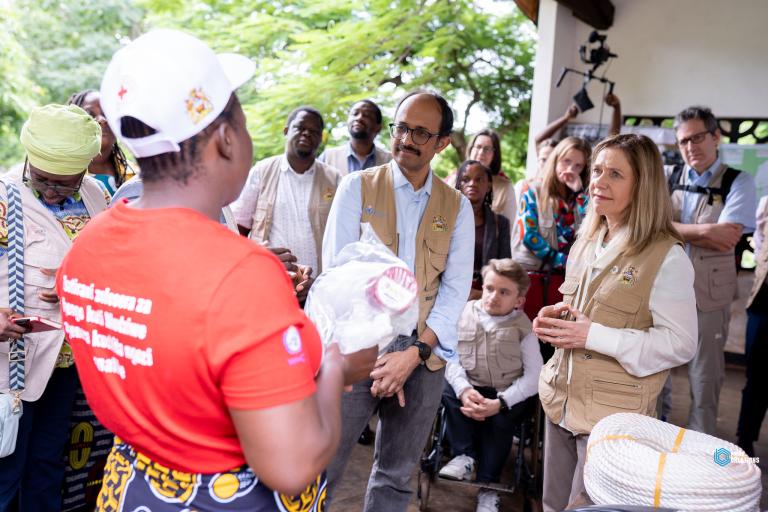
From 10–13 February 2026, Malawi hosted the 22nd CREWS Steering Committee meeting and a high-level mission in Blantyre and Lilongwe. The events brought together global partners, national authorities, and community representatives to accelerate progress toward multi-hazard early warning systems, combining strategic policy dialogue with field-level engagement.
At the national level, the Government of Malawi demonstrated strong political commitment to early warning systems as a cornerstone of resilience. A key milestone was the launch of Malawi’s Early Warnings for All (EW4All) roadmap, which provides a framework to strengthen coordination and guide implementation across sectors. High-level discussions underscored the central role of the Department of Climate Change and Meteorological Services (DCCMS) in delivering weather and climate services that protect lives and livelihoods, while also highlighting the importance of sustained investment and national ownership.
The mission also reinforced alignment across the United Nations system, with the UN Resident Coordinator and Country Team reaffirming their commitment to supporting EW4All implementation through improved coordination and coherence. These discussions highlighted the importance of strong partnerships and coordinated institutional support to advance effective climate services and early warning delivery.
A central focus of the mission was the importance of community-centered early warning systems. Field visits to Zomba District provided first-hand evidence of how improved forecasts, strengthened local coordination mechanisms, and enhanced preparedness are helping communities reduce risks from floods and other hazards. Community testimonies highlighted the practical value of early warning systems, while also emphasizing the importance of inclusivity, gender considerations, and the integration of indigenous knowledge to ensure that warnings are trusted, relevant, and actionable.
The mission also marked several important milestones, including the unveiling of the DCCMS Strategic Plan and the launch of a new USD 3.84 million initiative under the Systematic Observations Financing Facility (SOFF), implemented by DCCMS in partnership with the United Nations Development Programme (UNDP). The initiative will strengthen Malawi’s capacity to generate, process, and share high-quality weather and climate data in line with Global Basic Observing Network (GBON) standards.
Looking ahead, the CREWS Steering Committee endorsed preparations for a second phase of support to Malawi, aimed at further strengthening forecasting capacity, institutional coordination, and the delivery of early warning and climate information. Malawi is also exploring opportunities to scale up support through wider climate finance mechanisms, including the Green Climate Fund (GCF).
The four-year CREWS Malawi Project aims to strengthen multi-hazard early warning systems and climate services in Malawi. By enhancing forecasting capacity, improving coordination across institutions, supporting community-centered early warning delivery, and promoting end-to-end systems, the project plays a critical role in helping communities anticipate, prepare for, and respond to weather- and climate-related hazards.
- WMO Member:
- Malawi
- Region:
- Region I: Africa