
Strengthening Early Warnings Across Eastern and Southern Africa through WISER ActionFirst™ in Africa Initiative
Africa remains highly vulnerable to climate change, with increasing droughts, floods, cyclones, and heatwaves threatening lives and livelihoods across Eastern and Southern Africa. Despite investments in forecasting and early warning systems, access to timely and actionable information remains limited, and forecasts often fail to trigger early action. The WISER ActionFirst™ in Africa Initiative is designed to address these systemic gaps.
The Initiative represents a fundamental shift from producing forecasts to ensuring that they are actionable, co-produced with users, and embedded in decision-making systems. Working across 25 countries—nine in Eastern Africa (East African Community and Intergovernmental Authority on Development) and 16 in Southern Africa (Southern African Development Community)—the initiative aims to strengthen institutional capacity, develop national co-production roadmaps, operationalize action-based forecasting, and formalize early action protocols that trigger real-time preparedness measures.
From Regional Collaboration to National Implementation
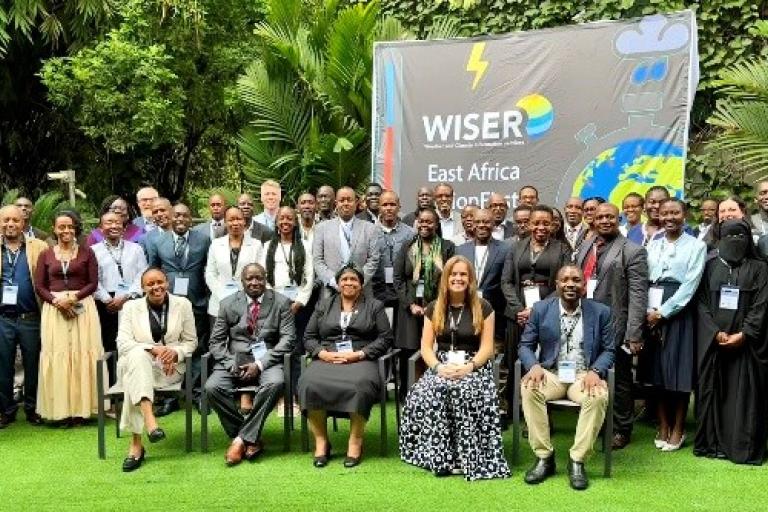
Two regional collaboration workshops, held in Pretoria, South Africa (23–27 February 2026) and Nairobi, Kenya (23–27 March 2026), brought together National Meteorological and Hydrological Services (NMHSs), disaster risk management authorities, and regional and international partners. Hosted by the South African Weather Service and the Kenya Meteorological Department, in partnership with the UK Met Office and the World Meteorological Organization (WMO), the workshops marked a key step in advancing the ActionFirst™ initiative. These engagements focused on strengthening the foundations for implementation—supporting countries to refine national baselines, initiate structured co-production processes, and reinforce regional coordination and technical support systems led by WMO and Regional Specialized Meteorological Centres (RSMCs).
Co-Production as the Foundation for Action
A defining feature of ActionFirst™ is its emphasis on co-production. National co-production processes bring together meteorological services, disaster management agencies, sector ministries, communities, and other stakeholders to jointly design early warning systems. These processes generate critical outputs, including user requirements, communication pathways, institutional roles, and technical priorities. They form the foundation for national Action-Based Warning roadmaps and guide future investments across the entire early warning value chain. Without this step, early warning systems risk remaining fragmented, underutilized, and disconnected from the needs of those most at risk.
Strengthening Action-Based Forecasting
During the workshop, participants placed strong emphasis on advancing action-based warning and impact-based forecasting approaches, including:
- identifying priority hazards and associated impacts,
- developing impact tables and action statements, improving risk communication and dissemination pathways, and
- strengthening coordination between NMHSs and disaster risk management agencies.
These efforts are critical to ensuring that early warnings lead to timely, informed, and coordinated action at national and local levels.
Embedding Gender Equality, Disability, and Social Inclusion in Early Warning Systems
Ensuring that early warning systems reach those most at risk requires deliberate attention to inclusion. The initiative integrates Gender Equality, Disability, and Social Inclusion (GEDSI) considerations throughout design and implementation. Countries are working to ensure that warnings are accessible, understandable, and actionable for women, youth, people with disabilities, and marginalized communities. This people-centred approach strengthens the effectiveness and equity of early warning systems.
Strengthening Regional Coordination and Learning
At the regional level, ActionFirst™ fosters peer learning, harmonization, and sustained capacity development. Through collaboration between WMO, RSMC Pretoria, RSMC Nairobi, and partners, countries benefit from shared technical guidance, joint messaging, and cross-border knowledge exchange. This coordinated regional architecture is essential for ensuring consistency, scalability, and long-term sustainability of early warning systems across Eastern and Southern Africa.
Looking Ahead: From Foundations to Impact
The activities delivered during this phase—baselines, co-production processes, strengthened regional systems, and early prototypes form the foundation for future investment in full action-based warning implementation. As the Initiative progresses, the focus will remain on ensuring that weather and climate information informs plans, policies, and decision-making processes, enabling countries to move from reactive disaster response to proactive early action. The WISER ActionFirst™ collaboration workshops, therefore, represent a significant milestone in advancing the Early Warnings for All agenda. They highlight a clear direction: early warning systems must be integrated, inclusive, and action-oriented, ensuring that when hazards occur, communities are informed, prepared, and able to act.
- Region:
- Region I: Africa