Arctic Report Card Marks 20 Years Amid Record Warming in 2025
Record heat, record low sea ice, shrinking glaciers, continued warming of the ocean and unprecedented extreme weather events are just some of the disruptive changes reported that are transforming this once reliably frozen region into a warmer, wetter, and unpredictable world.
These are the key findings of the Arctic Report Card 2025, authored by 112 scientists from 13 countries. Now in its 20th year, the report documents ongoing trends, record-setting events, and emerging challenges in a region warming far faster than the rest of the planet.
Along with reports on the state of the Arctic’s atmosphere, oceans, cryosphere, and tundra, this year’s report highlights major transformations underway: Atlantification bringing warmer, saltier waters northward; boreal species expanding northward into Arctic ecosystems; and “rivers rusting” as thawing permafrost mobilizes iron and other metals. Across these changing landscapes, sustained observations and strong research partnerships, including those led by communities and Indigenous organizations, remain essential for understanding and adaptation.
Since its inception in 2006, the Arctic Report Card, supported by the US National Oceanic and Atmospheric Administration (NOAA), has provided yearly, authoritative updates on the state of the Arctic. The Arctic Monitoring and Assessment Programme (AMAP) has supported this work, by facilitating the independent peer review of the report.
The Arctic report card highlights the importance of scientific research and monitoring from the WMO community to support decision-making and adaptation in the most rapidly warming part of the world. It is a reminder that what happens in the Arctic does not stay in the Arctic but impacts the entire globe.
In the air
- Surface air temperatures across the Arctic from October 2024 through September 2025 were the warmest recorded since 1900.
- The last 10 years are the 10 warmest on record in the Arctic.
- Since 2006, Arctic annual temperature has increased at more than double the global rate of temperature changes. Precipitation from October 2024 to September 2025 set a new record high.
- Arctic precipitation totals for winter, spring, and autumn were each among the top five since 1950.
In the ocean
- In March 2025, Arctic winter sea ice reached the lowest annual maximum extent in the 47-year satellite record.
- September 2025 saw the 10th lowest minimum sea ice extent. All of the 19 lowest September minimum ice extents have occurred in the last 19 years.
- The oldest, thickest Arctic sea ice (more than 4 years) has declined by more than 95% since the 1980s. Multi-year sea ice is now largely confined to the area north of Greenland and the Canadian Archipelago.
- Atlantification—an influx of water properties from lower latitudes—has reached the central Arctic Ocean, hundreds of miles from the former edge of the Atlantic Ocean.
- Atlantification weakens the Arctic Ocean’s layering of waters of different densities, therefore enhancing heat transfer, melting sea ice, and threatening ocean circulation patterns that exert a long-term influence on the weather.
On land
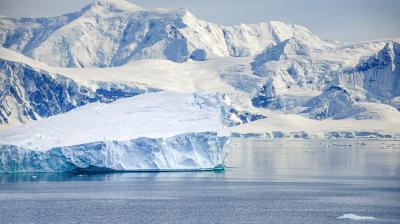
- Glaciers in Arctic Scandinavia and Svalbard experienced the largest annual net loss of ice on record between 2023 and 2024.
- The Greenland Ice Sheet lost an estimated 129 billion tons of ice in 2025, less than the annual average of 219 billion tons between 2003 and 2024, but continuing the long-term trend of net loss.
- Alaskan glaciers have lost an average of 125 vertical feet (38 meters) of ice since the mid-20th century, dramatically lowering ice surfaces statewide.
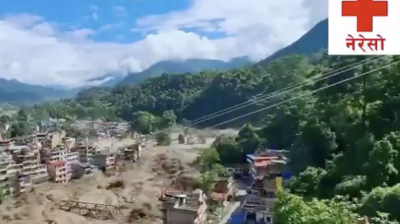
- Ongoing glacier loss contributes to steadily rising global sea levels, threatening Arctic communities’ water supplies, driving destructive floods and increasing landslide and tsunami hazards that endanger people, infrastructure, and coastline.
- Throughout the Arctic, snowpack was higher than normal during the 2024/25 snow season and remained high through May. Despite this, by June snow cover extent dropped below normal, consistent with levels the past 15 years.
- June snow cover extent over the Arctic today is half of what it was six decades ago.
- In over 200 Arctic Alaska watersheds, iron, and other elements released by thawing permafrost have turned pristine rivers and streams orange over the past decade.
- In “rusting rivers”, the increased acidity and elevated levels of toxic metals degrade water quality, compromising aquatic habitat and eroding biodiversity.
- First detected in the late 1990s, the “greening of the Arctic” has far-reaching impacts to Arctic habitats, permafrost conditions, and the livelihood of Arctic people, with implications for global climate and the carbon cycle.
- In 2025, maximum Arctic tundra greenness was the third highest in the 26-year satellite record, continuing a sequence of record or near-record high values since 2020.
- WMO Member:
- United States of America