Regional Workshop Supports Climate Science Information for Nationally Determined Contributions in Africa
The World Meteorological Organization (WMO) convened a Regional Workshop on Climate Science Information for the Nationally Determined Contributions (NDCs) 3.0 in Lomé, Togo, from 2 to 6 February 2026. The event was co-sponsored by the CREWS West Africa Project and the ClimSA Programme, supported by the WMO Regional Office for Africa, and hosted by Agence Nationale de la Météorologie du Togo (ANAMET).
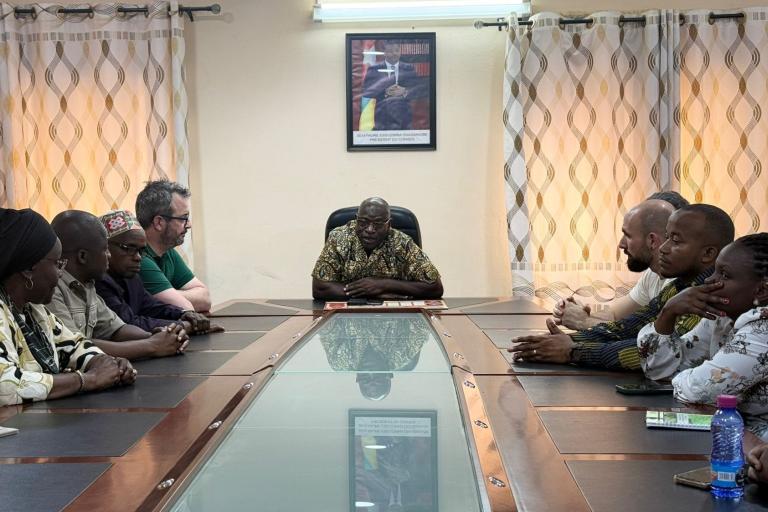
With the new round of Nationally Determined Contributions (NDCs) in full swing, ensuring that National Meteorological and Hydrological Services (NMHSs) can access, interpret, and apply robust climate science information is more important than ever for NDC development and implementation. In this context, WMO convened a regional workshop bringing together participants from seven countries in Africa - Burkina Faso, Cameroon, Comoros, Guinea, Madagascar, Rwanda, and Togo.
The workshop had four main objectives:
Develop skills in climate data management and climate indices calculation, enabling participants to analyze past and projected trends, variability, and extremes for NDC 3.0 reporting and development.
- Explore relations between climate patterns and sectoral information, integrating climate information into key sectors such as agriculture, water, health, forestry, and energy.
- Enhance the ability to interpret climate indices for socio-economic applications, assessing their implications for policy and decision-making.
- Strengthen expertise in utilizing climate science information to provide data-driven insights, professional recommendations, and technical support for the NDC 3.0 report.
The training was designed to be practical and interactive. Specific emphasis was placed on using WMO-supported resources to enhance technical capacities. Participants learned to use Climpact, a software package for calculating sector-specific climate indices, the Climate Information Portal (CIP), which provides access to 28 pre-calculated climate and water indicators derived from global and regional climate models and the Climate Science Information for Climate Action (CSICA) methodology, designed to translate climate science into decision-ready information for policy and investment planning.
Dr. Tindano Komlan, Secretary-General of the Ministry of Transport of Togo, highlighted that “access to reliable, relevant, and usable climate science information is an indispensable lever for guiding public policies and climate investments.” He welcomed the practical focus of the workshop, noting its use of tools and methodologies to strengthen the science-policy interface.
Technical sessions were delivered by climatology experts from the University Institute for Research in Sustainability, Climate Change, and Energy Transition (IU-RESCAT), Rovira i Virgili University (Tarragona, Spain). They covered climate data quality control, homogeneity assessment, climate indices calculation, and climate trends interpretation. The training also featured co-production discussions with sector representatives, including participants from Togo’s Ministry of Agriculture and Ministry of Environment, to help bridge climate analysis with economic sector needs.
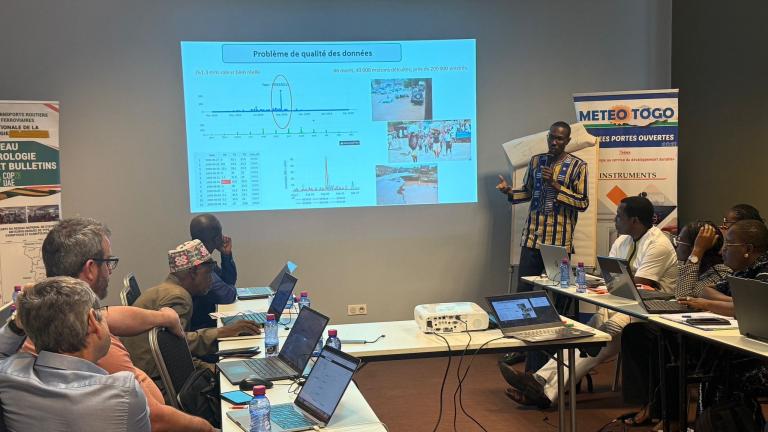
Throughout the week, participants took part in extensive hands-on exercises, a field visit and exchange at ANAMET, presentations on National Frameworks for Climate Services (NFCS), and group work outputs.
In addition, WMO staff introduced the Methodology on Climate Science Information for Climate Action and the National Framework for Climate Services (NFCSs) approach, and highlighted practical tools such as the Climate Services Dashboard to help translate climate science into decision-ready information.
Feedback from participants highlighted the practical relevance of the workshop, with a post-training score of 4.79 out of 5. Many participants reported improved mastery of WMO resources, greater technical proficiency in calculating and interpreting climate indices, and enhanced capacity to apply climate science to national policies, decision-making, and sectoral planning.
There was also a strong demand for continued support, particularly in using climate data for policy planning, strengthening NMHS capacities to deliver climate information services, technical cooperation on climate science for NDC development, and assistance with data collection and analysis for both adaptation and mitigation.
This workshop provided a critical platform to ensure that the new generation of NDCs reflects the latest advances in climate knowledge, modelling, impact assessments, and resilience planning. So far, 139 countries have submitted the new round of NDCs, with 70% now referencing climate information and meteorological services, demonstrating the widespread recognition of NDCs as a cross-cutting foundation for adaptation, responding to loss and damage, transparent reporting, and accessing climate finance.
WMO will continue to support NMHSs to access, interpret, and apply the best available climate science, ensuring that climate data is translated into policy-relevant language and embedded in decision-support reports and project proposals, strengthening the link between scientific evidence and national climate action.
- WMO Member:
- Burkina Faso ,
- Cameroon ,
- Comoros ,
- Guinea ,
- Madagascar ,
- Rwanda ,
- Togo
- Region:
- Region I: Africa