
Asian Universities Unite to Combat Climate-Health Crisis Through Innovation
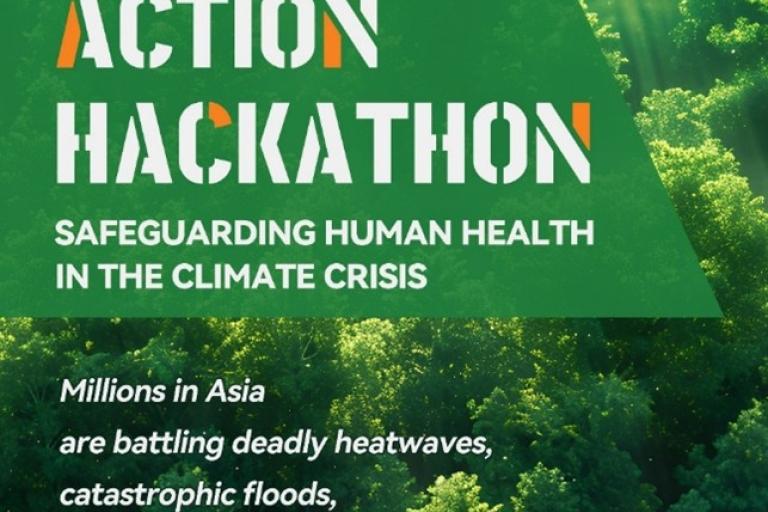
Climate-related health risks are among the most complex issues of our time and youth-led innovation is transforming how Asia is responding to the challenges. The 2025 Asian Climate-Sustainable Development Goals (SDGs) Technology Innovation HackathOn (ACTION) mobilized youth to address the pressing challenges at the intersection of climate change and public health. Their innovative solutions were inspiring and easily implementable.
The HackathOn, launched in May, aimed to promote climate research, youth innovation and training. Over 40 high-quality proposals were received and 12 teams advanced to the semifinals following a rigorous review. After intensive mentorship in September, each team presented their solutions in an online session on 22 September. An expert panel – from international organizations, industry and academia – evaluated the projects based on technical innovation, health impact, feasibility, scalability and presentation quality. On 20 October, a roadshow event in Hong Kong marked an important shift: from academic contest to real-world implementation.
The initiative reached its climax on 14 November with the finals of the "Asian Youth Climate and Health Innovation Challenge" during a side-event at the China Pavilion at the 30th session of the Conference of Parties (COP30) to the United Nations Framework Convention on Climate Change (UNFCCC). The Pavilion’s first dedicated "Climate and Health" session elevated youth-driven innovation to the forefront of the global climate dialogue.
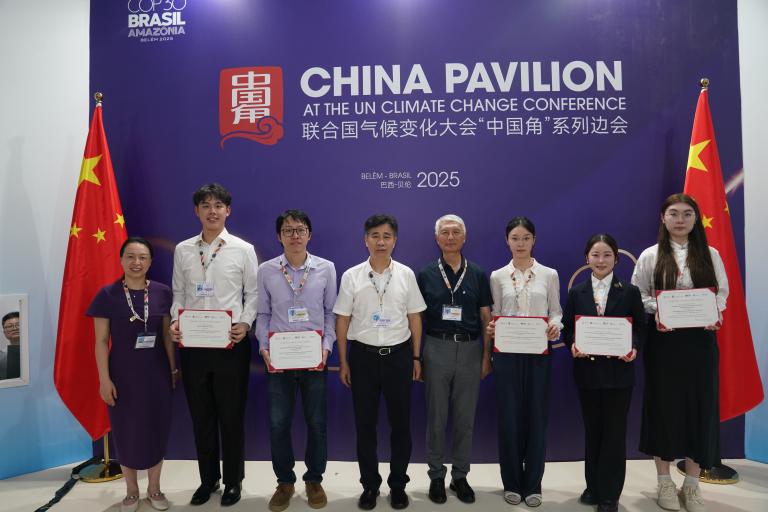
The event garnered high-level participation, including China’s Vice Minister of Ecology and Environment, Mr Li Gao; Brazil’s Minister of Health, Mr Alexandre Padilha; and Dr Diarmid Campbell-Lendrum from the World Health Organization (WHO), demonstrating robust political endorsement for integrating health into climate action. Mr Xiong Shaoyuan, Deputy Administrator of the China Meteorological Administration, also attended and commended the youth-led projects for their profound understanding of real-world challenges and innovative use of technology. The five finalist teams showcased their potentially implementable ideas, outlined below.
- Tsinghua University: A shared mobile cooling devices designed specifically for urban delivery workers to effectively prevent heat stress during extreme heat events
- National University of Singapore: An intelligent real time mosquito surveillance system that enhances early warning capabilities for dengue fever outbreaks under changing climate conditions
- The University of Hong Kong: A climate-adaptive safe navigation system to assist vulnerable groups in navigating urban environments safely during extreme weather
- The University of Tokyo: A biomimetic backpack that extracts drinking water from atmospheric air, offering a portable hydration solution for nomadic communities in arid regions
- Nanjing University: Hyperlocal digital twin systems that enable precision forecasting of compound flood and dengue risks at the community scale
The HackathOn was organized by WMO in collaboration with Tsinghua University and received support from the WHO, the Asian Universities Alliance, and the International Competency Development Committee. It aligns with WMO Youth Action Plan by offering a platform for youth to showcase innovation and to turn their ideas into practical solutions. Furthermore, as a project under the WMO Regional Association II (Asia) (RA II) Operating Plan, the HackathOn also reflects the Region’s strengthened innovation framework through the establishment of the RA II Coordination Panel on Research and Innovation following the RA II-18 Session (Phase 1). With continued support from WMO and its Members, these youth-led innovations will further advance a climate-resilient and healthy future.
- WMO Member:
- Singapore ,
- China ,
- Japan ,
- Hong Kong, China
- Region:
- Region II: Asia