
Turning Flood Alerts into Community Action in Djibouti
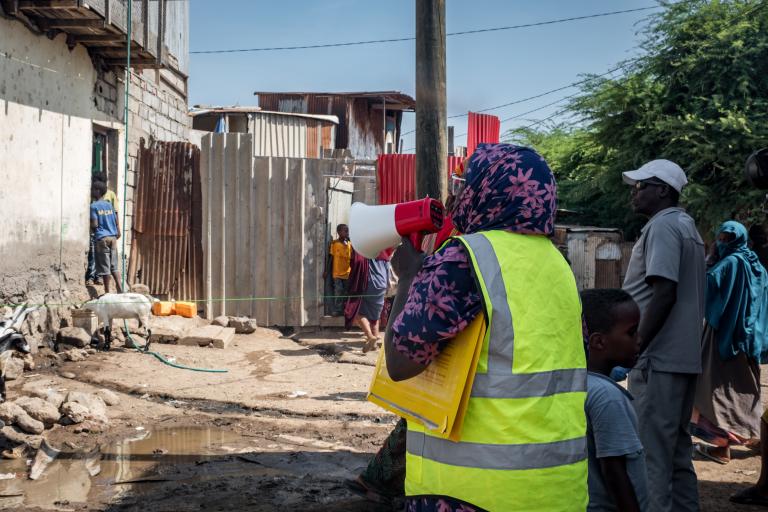
In Djibouti, floods don’t arrive slowly. Although sporadic, when heavy rain falls and water levels rise, communities must act fast. But crucial early warnings don’t reach everyone equally. Access to information, mobility and caregiving roles affect how effectively people can respond to flood warnings issued by local authorities. Ensuring that early warnings reach everyone is critical for their effectiveness.
In the flood-prone neighbourhood of Vietnam in Djibouti City, a community member receives a notice that water levels nearby are rising fast. She quickly warns her neighbours, using a megaphone to spread the word. She goes from door to door to make sure that everybody receives the alert, especially those without access to digital communication. But this community relay is only one element of a wider, integrated approach that helps reduce the destructive impact of floods on local communities.
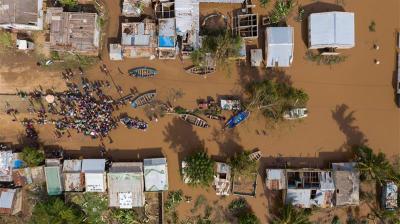
Floods are among Djibouti’s most damaging hazards, destroying livelihoods, disrupting development and claiming lives. In the densely populated neighbourhoods of the capital region, closely packed housing and a lack of drainage infrastructure can cause floodwater to accumulate rapidly during intense rainfall, leaving residents with little time to react. Effective early warnings are therefore critical. Yet a warning only saves lives if it reaches people and enables them to act quickly.
Putting inclusion into practice
The steps community members take in response to floods are set out in the Community Flood Action Plan, recently developed by the Djibouti Red Crescent Society (DRCS) under the Climate Risk and Early Warning Systems (CREWS) Djibouti Project, led by the World Meteorological Organization (WMO). Putting the plan into practice, however, requires preparation.
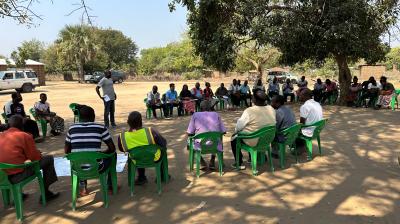
In May 2026, DRCS organized a community-based drill simulating a flood scenario and testing the established inclusive evacuation procedures. The exercise mobilized community volunteers and placed particular emphasis on vulnerable groups, such as the elderly, caregivers, and those with limited mobility, who need special assistance to evacuate the area.
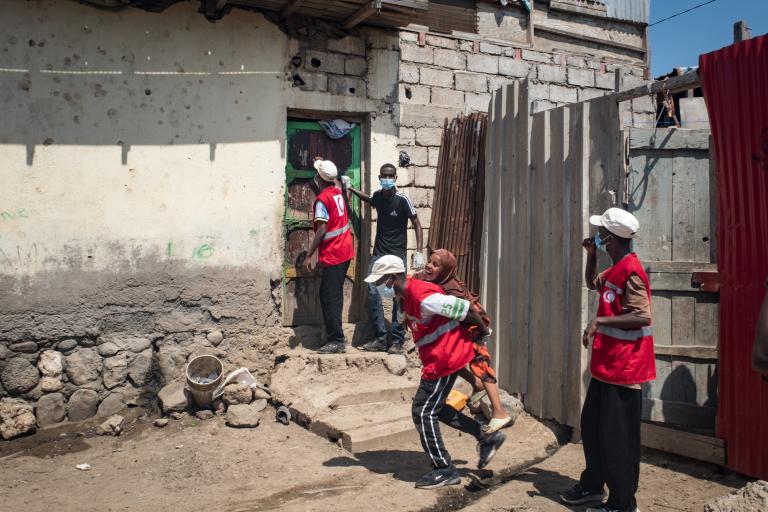
“Through this exercise, we want to see the self-organization of the community and also their preparedness capacity”, explains Hawa Ibrahim of DRCS, “because we know that a community that has its capacity strengthened is a community that is better prepared for all the disaster risk situations”.
Building a system of inclusion
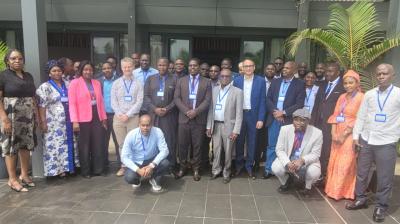
In the run-up to the drill, a two-day workshop on “Inclusion for Better Alerts” brought together national meteorological and disaster management institutions, local governments, NGOs and community representatives to explore how gender and social inclusion can be better integrated throughout End-to-End Early Warning Systems for Floods (E2E-EWS-FF).
Participants discussed how to make early warning systems more inclusive, from planning and programming to monitoring and budgeting. The workshop outcomes delivered a strong collective message: inclusive early warning systems cannot remain a principle on paper. Participants called for sustained investment, stronger institutional coordination, accessible alerts for all and concrete implementation, reaffirming that without inclusion, early warnings cannot fully protect the communities most at risk.
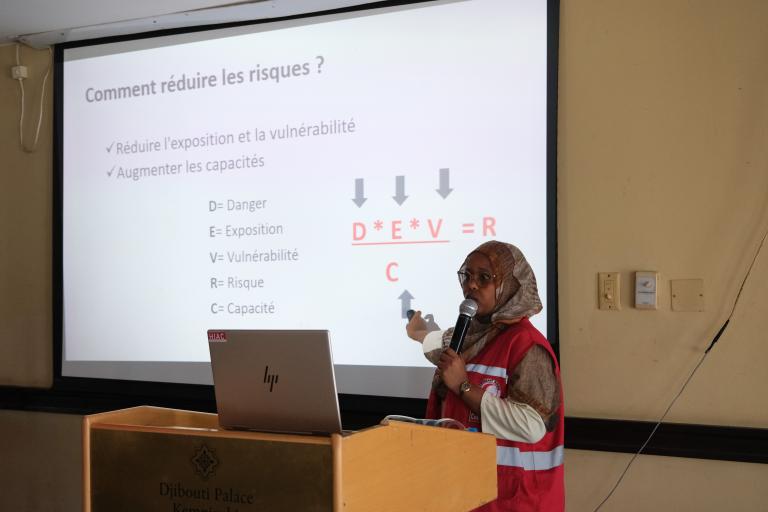
Together, the workshop and the simulation drill marked an important step for Djibouti, representing the country’s first coordinated efforts to integrate gender and social inclusion into early warning systems.
These efforts reflect the broader ambition of the CREWS Djibouti project: to build an early warning ecosystem that is not only technically robust but also people-centred, inclusive and effective. By strengthening coordination between institutions, improving forecasting and communication capacities, and empowering communities to act before disasters strike, CREWS Djibouti is helping transform early warnings into early action.
Beyond systems and structures, the real test of early warning lies in its ability to reach everyone in time and allow them to take action. When inclusion becomes the foundation, early warning systems stop being abstract mechanisms and become catalysts for community action, ensuring no one is left behind.
- WMO Member:
- Djibouti
- Region:
- Region I: Africa