UN Seminar Highlights WMO Role in Early Warning and Multi-Hazard Preparedness
In the face of increasing disaster risks driven by industrial and natural hazard interactions, WMO has joined calls for urgent action to strengthen multi-hazard early warning systems (MHEWS) to fully address technological and Natech (natural hazard-triggered technological) disasters.
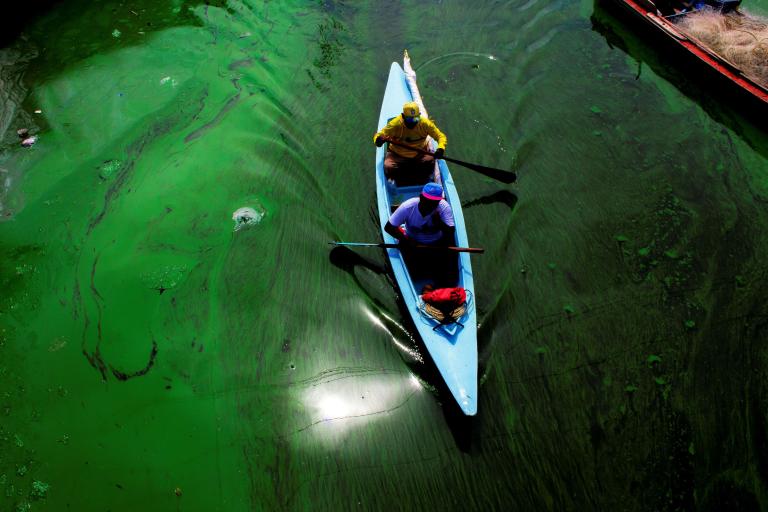
The United Nations Global Seminar on Early Warning, Pollution Remediation, and Environmental Liability focused on cascading hazards driven by hydrological extremes - floods, droughts, and compound events - which can increase the likelihood of industrial accidents and cross-border pollution.
It was initiated by the United Nations Economic Commission for Europe (UNECE) and co-organized with WMO and the United Nations Office for Disaster Risk Reduction (UNDRR) and took place on 29–30 January 2026.
UNECE Deputy Executive Secretary Dmitry Mariyasin highlighted the central role of multilateral environmental agreements, observing that “catastrophic industrial accidents and Natech events remind us how quickly lives, communities and shared waters can be affected.”
“History reminds us what is at stake. Events such as the 1970 Bhola Cyclone, the 2004 Indian Ocean tsunami, and Japan’s 2011 earthquake, tsunami and nuclear disaster informed the early warning capacities we have today. Our collective ambition is clear: that disasters of this scale should never again occur because warnings were missing, delayed, or not acted upon,” said Ko Barrett, Deputy Secretary-General of WMO.
“Cooperation across borders makes a measurable difference. It saves lives, protects livelihoods, and strengthens resilience,” said Ko Barrett. “Through instruments such as the Early Warnings for All Roadmap and the Regional HydroSOS support plan, WMO helps align national efforts, strengthen cross-border cooperation, support river basin commissions, and guide investment in regional early warning and resilience capabilities,” she said.
Ko Barrett outlined key areas of progress:
- We can predict how pollutants move through the atmosphere, and oceans.
- We operate global arrangements to share observations and modelling in support of emergency environmental response – for instance through forecasts of the atmospheric transport of radioactive substances.
- We track volcanic ash clouds and oil spills and provide dispersion forecasts that allow aviation and maritime authorities to protect lives while minimizing disruption.
- We can increasingly anticipate where heavy rainfall will fall and what impacts it is likely to cause on the ground.
- We are strengthening forecasts and warnings of sand and dust storms and wildfire risk. And we can provide skillful seasonal outlooks for floods, droughts, heat, and cold to support advance planning in key sectors like health, agriculture and energy.
Angela Chiara Corina from National Civil Protection Department of Italy in her role as Vice-President of the WMO Commission for Weather, Climate, Hydrological, Marine and Related Environmental Services and Applications (SERCOM), showcased HydroSOS, WMO’s global hydrological status and outlook system.
HydroSOS provides authoritative, cross-border data from short-term flood forecasts to seasonal water stress outlooks, supported by WMO’s Unified Data Policy to ensure interoperability, transparency, and trust. This helps authorities and industrial operators anticipate risks, plan preventive measures, and coordinate responses effectively.
The Seminar also featured UNECE’s upgraded Industrial Accidents Notification System and UNDRR’s guidance on preparedness and risk governance under the Sendai Framework.
The event highlighted how UNECE, WMO, and UNDRR work together to turn early warning into early action, strengthening resilience to water-related hazards and multi-sector cascading risks across borders.
For more information, see the UNECE press release.