First Global Early Warnings for All Multi-Stakeholder Forum launches with call to accelerate universal protection from disasters
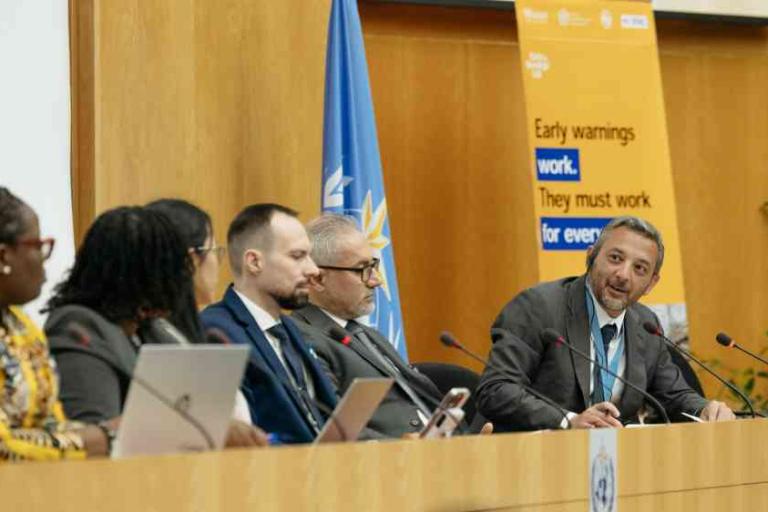
Co-led by the United Nations Office for Disaster Risk Reduction (UNDRR) and the World Meteorological Organization (WMO), the forum brings together governments, international organizations, civil society, private sector actors, and communities to advance the UN Secretary-General's Early Warnings for All (EW4All) initiative.
As part of the preparatory days for the Global Platform for Disaster Risk Reduction, the two-day forum aims to ensure that every person on Earth is protected by early warning systems by the end of 2027. With disasters projected to increase by 40% between 2015 and 2030, and economic losses from disasters in 2023 estimated at $250 billion, the urgency for effective early warning systems has never been greater.
The forum's opening session featured a comprehensive stock-take of global early warning system progress, highlighting that 108 countries report that they have multi-hazard early warning systems. Building on outcomes from five regional Early Warnings for All Multi-Stakeholder Fora held across Asia-Pacific, Africa, Europe & Central Asia, the Americas & Caribbean, and Arab States, the global gathering captures lessons learned and identifies pathways to close remaining gaps.
Community-centered approaches and innovation at the forefront
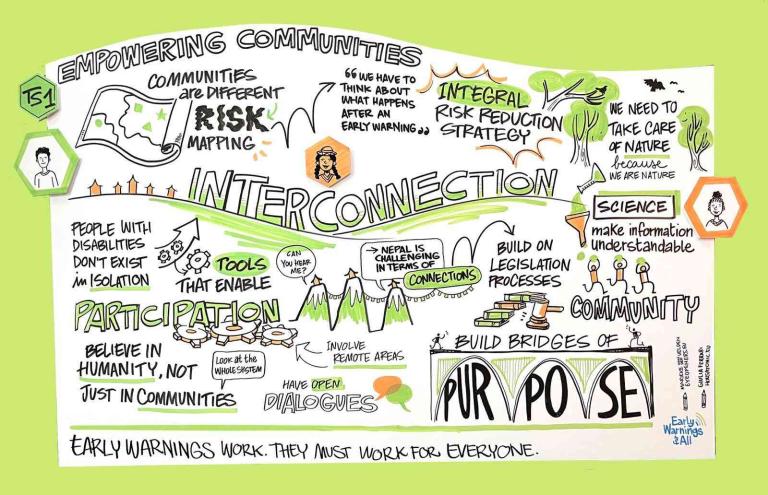
The forum's first day emphasized the critical importance of people-centered approaches to early warning systems. Thematic sessions explored how communities can be empowered through user-tailored early warnings and early action, with particular attention to the unique challenges faced in fragile and conflict settings.
Mr. Kamal Kishore, Special Representative of the UN Secretary-General for Disaster Risk Reduction, reinforced this message, stating, "Leave no one behind comes very important in the context of early warning systems. Women, children and persons with disabilities are not passive recipients of services, they are active participants."
Participants examined effective governance models that support multi-hazard early warning systems, recognizing that successful implementation requires institutionalized chains of responsibility and multi-stakeholder engagement including South-South and Triangular Cooperation mechanisms. The forum highlighted that early warning systems are strongest when at-risk communities and sectors co-develop and co-own these systems, ensuring trust, timely action, and long-term sustainability.
Innovation emerged as a key theme, with experts showcasing how science, technology, and local knowledge can advance multi-hazard early warning systems. Discussions covered the integration of artificial intelligence, satellite systems, Information of Things (IoT) technologies, and traditional knowledge systems to enhance forecasting accuracy and improve warning dissemination to vulnerable populations.
Ambassador Julien Thöni, Deputy Permanent Representative of Switzerland to the United Nations and other Organisations in Geneva, highlighted the dual nature of innovation: "Early Warning Systems can go hand-in-hand with innovation. New technologies from satellite data to mobile alerts help us predict more accurately and reach people faster. But innovation also means finding smarter ways to work together, adapt to local needs, and make sure no one is left behind."
Building partnerships for resilient futures
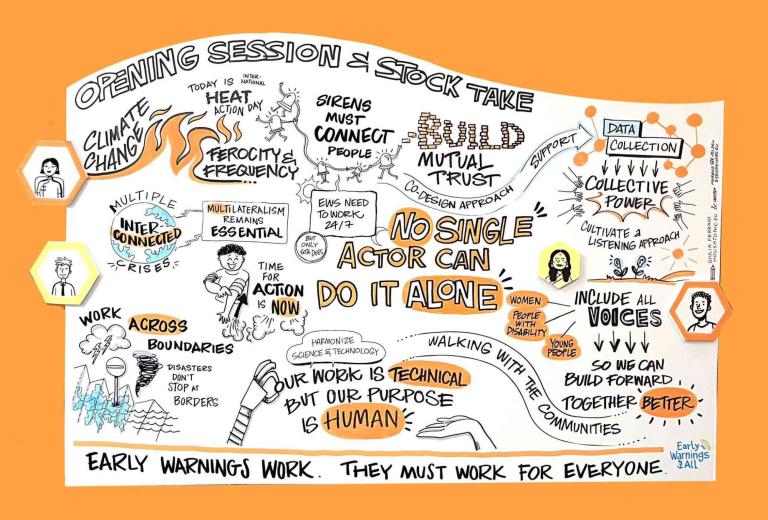
The forum underscored that no single entity can build and maintain effective early warning systems alone. Participants emphasized the need for stronger partnerships across sectors, levels of government, and international boundaries to achieve Early Warnings for All, by All.
Professor Celeste Saulo, Secretary-General of the World Meteorological Organization, emphasized the critical importance of collaboration: "No warning, however early, is effective unless it reaches the right people at the right time. And that is why we are here today. To cement our partnerships and trust which are essential to early action...Alone we can do very little. But together, we can do so much."
Early warning systems provide a ten-fold return on investment and are recognized as among the most cost-effective adaptation measures. However, their full socio-economic benefits remain under-documented, highlighting the need for better evidence and advocacy to scale up investments.
The forum's diverse organizing committee, including the International Telecommunication Union (ITU), the International Federation of Red Cross and Red Crescent Societies (IFRC), the CREWS Secretariat, the Risk-informed Early Action Partnership (REAP), the United Nations Development Programme (UNDP), the United Nations Environment Program (UNEP), the Food and Agriculture Organization (FAO), United Nations Office for the Coordination of Humanitarian Affairs (OCHA), Group on Earth Observations (GEO), the United Nations Educational, Scientific, and Cultural Organization (UNESCO), the World Food Programme (WFP), Stakeholder Engagement Mechanism (SEM), the Global Network of Civil Society for Disaster Reduction (GNDR), and the Executive Office of the Secretary-General Climate Action Team, reflects the multi-stakeholder approach essential for success.
Path forward: cooperation and finance
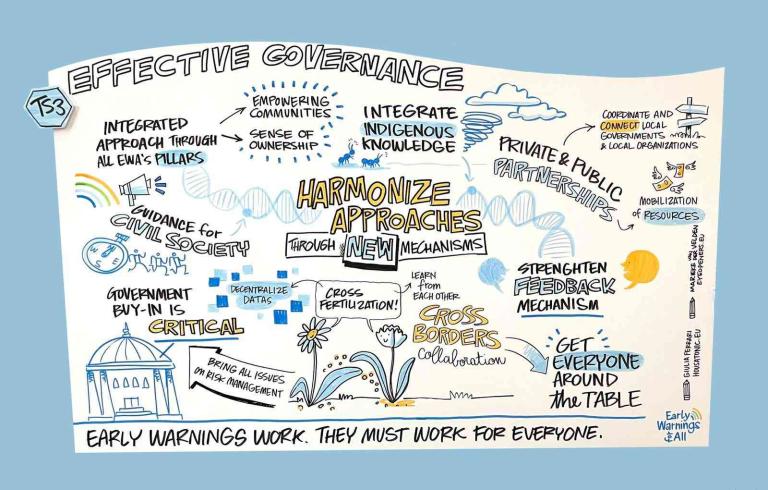
As the Forum continues, participants will focus on accelerating Early Warnings for All through international, regional and national cooperation and partnerships, alongside solutions for scaling and sustaining investments in multi-hazard early warning systems and building resident capacity.
The Forum will produce an outcome statement sharing overarching needs and priorities, as well as emerging opportunities identified by participants at the global level. These outcomes will feed directly into the Global Platform's thematic session on early warnings and early action.
With Target G of the Sendai Framework calling for substantial increases in the availability and access to multi-hazard early warning systems, the Global Early Warnings for All Multi-Stakeholder Forum represents a critical milestone in the journey toward universal protection from disasters.
The Global Early Warnings for All Multi-Stakeholder Forum continues on 3 June 2025, focusing on international cooperation and financing solutions for early warning systems.