Cultivating the next generation of meteorological professionals

More than 260.000 students have graduated from Nanjing University of Information Science and Technology (NUIST) in meteorology and related disciplines since its founding in 1960, including over 6.000 international alumni. It has also supported training for participants from 160 Members of the World Meteorological Organization (WMO) through a wide range of short-term international programmes and workshops. As demands on National Meteorological and Hydrological Services (NMHSs) grow, driven by increasingly frequent and complex weather and climate risks, building a skilled and adaptable workforce has become a central challenge for many countries.
As a host of a WMO Regional Training Centre (RTC-Nanjing) since 1993, NUIST combines long-term academic education with short-term professional training aligned with WMO competency frameworks. Its programmes aim to support both technical skills and leadership development, preparing professionals to contribute to operational services, research and management roles within NMHSs.
A key element of NUIST’s approach is the New-Plus-Sync-Open (NPSO) model, which brings together strong disciplinary foundations, interdisciplinary development, operational alignment, and international collaboration. Academic programmes are aligned with advances in atmospheric and related sciences, while interdisciplinary tracks such as “Meteorology+” and “+Meteorology” respond to emerging needs in areas including artificial intelligence (AI), environmental science and hydrology.
Partnerships with meteorological services and industry provide students with hands-on operational experience, while joint programmes, research platforms and global initiatives support the development of an international perspective. Through this integrated model, NUIST aims to prepare professionals who are technically competent, adaptable and able to contribute to increasingly complex meteorological service systems.
Supporting disaster response in Myanmar
Dr Kyaw Than Oo from Myanmar represents a growing generation of meteorologists whose careers bridge academic training and operational responsibility. During his master’s and PhD studies at NUIST from 2019 to 2025, he developed expertise in atmospheric science, climate modelling and data analysis under the guidance of Professor Wang Wen and Professor Chen Haishan. His work was recognized at international research forums, where he received awards for his research.
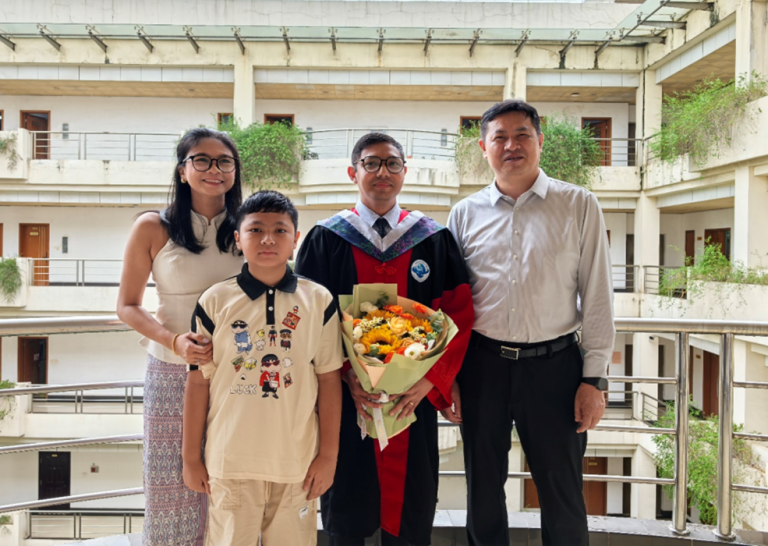
He now serves as Head of the Aviation Weather Service at the Myanmar Air Force and as a Senior Researcher at Myanmar’s National Disaster Management Committee (NDMC). In these roles, he contributes to extreme weather forecasting, disaster risk management and public services. His experience reflects how structured education, combined with mentorship and practical training, can support both technical expertise and leadership development.
Opening the door to meteorological leadership in Uganda
Dr Bob Ogwang Alex from Uganda illustrates how academic study, combined with sustained mentorship, can support career progression in meteorological services. He completed his master’s and PhD studies at NUIST between 2009 and 2015, developing a strong scientific and technical foundation under the guidance of Professor Chen Haishan.
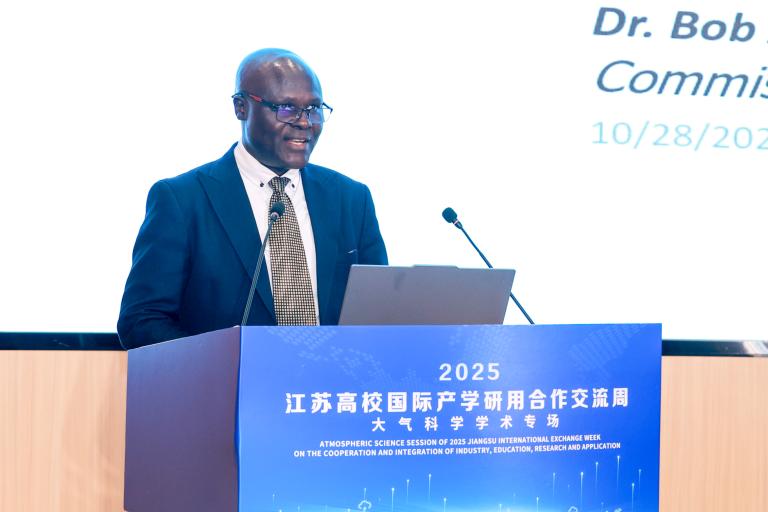
He now serves as Commissioner of the Department of Meteorological Services (DMS) in the Ministry of Water and Environment of Uganda and as the country’s Permanent Representative with WMO. Alongside his degree studies, he participated in specialized seminars and training activities organized by RTC-Nanjing. This combination of academic education, mentorship and targeted training supported his transition from a technical specialist to a senior leadership role, highlighting the importance of sustained learning pathways beyond formal education.
Building strong foundations for capacity development
These experiences highlight the importance of long-term, integrated approaches to capacity development for NMHSs. While short-term training can address immediate operational needs, it cannot replace the deeper scientific foundation and leadership potential developed through structured academic education.
A progressive pathway that combines degree education, targeted training and continuous professional development is essential for building a skilled and adaptable workforce. Such approaches strengthen both technical capacity and institutional resilience, enabling NMHSs to respond more effectively to growing weather and climate challenges.
- WMO Member:
- China
- Region:
- Region II: Asia