Flood management collaboration: Rio Grande do Sul looks to the future with resilient recovery
News was produced by: UNDRR, IRP
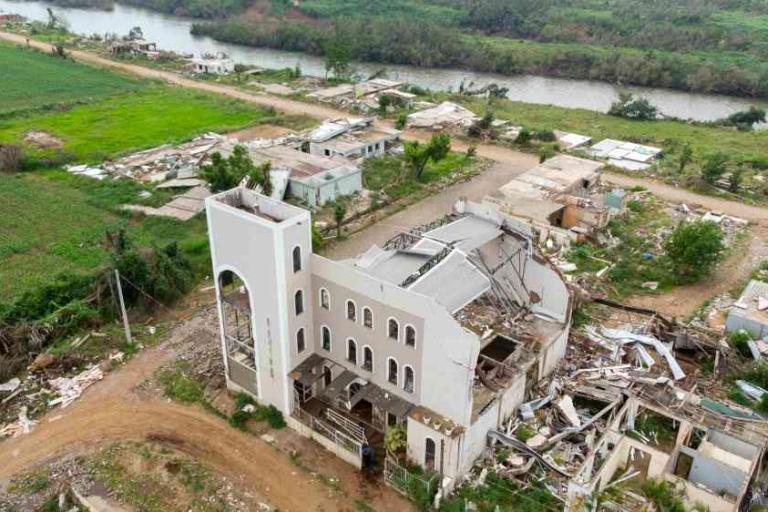
In 2024, the State of Rio Grande do Sul (RS) faced one of the most devastating flood events in its history, affecting more than 2.3 million people and causing estimated losses of USD 17 billion (ECLAC, 2024). According to the State Civil Defense and OCHA, 478 municipalities were impacted, with nearly 600,000 people displaced, 806 injured, 34 missing, and 178 fatalities. The disaster exposed the urgency of embedding resilient recovery, rehabilitation, and reconstruction into pre-disaster planning - advancing the principles of "Building Back Better," Priority 4 of the Sendai Framework for Disaster Risk Reduction.
Porto Alegre, the vibrant capital of Rio Grande do Sul, witnessed unprecedented flooding that submerged neighborhoods, cut off infrastructure, and displaced nearly 160,000 residents. As the Guaíba River system overflowed, the state mobilized its response apparatus - from municipal authorities and state agencies to the Armed Forces and civil protection forces. International support arrived swiftly, with contributions from United Nations agencies, the Dutch Disaster Risk Reduction and Surge Support (DRRS) team, and multiple humanitarian partners, all working alongside federal and local authorities to coordinate response and early recovery.
A prelude to action
Long before the May 2024 floods, early warning signs were visible. In September 2023, water levels in the Guaíba archipelago began to rise dangerously, testing the city's flood protection infrastructure. When the levees finally failed, Porto Alegre's municipal water department sought technical support from DRRS - not only to assess damages, but to shape a resilient recovery that reimagines how the city lives with water in a changing climate.
"For us, the greatest challenge has been to adapt reconstruction and recovery to not only recover what was lost, but to ensure that communities are rebuilt with greater resilience," says Ms. Angela Oliveira, Deputy State Secretary for Reconstruction in Rio Grande do Sul.
Related video:
From emergency to recovery: A Multi-phase, multi-partner effort
The DRRS team implemented a multi-phase approach, guided by close collaboration with the State Secretariat for Reconstruction and supported by UN agencies and international financial institutions:
- Immediate Response: Even while working remotely, DRRS issued rapid guidance on early recovery protocols, ensuring that emergency actions aligned with best international practices.
- Initial Assessment: Field experts mapped the extent of flood damage and identified key lessons for strengthening resilience in future events.
- Long-Term Planning: Brazilian and Dutch experts co-designed measures for structural improvements, urban drainage systems, community awareness, and water governance strategies.
- Ongoing Support: Partnerships were deepened with the World Bank, Inter-American Development Bank, and UN entities to develop a state-wide flood and drainage master plan - linking reconstruction with risk reduction.
Lessons in resilience
In June 2025, Rio Grande do Sul faced another severe flooding. Commenting on the State's progress since 2023, State Secretary Oliveira highlighted that "after that disaster, the state civil defense force increased four-fold. This investment proved decisive. In June 2025, we faced rainfall of similar intensity to 2023. But this time the losses were minimal compared to the past, particularly in terms of fatalities. This demonstrates how readiness through investments in institutional capacity, community preparedness and contingency planning directly translated into saved lives and reduced social and economic impacts".
The road ahead: Recovery readiness
As Rio Grande do Sul rebuilds, the State is now focusing on "recovery readiness" - preparing governance, financing, and technical systems before disasters occur. Through the International Recovery Platform (IRP), UNDRR provides technical assistance to apply the Recovery Readiness Framework and Assessment Tool, recently recognized by the G20 as a key tool for proactive, inclusive and sustainable recovery planning.
Speaking at the High-Level Policy Dialogue on Resilient Recovery, organized by UNDRR & IRP in Kobe in September 2025, Deputy State Secretary Oliveira underlined: "Readiness is crucial for us, because in our context, extreme events occur in succession, often before recovery from the previous disaster is completed".
The assessment aims to embed recovery within risk governance, strengthen local leadership, and foster community participation - ensuring that rebuilding is not a return to the past, but a leap toward resilience.
State Secretary Oliveira highlights that "[...] this tool can help by providing a structured way to measure that State's and municipalities' capacity...For Rio Grande do Sul, this tool can strengthen governance, anticipate bottlenecks, and prepare mitigation strategies in advance".
From response to resilience: The journey continues
From the first rescue efforts to the policy dialogues in Kobe and Brasília, the story of Rio Grande do Sul is one of partnership, perseverance, and innovation. UNDRR, DRRS and IRP stand ready to support Rio Grande do Sul to not just recover - but to thrive, transforming past challenges into a resilient future. The journey toward safer, more prepared cities and communities continues, fueled by the commitment of its people and the steadfast support of international partners.
- WMO Member:
- Brazil