Five ways cities across Europe and Central Asia are adapting to extreme heat
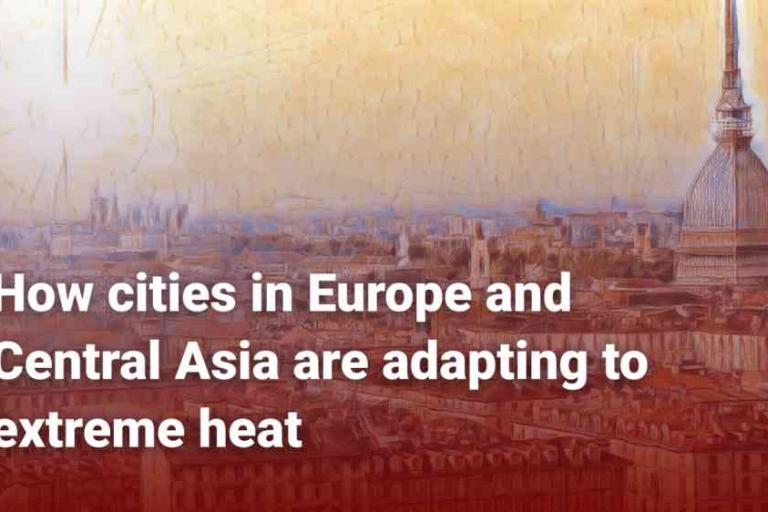
Extreme heat is now one of the most urgent and fastest-growing climate risks across Europe and Central Asia.
The summer of 2024 was the hottest ever recorded in Europe, while Central Asian cities are experiencing rising average temperatures, more frequent heatwaves and mounting stress on water, energy and health systems. Heat already causes more deaths than any other weather-related hazard, and urban growth is amplifying the risks.
Yet cities across the region are demonstrating that with the right tools, partnerships and planning, meaningful progress is possible. From Flames of change II: Urban action on Extreme Heat Across Europe and Central Asia, here are five ways cities in Europe and Central Asia are adapting to extreme heat.
1. Strengthening governance for heat resilience
Cities across Europe and Central Asia are shifting from reactive heat responses to strategic, long-term governance systems that embed heat risk into everyday decision-making.
In Amadora, Portugal, heat risk has been elevated as both a political and operational priority. The Mayor's office ensures continued attention to heat-related issues, while the Civil Protection Department coordinates across planning, environment, health, and social services. Heat was formally identified as a major risk after the city completed the Disaster Resilience Scorecard for Cities, which highlighted gaps in coordination and institutional responsibilities. This assessment helped Amadora clarify departmental roles, strengthen planning processes, and improve oversight of heat-related measures.
Effective governance depends on clear mandates, shared responsibilities, and integration of heat considerations across municipal departments. The Extreme Heat Risk Management Scorecard helps cities assess these governance gaps and structure their next steps.
2. Using data and diagnostics to inform decision-making
Cities are increasingly using heat data, risk diagnostics, and climate projections to understand how extreme heat affects infrastructure, public health, and urban systems.
In Leova, Republic of Moldova, the municipality integrates heat considerations into its General Urban Plan based on observed impacts such as road surface deterioration, water supply challenges, and increased respiratory illness during high-temperature periods. These locally grounded assessments help the city prioritise investments and inform future planning processes.
Developing a clear heat risk profile enables cities to target interventions where they are most needed. The Urban Heat Risk Management Resource Package provides cities with practical templates and methodologies for conducting these assessments.
3. Redesigning urban spaces to reduce heat exposure
Urban form plays a significant role in how heat is absorbed and experienced across neighbourhoods. Cities are adapting public spaces through nature-based solutions, improved materials, and microclimate-sensitive design.
In Wrocław, Poland, courtyard spaces in the Olbin district have been redesigned using green and blue infrastructure, permeable surfaces, and added vegetation to reduce local heat stress while also improving stormwater management. These measures form part of the city's broader climate adaptation efforts and demonstrate how existing urban areas can be retrofitted to improve thermal comfort.
Other examples include Białystok's installation of green bus stops to provide shading and Cascais' development of green corridors that help moderate temperatures in exposed neighbourhoods.
4. Strengthening early warning systems and community outreach
Heatwaves can escalate risks rapidly, particularly for older adults, people with health conditions, and residents living in dense urban environments. Cities are expanding early warning systems and connecting alerts to social support mechanisms.
In Amadora, Portugal, heat warnings are linked with proactive community outreach. During periods of elevated risk, municipal teams and partners, including the Red Cross and local police, conduct regular check-ins with 3,000-4,000 elderly and vulnerable residents, ensuring they receive guidance and assistance when needed. This system complements public communication campaigns and formal alert protocols.
Early warning systems work best when they are people-centred, locally trusted and actionable. Integrating early warnings with social services helps ensure that the most at-risk individuals are reached quickly and consistently.
5. Leveraging partnerships and tools to support heat resilience
Municipalities are increasingly turning to partnerships, networks, and shared tools to accelerate progress on heat resilience.
Across Europe and Central Asia, cities are engaging with MCR2030, academic institutions, civil society organisations, and regional networks to exchange knowledge and strengthen technical capacity.
Two recent tools support cities in structuring their efforts:
- The Urban Heat Risk Management Resource Package supports cities with ready-to-use guidance on governance, design, planning and communication.
- The Extreme Heat Risk Management Scorecard helps local governments assess preparedness, identify gaps and prioritise investments.
These resources enable cities to build on shared experience and move toward more coordinated approaches to heat risk management.