

ECMWF is a cornerstone of the global prediction system
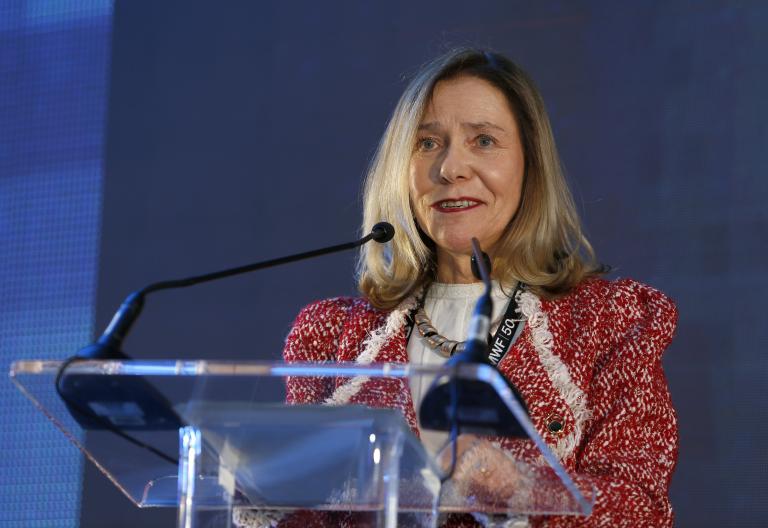
The European Centre for Medium Range Weather Forecasts (ECMWF) has shaped not only the science of prediction, but the very architecture of global cooperation in weather and climate, WMO Secretary-General Celeste Saulo said at an event marking the organization’s 50th anniversary.
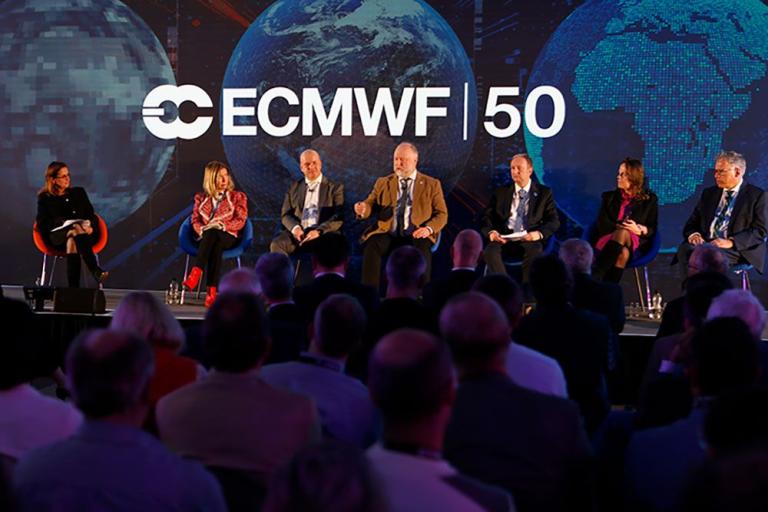
When ECMWF was founded in 1975, global numerical prediction was still taking shape. Observations were uneven, computing power was limited, and many countries lacked access to the tools that today safeguard lives and support economies.
Yet from the beginning, our organizations chose to bridge these gaps together, Celeste Saulo told the 50th anniversary concluding celebrations at ECMWF headquarters in Reading on 3 December.
“Fifty years on, ECMWF has become a cornerstone of the global prediction system. Its work — grounded in shared standards, open data and scientific rigour — contributes directly to WMO’s efforts to protect communities, support economic activity and enhance resilience worldwide,” she said, drawing on the parallels with WMO’s own 75th anniversary this year.
“Our collaboration is not accidental; it is engineered, it has also grown more essential — especially now, as climate extremes accelerate, geopolitics grows more fragile, and technology evolves faster than governance,” said Celeste Saulo.
There are three ways in which this engineered cooperation takes shape in practice:
- Open and shared foundations: The gradual expansion of ECMWF’s open data policy — with more real-time fields planned for 2026 — will strengthen National Meteorological and Hydrological Services and enable innovation and research worldwide.
- Operational support to countries: Through the Systematic Observations Financing Facility (SOFF), ECMWF provides dedicated real-time forecast datasets to 61 countries. For many of them, this data represents the difference between preparedness and vulnerability.
- Innovation with practical impact: ECMWF’s leadership in AI-enabled forecasting is opening new pathways for next-generation capability. The “Forecast in a Box” initiative, developed with the Norwegian Meteorological Service, is now being tested in Malawi — a concrete example of how advanced tools can support operational capacity where it is most needed.
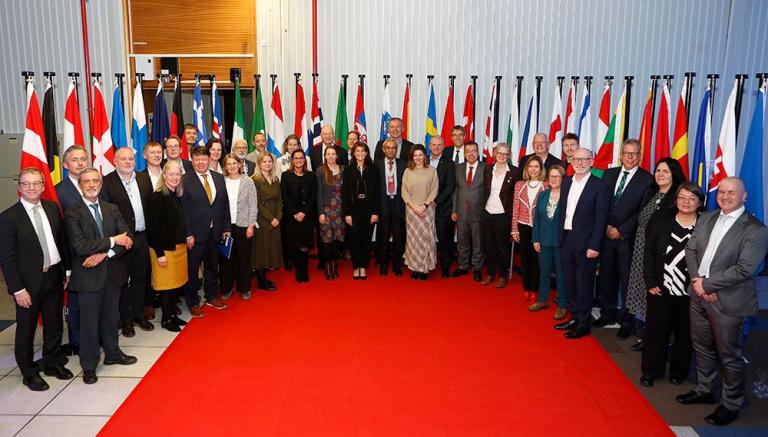
These examples illustrate how national capabilities benefit from a strong regional centre such as ECMWF, and how this regional capability, in turn, connects to the global layer coordinated through WMO. This structure — national, regional, global — is a strategic asset for the entire prediction enterprise, said Celeste Saulo.
ECMWF is a research institute and a 24/7 operational service, producing global numerical weather predictions and other data for Member and Co-operating States and the broader community. It operates a world-class supercomputer facility for weather forecasting and hold one of the largest meteorological data archives. Other strategic activities include delivering advanced training and assisting the WMO in implementing its programmes.
ECMWF is a key player in Copernicus, the Earth Observation component of the European Union’s Space programme, by implementing quality-assured information on climate change (Copernicus Climate Change Service), atmospheric composition (Copernicus Atmosphere Monitoring Service), and contributing to information on flooding and fire danger (Copernicus Emergency Management Service). Together with ESA and EUMETSAT, it are delivering the EU's Destination Earth initiative, which is developing prototype digital twins of the Earth.