Launching the CREWS Gender Mainstreaming Report
WMO has released the Gender Mainstreaming in WMO-Implemented Climate Risk and Early Systems Initiative (CREWS) Projects report, providing the first consolidated review of how gender considerations have been integrated across a decade of CREWS activities in LDCs and SIDS. The report applies the UN Gender Equality Marker (GEM 1–3) and a structured analytical framework to assess current practices, highlight strengths and gaps, and outline priority actions for more inclusive early warning systems.
Advancing Gender Mainstreaming at WMO: Lessons and Next Steps for 2026
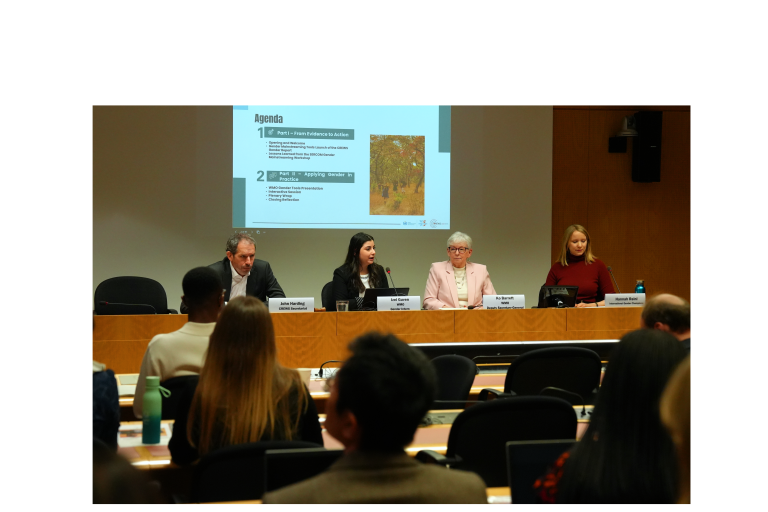
On 4 December, the WMO Secretariat hosted the event “Advancing Gender Mainstreaming at WMO: Lessons and Next Steps for 2026,” for the official launch of the CREWS Gender Mainstreaming Report and to highlight key insights from the recent Gender Mainstreaming Virtual Workshop organized by the WMO Services Commission (SERCOM).
The opening session featured welcome remarks by Ko Barrett, WMO Deputy Secretary-General; John Harding, Head of the CREWS Secretariat; and Hannah Reinl, Project Manager at the International Gender Champions Secretariat. WMO and CREWS partners were invited to this event for the important release of the CREWS Gender Report, with representatives from IFRC, UNDRR, ITU, the World Bank, and the UN Women East and Southern Africa Regional Office joining virtually.
The event reaffirmed WMO’s high-level commitment to gender equality by showcasing gender-mainstreaming tools developed with UN Women East and Southern Africa and presenting lessons from gender-responsive case studies collected through the SERCOM workshop. By consolidating institutional learning and strengthening organizational commitment, it underscored the importance of integrating gender considerations across WMO and CREWS projects.
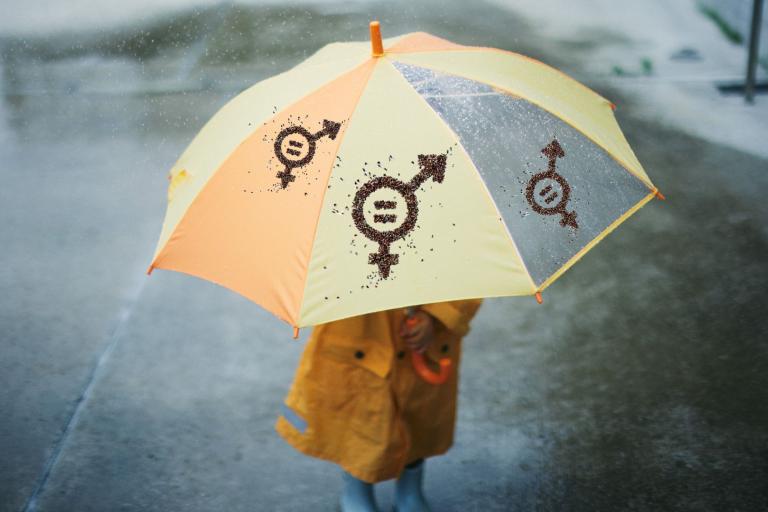
CREWS Gender Report
The findings show steady progress in gender-sensitive and gender-responsive activities across the portfolio, including inclusive training, adapted communication approaches and co-designed services. A smaller number of gender-transformative initiatives demonstrate how targeted support to women’s leadership can strengthen the reach and effectiveness of early warnings.
What the evidence shows
The report categorises activities across three levels of gender integration:
1. Gender-sensitive (GEM 1): building inclusion through participation
Examples include Haiti and Togo, where CREWS-supported trainings deliberately included women and young professionals in technical sessions. In Togo, inclusive attendance directly improved how hydrometeorological information is later communicated to rural communities. In Haiti, women’s participation in forecast interpretation training increased the diversity of actors able to understand and apply early warning information.
2. Gender-responsive (GEM 2): adapting services to address gendered barriers
Several cases demonstrate how CREWS projects have adjusted service design to meet differentiated needs.
- Chad: Co-designed agrometeorological bulletins and community-radio dissemination in local languages expanded access to women farmers, who often rely on spoken communication and shared listening spaces.
- Malawi: Gender-sensitive risk assessments in urban wards highlighted differences in how women, men and older people access and act on warnings, shaping more inclusive approaches to urban flood alerts.
3. Gender-transformative (GEM 3): shifting systems and leadership
Higher-level examples include:
- Pacific SIDS: CREWS activities supporting women’s leadership in hydrology and early warning governance.
- East Africa: CREWS–UN Women collaboration strengthening women’s roles in early warning planning and technical decision-making across six countries.
Institutional learning and next steps
A major contribution of the CREWS report is its structured approach to documenting gender mainstreaming. By mapping activities, applying GEM classifications consistently and presenting a typology that is aligned with United Nations standards, the report fills a long-standing need for a common institutional reference.
The recommendations and roadmap outline short-, medium- and long-term actions for WMO, including:
- Strengthening gender analysis at design stage
- Improving sex-disaggregated data collection
- Integrating gender considerations systematically across Hydromet service design
- Supporting NMHSs in developing gender actions and monitoring frameworks etc.
The roadmap directly supports the WMO Gender Action Plan, and is in line with CREWS Operational Procedure No. 3, providing a clearer direction for mainstreaming gender in future CREWS programming.
Context from the wider community
This launch follows the recent SERCOM Virtual Workshop on Gender Mainstreaming in Hydrometeorological Services, which gathered more than 450 participants and 30 case studies. The workshop underscored many of the same needs identified in the CREWS report, including the importance of systematic guidance, stronger alignment across institutions and improved capacity to apply gender tools in operational settings.
Together, the workshop and the CREWS report provide a coherent evidence base for WMO’s next steps. They reinforce that gender considerations are integral to the effectiveness of hydrometeorological and early warning services, and they offer practical entry points for Members and implementing partners to strengthen people-centred approaches across the early warning value chain.