

UNDRR launches global media training course to strengthen disaster reporting
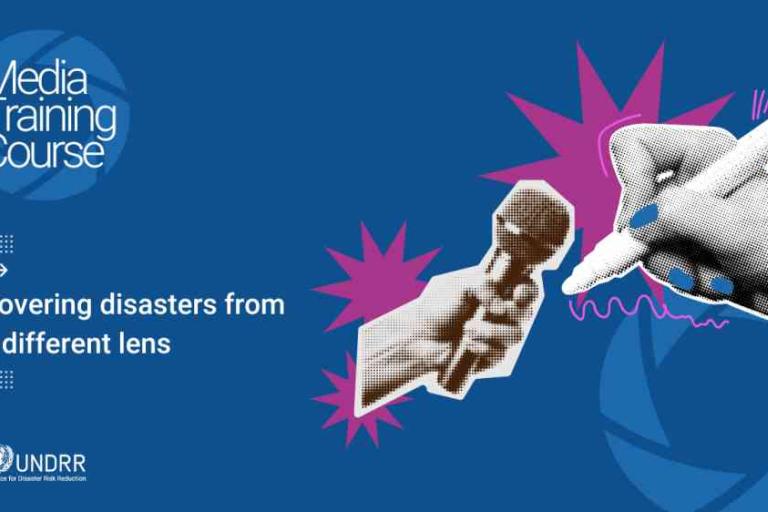
Colombo, Sri Lanka, 26 November 2025 -- As disasters become increasingly complex and climate impacts intensify worldwide, the UN Office for Disaster Risk Reduction (UNDRR) today launched a new online training course, Covering disasters from a different lens, at the 9th ABU Media Summit on Climate Action and Disaster Prevention. The course provides journalists and media professionals with a comprehensive foundation in disaster risk reduction and practical guidance for reporting in ways that increase risk understanding, empower communities, and build resilience.
The launch took place during the Summit's programme on strengthening media capacity. The Summit brings together broadcasters, media leaders, practitioners, and experts to explore how the media can advance climate action, support early warning, and strengthen public understanding of risk.
The launch also coincides with the introduction of UNESCO's Model Disaster Preparedness and Response Plan for Media Institutions, which provides broadcasters with practical guidance to strengthen newsroom readiness before and during emergencies.
Kamal Kishore, Special Representative of the UN Secretary-General for Disaster Risk Reduction and Head of UNDRR, highlighted the central role of the media in disaster risk reduction:
"The media plays an indispensable role in disaster risk reduction. It explains risks to communities, inspires action, and holds governments accountable for progress."
- Kamal Kishore, SRSG
A comprehensive training for media professionals globally
The free, self-paced online course introduces core concepts of disaster risk reduction, including hazards, exposure, vulnerability, and resilience. Drawing on real-world examples and current global trends, it explains what drives disaster risk, including rapid urbanization, inequality, environmental degradation, and climate change, and explores why certain groups are more affected when hazards strike.
Through ten interactive modules and an activity with the Stop Disasters game, the course builds the skills needed for coverage that goes beyond immediate impacts and put the spotlight on underlying risks, vulnerability, and opportunities for reducing future disaster losses. Learners explore how climate change is amplifying hazards, how early warnings can save lives, and how to look beyond headline losses to uncover invisible social and economic impacts. The training also supports journalists in reporting through multiple lenses, including economic, governance, social, climate, and community resilience, and emphasizes the importance of inclusive approaches that leave no one behind.
Each module includes reflection activities, and participants receive a certificate upon completion. The course is open to journalists and media professionals globally. It can also be used as an introductory component for face-to-face training. Organizations interested in incorporating the course into their own training programmes can preventionweb un [dot] org (contact us).
Supporting the media's role in early warning and disaster resilience
Journalists and media professionals are essential to disaster risk reduction. They help the public understand risk, make sense of warnings, and access information that supports timely, protective action. This work depends on clear communication, trusted relationships with audiences, and the ability to reach communities who are often the most at risk.
UNDRR's new course strengthens these capacities by equipping journalists with a foundational understanding of disaster risk drivers and practical approaches for explaining why disaster impacts occur, who is most affected, and what can reduce future losses. It encourages coverage that supports the goals of the Sendai Framework and Early Warnings for All, promoting resilience, inclusion, and informed decision-making across communities.
5 questions the media should ask after a disaster
From raising awareness to demanding accountability, journalism can help save lives before, during, and after disasters.
Access the training
Covering disasters from a different lens is now available for free to journalists and media professionals worldwide. Participants can register, progress through the modules at their own pace, and receive a certificate upon completion.
To access the course:
- Create an account on SparkBlue here
- Enroll in Covering disasters from a different lens