Six inspiring ways South Africa is reducing disaster risk
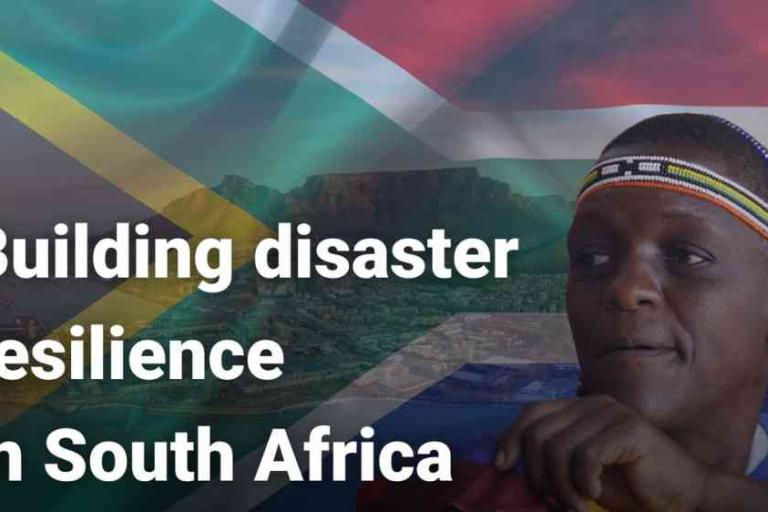
The G20 Working Group on Disaster Risk Reduction meeting in Cape Town, South Africa, concluded on 13 October – the International Day for Disaster Risk Reduction – with encouraging progress towards disaster resilience.
G20 Ministers adopted the Ministerial Declaration “Resilience of All” which reaffirms their shared resolve to reduce disaster risk and promote sustainable development through enhanced investment and international cooperation.
The Declaration sends a clear and powerful message: resilience must be at the centre of sustainable development, economic stability and shared prosperity. It calls for stronger national and global action to expand early warning systems, promote resilient infrastructure, and scale up nature-based solutions.
The G20 Ministers also endorsed the Voluntary High-Level Principles for Investing in Disaster Risk Reduction, a flexible framework to guide national financing strategies, and recognised the Recovery Readiness Assessment Framework as a valuable tool for proactive and inclusive recovery planning.
South Africa used the occasion to launch its Early Warnings for All (EW4All) Roadmap, advancing the global goal of universal early warning coverage by 2027. The roadmap highlights South Africa’s commitment to applying advanced technologies and data analytics for more proactive, effective responses to environmental risks.
As host and as the G20 Presidency, South Africa provides both leadership and practical examples of resilience in action. Across the country, scientists, citizens and communities continue to find inventive ways to manage heat, fire and floods — while making water systems more inclusive and reliable. From Cape Town’s water economy to youth-led flood mapping, here are six promising examples of innovation in reducing disaster risks.
Building confidence in Cape Town’s water future
The Western Cape Water Supply System sustains more than four million people across several municipalities. In recent years, Cape Town’s freshwater reserves reached dangerously low levels, resulting in severe restrictions. A recent hydro-economic study shows how integrating water management into urban planning can unlock value across sectors. The province’s augmentation plan includes investing in aquifers, increasing reuse and desalination, maintaining public trust, and ensuring water access for the poorest people – positive steps towards a secure and inclusive water future.
Discover the economic benefits of climate-resilient water systems for South African cities:
Smart scenarios for safer informal settlements
In South Africa’s informal settlements, overlapping risks of floods, fires and landslides are intensified by unsafe housing and systemic inequality. A ‘Youth Foresight Sprint’ team from Northwest University examined these challenges through future scenarios that challenge the notion of disasters as “natural”. Their work demonstrates that risk is socially constructed – and identifies pathways for safer housing, inclusive planning and community-led resilience.
Take inspiration from the Youth Foresight Sprint.
Forecasting fire danger with fuzzy logic
Berg wind events – characterized by hot, dry winds – are associated with elevated wildfire risks. In KwaZulu-Natal, researchers used fuzzy logic – a method for handling uncertainty – to analyse hourly weather data and detect when Berg winds are likely to raise wildfire risk. By quantifying rapid micro-climate shifts, this system can complement fire danger monitoring and improve near-real-time early-warning alerts.
Get blown away by the incendiary berg winds.
Turning residents into urban heat scientists
Citizen-scientists have been mapping heat hazards in Tshwane, Cape Town and Buffalo City. Armed with heat sensors, residents mounted devices on cars and drove pre-planned routes to capture temperature data street by street. The resulting maps are helping the cities craft equitable heat action plans. When people co-produce data, local governments gain the insight and legitimacy needed for targeted adaptation.
Meet the cool heat-mapping heroes.
Youth mapping flood risks – and saving lives
The Water from a Rock project, developed by the University of Pretoria’s YouthMappers, is identifying vulnerabilities and disaster preparedness needs. Following deadly floods in KwaZulu-Natal, students developed a geofencing app that alerts users entering high-risk zones. They also mapped emergency routes and waterways, and led awareness campaigns on flood preparedness. Youth-led mapping combines digital skills with civic action, making communities more aware and responsive.
Explore Water from a Rock and other youth-led projects.
Early warnings for shared water security
UNDRR’s 2023 RISK Award recognized a South African initiative to address water-related risks such as water insecurity, floods and drought, and health-related risks from water pollution. In the tri-national Inkomati Basin – bordering South Africa’s and Limpopo Provinces, Mozambique and eSwatini – the RISK Award winner, the Association for Water and Rural Development, is co-developing an early warning system with communities exposed to floods, drought and water pollution. Cross-border early warning bridges hydrology and health, showing how inclusive science builds trust across boundaries.
Dive into cross-border water risk reduction.
Together, these initiatives show how resilience can thrive where innovation meets participation – and where every individual contribution, every piece of data, and every drop of water can make a difference.
- WMO Member:
- South Africa