
WMO Air Quality and Climate Bulletin No. 6 - September 2026
This sixth edition of the WMO Air Quality and Climate Bulletin provides a brief overview of some notable aspects of air quality and climate change in 2025. Building on previous editions, the various articles provide further evidence of the strong linkages between air quality and climate, including the effects of air pollution on health.
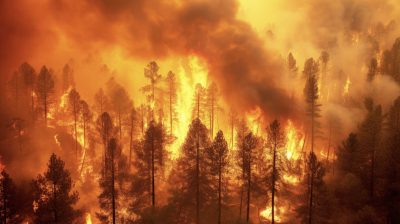
It shines a light on aerosol, not only in terms of its fundamental role in air quality, but also its significant impacts on climate. Namely, aerosol affects the radiative properties of the atmosphere and the formation, microphysical properties and life cycles of clouds. Likewise, aerosol has clear effects on health, as part of the toxic mix of chemicals emitted by wildfires.
The report highlights the need for improved atmospheric observations of air pollutants such as fine particulate matter, and ground-level ozone, as well as aerosol like black carbon and microplastics.
About the WMO Air Quality and Climate Bulletin series
Ongoing climate change, caused by the accumulation of greenhouse gases in the atmosphere, is happening on a timescale of decades to centuries and is driving environmental changes worldwide. In contrast, the air pollution that occurs near the Earth’s surface happens on a timescale of days to weeks, and across spatial scales that range from local (for example, urban centres) to regional (such as the eastern United States of America, northern India or the Amazon).
Despite these wide‑ranging differences, air quality and climate change are strongly interconnected. The WMO Air Quality and Climate Bulletin reports annually on the state of air quality and its connections to climate change, reflecting on the geographical distribution of and changes in the levels of traditional pollutants.