
SOFF in Action: What It Takes to Strengthen Global Weather Observations
A weather balloon launched in Bhutan, a solar-powered forecasting centre in Madagascar, or a new observing site being built in the Solomon Islands can improve forecasts far beyond national borders.
Weather prediction relies on a global exchange of observations. Yet across 77 Least Developed Countries (LDCs) and Small Island Developing States (SIDS), nearly 90% of the observations required by the Global Basic Observing Network (GBON) are still missing. GBON is the internationally agreed standard for weather observations shared globally.
When observations are absent, forecasts are less accurate. Closing these gaps is the mission of the Systematic Observations Financing Facility (SOFF), a United Nations fund jointly created by the World Meteorological Organization (WMO), the United Nations Environment Programme (UNEP) and the United Nations Development Programme (UNDP). Through long-term investments in observing systems, SOFF helps countries generate and exchange data that underpin weather forecasts, early warnings and climate services worldwide.
Building the foundations of forecasting
What does that look like in practice? Strengthening observations is about much more than installing equipment. Twenty-six countries are currently in the SOFF Investment Phase, during which they receive support to establish and upgrade their observing networks. Their efforts range from building new infrastructure and upgrading stations to improving data transmission, training personnel and addressing local challenges that stand in the way of reliable observations.
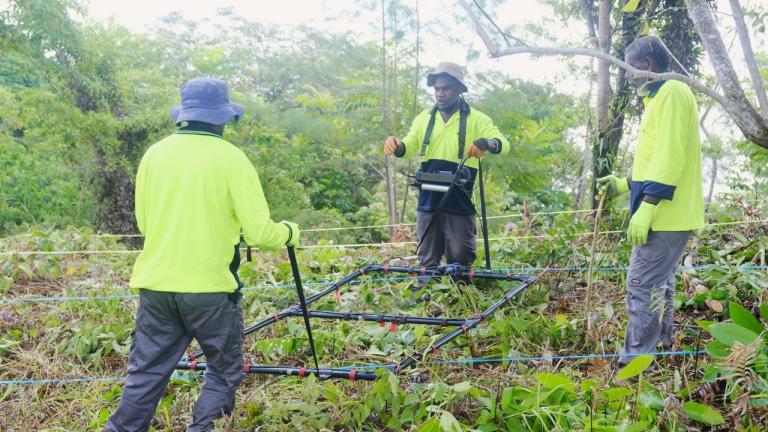
In the Solomon Islands, the first step is making land safe. In some locations, unexploded ordnance from World War II remains buried underground, creating a challenge for expanding the national observing network. Before new stations can be constructed, sites must first be cleared.
“We are working to prepare three sites across the provinces so our new upper-air stations are built on safe and secure ground”, says Alick Haruhiru, Director of the Solomon Islands Meteorological Service.
This example highlights how strengthening weather observations often begins with overcoming very local challenges before a single observation is collected.
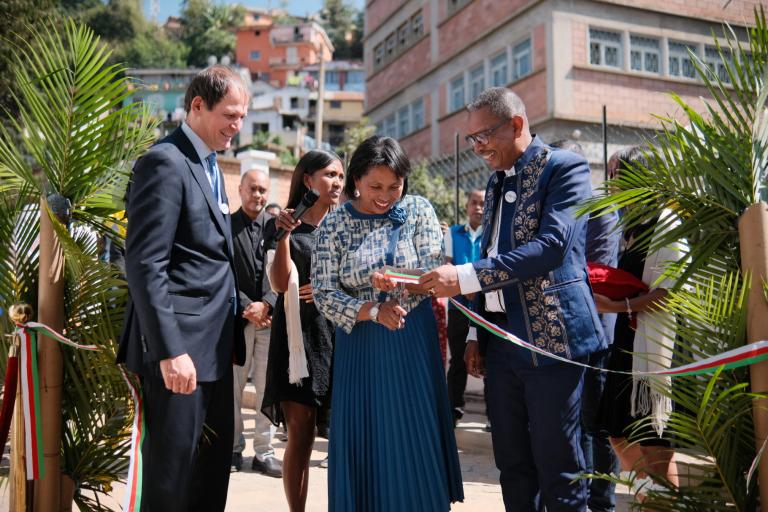
In Madagascar, the challenge was keeping data flowing during power outages. SOFF-supported solar-powered infrastructure now helps ensure uninterrupted essential services related to the management of meteorological data, including their collection, transmission, storage, and security.
“Before the establishment of this facility, we lacked electricity to access essential data and to carry out meteorological forecasts. Now, our hydrometeorological forecasting operational centre runs 24/7”, says Luc Randriamarolaza, Director General of the Directorate General of Meteorology of Madagascar.
Continuous operations mean more reliable forecasts and better services for users ranging from farmers and fishermen to disaster risk managers.
In Bhutan, SOFF is supporting the establishment of the country's first upper-air observation station. These observations, collected by weather balloons, provide upper-atmosphere data that global weather models rely on for accurate forecasts.
The station will strengthen national forecasting and aviation services while helping fill a major gap in global observations. Because weather systems do not stop at national borders, the data collected in Bhutan will also contribute to forecasts used around the world.

Local observations, global benefits
Although the investments differ from country to country, they all contribute to the same goal: strengthening a global observing system that depends on data from every region of the world.
“If observations are missing in Africa, the Pacific, or other under-observed regions, this is not only a local problem. It affects the quality of forecasts everywhere, including in Europe”, says Dr Florian Pappenberger, Director General of the European Centre for Medium-Range Weather Forecasts.
Closing critical observation gaps requires more than equipment. It depends on sustained financing, technical expertise, national ownership and long-term commitment to maintaining observing systems. Through SOFF, countries are building the foundations of a stronger global observing system that helps communities prepare for weather hazards.
- WMO Member:
- Madagascar ,
- Bhutan ,
- Solomon Islands