Young Voices Shape Early Warning Dialogue in Morocco
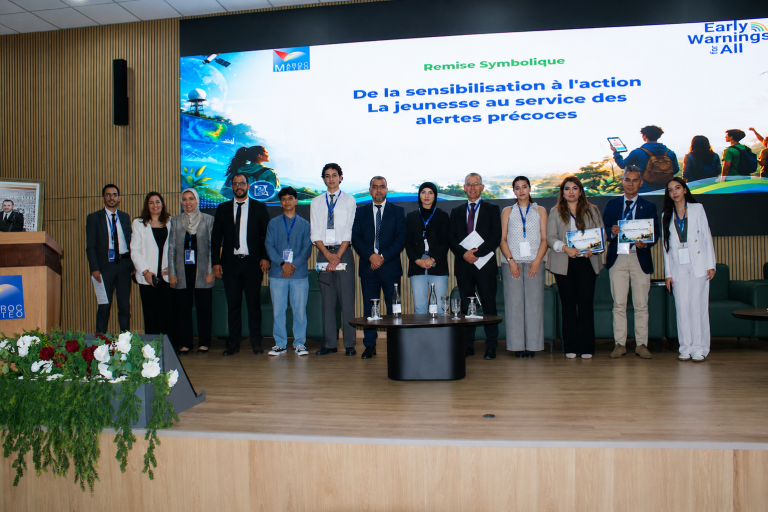
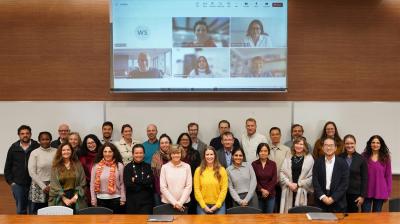
Organized by Morocco’s General Directorate of Meteorology (DGM), the Youth for Early Warnings side event brought young people together with representatives from DGM, the World Meteorological Organization (WMO) and the United Nations Office for Disaster Risk Reduction (UNDRR) to explore how to strengthen risk awareness, preparedness and early action. Through interactive activities, a Model United Nations (MUN) Challenge and intergenerational dialogue, participants tackled a central question: how can early warnings reach people in ways they understand, trust and act upon? "Early Warnings for All can only succeed through collective action. Empowering young people to understand risks, innovate and engage in decision-making is essential to building a safer and more resilient future for all,” said Mohammed Dkhissi, Director General of Meteorology and Permanent Representative of Morocco with WMO.
Learning through participation
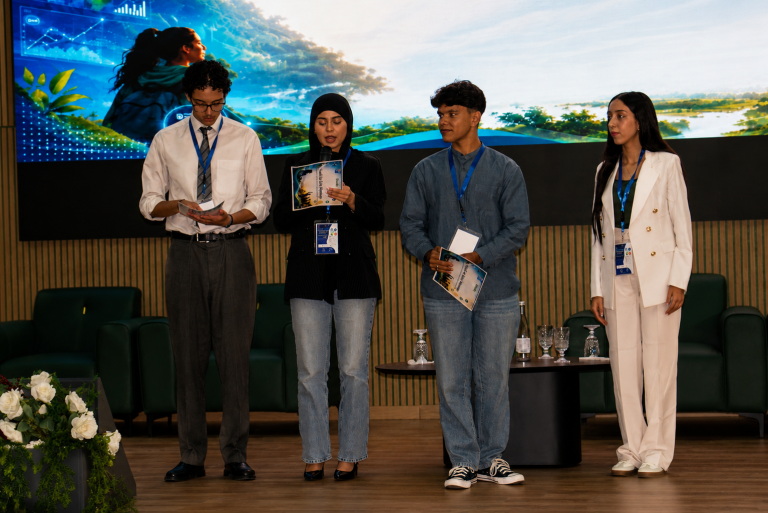
During the MUN Challenge, young participants debated policy options and developed recommendations to strengthen risk awareness, preparedness, communication, and early action.
A video from the Mohammed VI Foundation for Environmental Protection brought perspectives from young people across Africa into the discussion, highlighting shared climate risks and the importance of youth engagement in building resilience. The programme concluded with an intergenerational dialogue, during which participants presented their ideas directly to representatives from DGM, WMO, and UNDRR. Their proposals included using social media, short videos, WhatsApp, SMS, and voice notes, as well as communicating in languages understood by local communities, including Darija and Tamazight.
Their message was clear: a warning can only protect people if they receive it, understand it, trust it, and know how to act.
From ideas to action
The event culminated in the Moroccan Youth Message for Early Warnings, bringing participants’ proposals together in six recommendations.
Young people called for a stronger role in early warning decision-making, greater public awareness of disaster risks, and the integration of disaster risk reduction, climate resilience and early warning education into schools, universities and youth spaces.
They also proposed a Youth Innovation for Early Warnings programme connecting young people, startups, researchers and decision-makers, as well as a national network of young resilience ambassadors to support preparedness and connect early warning efforts with local communities.
Throughout the event, young people challenged the idea that they were merely recipients of warnings. Instead, they highlighted their role as communicators, innovators, volunteers, and community partners who can help strengthen early warning systems.
By including the youth dialogue within the national EW4All consultation, Morocco gave young people a direct role in shaping discussions on early warnings. The approach offers a practical example for countries implementing Early Warnings for All, demonstrating how meaningful youth engagement can help make early warning systems more accessible, trusted and actionable.
This article was written by Mohamed Snoussi, Phd - WMO Youth Focal Point Morocco
- Region:
- Region I: Africa