WHO – WMO Joint Climate and Health Programme
Our mission
Weather, climate, and environmental conditions shape people’s lives, wellbeing, and demand for health care. Timely, reliable information about weather and climate conditions helps health authorities anticipate risks, prepare communities, and protect the people most exposed to extreme weather and environmental threats.
The World Health Organization (WHO) - World Meteorological Organization (WMO) Climate and Health Joint Programme works to help national public health and meteorological services turn climate information into innovative solutions and decisions that protect people and save lives.
Who we are
WMO and WHO established the Joint Programme to help countries improve the generation and use of climate, weather, and environmental information in public health planning and action. Since 2014, the Joint Programme, with its office based at the WMO Secretariat in Geneva, has worked at the intersection of climate science and public health across sectors and borders to improve health and wellbeing for people facing increasing extreme weather and related risks.
The team delivers expertise across a broad range of disciplines, including meteorology, public health policy, data analysis, and science communications. In addition, the team works to advance the use of Climate-Health Intelligence: enabling - climate, weather and environmental information to become routinely useful in health decision-making.
Established under the Global Framework for Climate Services, the Joint Programme’s priorities are guided by the 2023–2033 Implementation Plan for Advancing Integrated Climate, Environment, and Health Science and Services.
What we do
The Joint Programme Office team supports countries and partners by strengthening collaboration, building technical capacity, and promoting the use of climate and environmental data to protect health and save lives. It also hosts the Technical Support Unit of the Global Heat Health Information Network (GHHIN), a global partnership of policymakers, scientists, and practitioners working to scale heat resilience in a warming world.
From managing the health risks of extreme heat and infectious diseases to connecting digital systems and developing technical guidance, the programme brings together expertise across sectors to help countries and partners better understand, prevent, and prepare for climate-related health risks.
The Joint Programme
- Provides policy and technical support to WMO Members to strengthen climate services for health
- Designs and coordinates climate and health initiatives, including country pilots, technical assistance and capacity development
- Builds scientific and operational partnerships across climate, environment and health communities
- Develops and promotes guidance, standards and tools for managing climate-related health risks
- Maintains ClimaHealth.info and HeatHealth.info, global knowledge platforms for climate and health
This work is guided by four key priorities:
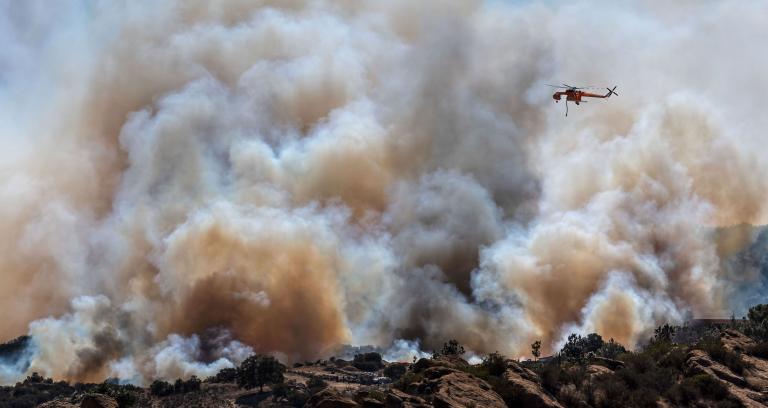
- Urban climate and health with a focus on extreme heat, wildfires, air pollution and other urban hazards.
- Work on climate-sensitive infectious diseases, helping countries anticipate and respond to changing patterns of transmission.
- Climate and nutrition, examining how climate variability and change affect food systems, nutrition and health.
- Resilient health systems focusing on maintaining continuity of care during climate shocks while reducing health-sector emissions.
Across these priorities, the Joint Programme helps ensure that climate information is relevant and usable. It enables meteorological institutions and health partners to identify needs, combine climate and health data, develop fit-for-purpose forecasts and warnings, communicate risk and evaluate results.
Scaling climate services for health - the Accelerator Initiative
Transforming climate science into meaningful health protection requires sustained collaboration and capacity building across sectors, and services that are robust and long-lasting.
In 2025, the Rockefeller Foundation and Wellcome committed a combined USD 11.5 million through coordinated grants to WMO, working closely with WHO, to scale up the co-production and use of climate services for health through the WHO–WMO Climate and Health Science and Services Accelerator.
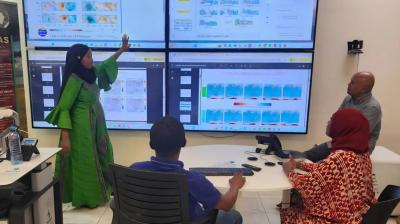
The Accelerator is a global initiative to improve health outcomes by mobilizing a network of resources and actors to scale up climate science and services that inform health decision-making. Through dedicated regional and national climate-health desks, supporting health authorities and meteorological agencies to co-create solutions together, the Accelerator works to ensure that climate services for health become permanent and integrated features of how health authorities and meteorological services work together.
The Accelerator funds country-level pilots, expands access to training and technical assistance, and connects meteorological services and health authorities with expertise to develop and apply climate-informed health products. This includes strengthening early warning systems for heat and vector-borne diseases, as well as enhancing regional coordination and knowledge exchange.
Leading action on extreme heat: the Global Heat Health Information Network
The Global Heat Health Information Network (GHHIN), co-sponsored by WHO and WMO and spearheaded by the Joint Programme, is a voluntary, member-driven community of policymakers, scientists and practitioners working to reduce the avoidable health impacts of extreme heat.
The Joint Programme hosts GHHIN's Technical Support Unit, which supports network coordination, technical exchange and the development of evidence and guidance.
From groundbreaking research initiatives to the development of practical tools for heat health planning and intervention strategies, the Network and its Regional Hubs have become a leading collaborative forum of renowned experts, dedicated to reducing the health and societal risks posed by rising heat.
The Network’s activities are centered around three goals:
- Connecting people and institutions to form multi-disciplinary partnerships to reduce heat risks
- Generating knowledge, evidence-based guidance and standardized metrics, influencing learning
- Catalyzing action at policy level to reduce the impacts of heat
GHHIN also complements the Early Warnings for All (EW4All) initiative, and supports and endorses the United Nations Secretary-General's Call to Action on Extreme Heat.
Links
Related news




Related events


Nairobi, Kenya
Yaounde, Cameroon
Related topics
Partners