
Water Energy Food Ecosystems Nexus
Why WEFE Nexus
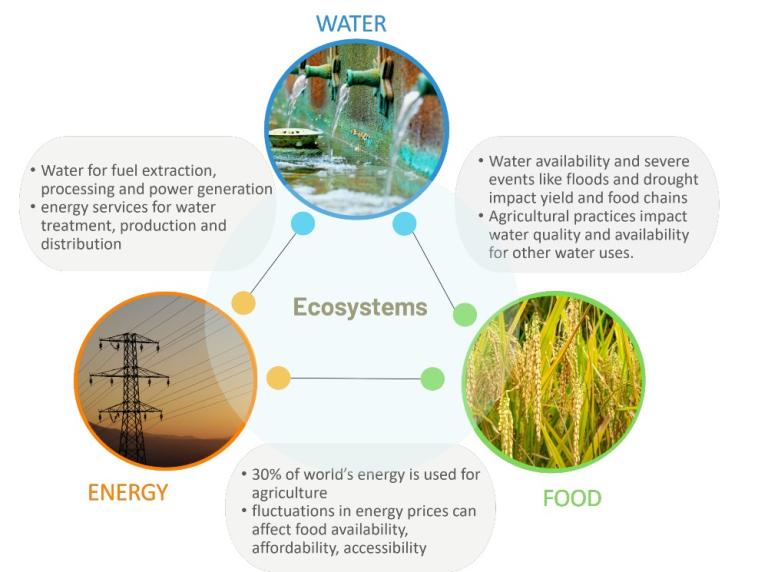
Demographic, economic, social, and climatic changes, are all exerting increasing pressure on natural resources, including through a seemingly ever-growing global demand of energy, food, and water that threatens the well-being of the ecosystems we rely upon. With current projections, the world will face a 40% shortfall between forecast demand and available supply of water by 2030[1]. A population of 10 billion people by 2050 will require a 50% increase in agricultural production, (which consumes 70% of the resource today), and a 15% increase in water withdrawals[2]. With such increasing pressures, cross-sectoral collaborations and integrated solutions are critical for the sustained management of water resources and to balance competing water resource needs for food and energy production, and the environment.
Past Events:
WEFE Nexus session dialogue
Congress (Cg-19), Hydrological Assembly, 27th May 2023
Session Objective:
To explore the interlinkages between water, energy, food and eco-systems, and identify integrated practices and solutions for water resources management to balance the needs of people, environment and the economy.
Outcomes:
- Insights into the complex interdependencies of the water-energy-food-ecosystems nexus
- Underscored the urgency of adopting an integrated approach for sustainable water resources management
- Emphasized collaboration among different sectors and stakeholders
- Demonstrated case studies on WEFE nexus challenges and recommendations for water resources management
Case studies:


Session report: 20230527 HA_Session Report_Water-Energy-Food-Ecosystems Nexus .pdf