

WMO ABO Newsletter - Volume 28
This issue includes information about status of ABO Programmes, activities of ET-ABO and new resources available for the community during the first semester of 2026.
A pdf version is available here
- Author(s):
- ABO-related experts, ET-ABO and WMO Secretariat

WMO Aircraft-Based Observations Newsletter
Volume 28, June 2026
Contents
- Welcoming Remarks
- Status of Aircraft-Based Observations Programme
- Regional Programme status and developments
- Progress on WMO UAS DC
- Status of Derived and Third-party Data (SG-DTD)
- Aircraft-based Turbulence Observations Status within AMDAR (SG-TURB)
- ABO Water Vapor Measurement Status (SG-WVM)
- Status of ABO Metadata and Monitoring (TT-WTABO)
- Thirty Years of IAGOS in Operation – a Research Infrastructure for Global-Scale Atmosphere Monitoring by Passenger Aircraft
- Estimating the Impact of Assimilating Uncrewed Aircraft System Observations into Regional NWP
- Overview of FLYHT/FTG Aircraft Based Observations Status and Expansion
- MADIS AMDAR Page Updates
- Closing remarks
Welcoming remarks
A New Chapter for the WMO ABO Newsletter Editors
On behalf of the ET-ABO chair and the WMO Secretariat, I welcome you to this edition of the WMO Aircraft-Based Observations (ABO) Newsletter.
As we continue to strengthen the global observing system through collaboration and innovation, this issue also marks an important transition for our newsletter team. On behalf of the ABO community, I would like to express our sincere gratitude to Carl Weiss, who recently retired as Editor of the ABO Newsletter. Over many years, Carl's dedication, professionalism, and commitment have helped make this publication a valuable source of information and a platform for sharing developments across the aircraft-based observations community, especially in his contribution as Vice-chair of the former WMO AMDAR Panel 15 years ago. We thank him for his outstanding service and wish him all the best in his retirement.
At the same time, I am pleased to welcome richmamrosh gmail [dot] com (Richard Mamrosh) as the new Editor of the ABO Newsletter. Richard brings extensive experience and expertise gained from 30 years of working with aircraft-based observations at NWS-NOAA (USA), and we look forward to working with him as he guides the newsletter into its next chapter.
I would also like to acknowledge and thank Humphrey Angulu, who stepped down from his role as Co-Vice-Chair of the Expert Team on Aircraft-Based Observations and started his retirement last December. Humphrey has made significant contributions to the work of the Expert Team and to the advancement of aircraft-based observations, especially in Africa. His leadership, dedication, and collegial spirit have been greatly appreciated, and we thank him for his valuable service.
The aircraft-based observations community continues to play a critical role in supporting weather prediction, climate monitoring, and aviation meteorology. This edition highlights recent developments, achievements, and ongoing activities across our programmes and partnerships. I hope you find the articles informative and engaging.
Thank you to all contributors and readers for your continued support of the ABO programme and this newsletter.
Enjoy the issue!
cemmelexch [dot] dwd [dot] de (Carmen Emmel), Deutscher Wetterdienst (DWD), ABO Coordinator / SG-WVM Lead and ET-ABO Vice-chair
Status of WMO Aircraft-Based Observations Programme
Currently, the WMO ABO observing system is being supported by 12 operational ABO national and regional programmes in cooperation with some 43 national and international participating airlines - as listed on the WMO website.
Figure 1 below shows the smoothed monthly average of daily aircraft-based observations which are single point measurements in space and time composed mainly of air temperature and wind speed and direction since 2007.
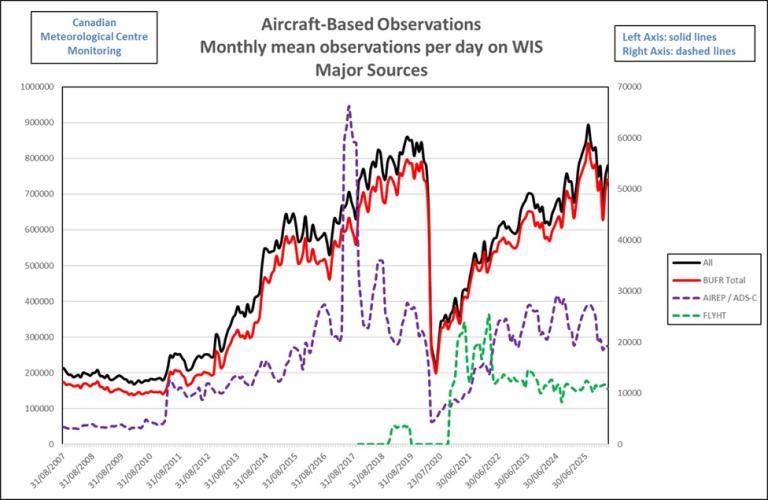
Figure 1: Evolution of major sources of ABO from August 2007 to March 2026. Source: CMC - ECCC.
The data categories shown are:
- all aircraft and all systems (black),
- from the AMDAR programme with reports submitted in binary format (BUFR, red),
- from ICAO data sources (AIREP and ADS, purple dashed), and
- from the FLYHT/AFIRS system (green dashed).
ABO Data Volumes and Coverage
As illustrated in Figure 1, aircraft-based observations reached an all-time high in late 2019 and early 2020, with over 850,000 daily reports recorded on the WIS. The majority of these, approximately 750,000 per day, were AMDAR observations. However, with the onset of the COVID-19 pandemic in March 2020, the resulting disruption to the aviation industry caused a sharp decline in data availability. Overall daily volumes plummeted to around 245,000 observations, while AMDAR reports fell to 230,000—just 30% of their December 2019 peak.
Since then, data volumes have steadily recovered, surpassing 895,000 daily observations for the first time and exceeding pre-pandemic levels in July 2025 -reaching a new all-time high. Nonetheless, a notable drop occurred during January and February 2026, driven by seasonal reductions and the emergence of conflict in the Mid-east region as main challenges for aviation industry.
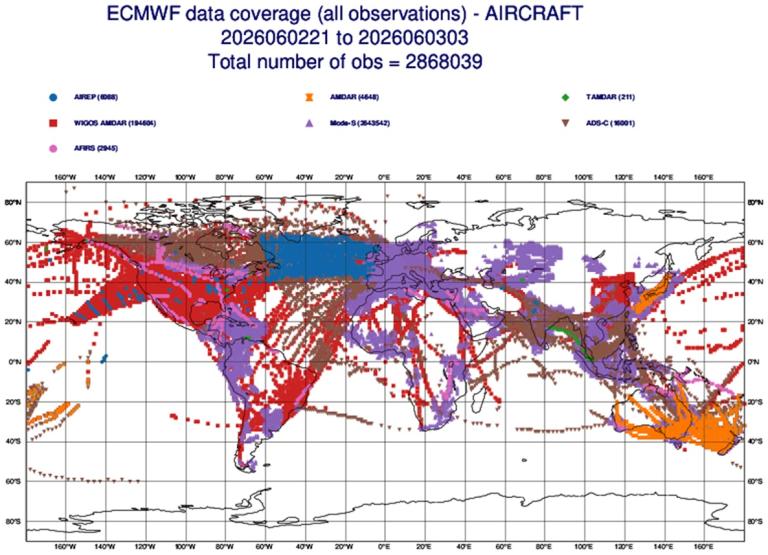
Figure 2. Coverage ABO for 6hr on 03 June 2026. Source: ECMWF
Figure 2, provided by ECMWF, illustrates the coverage of the entire WMO ABO programme system over a six-hour period on 03 June 2025. The data incorporate AFIRS, Mode-S, TAMDAR, ADS-C, AIREP, AMDAR (FM42 – former alphanumeric encoding) and WIGOS AMDAR (FM94 BUFR – binary format). A significant expansion in coverage is evident, particularly over data-sparse regions, including RA-I and III. This increase is attributable to Mode-S data provided by a European Meteorological Aircraft Derived Data Center/Met Office programme (depicted in purple) as well as to aircraft data collected by DECEA (and distributed by INMET- Brazil) and the expansion of Kenya Airways Programme in Central Africa.
nrivabenwmo [dot] int (Nicolás Rivaben), WMO Scientific Officer
WMO Region I Status - Africa
Aircraft-based observations (ABO) provide critical upper-air meteorological data such as temperature, wind, and pressure from commercial aircraft. This is accomplished primarily through automated systems installed in these aircraft that collect and transmit data in real-time. Region I covers Africa. Today, this region remains one of the areas in the world which has sparse data coverage. Before the WMO AMDAR program, Meteorological Agencies/departments in Africa relied heavily on radiosondes which have high operational costs, and many countries barely manage to launch one or two radiosondes daily. This leaves a huge gap in the availability of upper air observations in this region. The WMO AMDAR program is critical in helping improve the availability of upper air observations across Africa.
Several African meteorological agencies/departments have partnered with WMO local airlines through the WMO AMDAR program, to ensure availability of upper air observations. As of April 2026, six Kenya Airways aircrafts actively are observing and sending data and one additional aircraft is expected to join the fleet before July 2026. The process of initialization and installation of observation and transmission equipment experienced challenges with some software delaying the process, but now the process has improved, and the fleet is sending numerous data profiles monthly.
South Africa enjoys extensive coverage provided by several E-AMDAR fleets which deliver a large volume of observations monthly. These are complemented by data from eleven active radiosonde stations operated by the South African Weather Service (SAWS). Together, both systems furnish SAWS with robust upper-air profiles for operational use.
In Morocco, efforts are underway to revive the AMDAR project through collaboration between Maroc Météo, Royal Air Maroc (RAM) and EUMETNET. The Ethiopian Meteorological Institute (EMI), in collaboration with Ethiopian Airlines and guided by the WMO Regional Office in Addis Ababa, is exploring actively implementation pathways. EMI also is considering the establishment of a data processing system to support the program once operational.
In conclusion, there is remarkable progress in observation, transmission, and use of ABO data in Africa. Assimilation of this data into the local weather forecasting models for the different African countries will go a long way to improve the quality of predictions from these models. There is still great potential for expanding the ABO program to many other countries that currently do not participate. More ABO data will improve significantly forecast accuracy and strengthen the region’s early warning capabilities. Ongoing consultations with the WMO Regional Office aim to establish a new framework for collaboration. The long-term vision is to transform Region I from a data-sparse to a data-rich region ensuring that its meteorological agencies/departments are equipped to deliver accurate and timely forecasts to save lives, and properties and to improve the local economies.
mirriamsykgmail [dot] com (Mirriam Mwende) , Kenya Meteorological Department / ABO RA I Lead
WMO Region III Status – South America
The Region continues to advance its work in three key areas, aligned with the WMO strategic objective of enhancing data acquisition through WIGOS. In this context, the ABO Task Team (TT-ABO) of Regional Association III is focusing on the following priorities:
Reactivation of the Regional AMDAR Programme
Regional efforts continue to focus on reactivating the participation of LATAM Airlines in the AMDAR Programme, which was suspended in 2021. Activities are currently centered on coordinating and supporting stakeholders (NOAA) throughout the reactivation process, while also maintaining close follow up on developments. In 2025, RA III received support from the WMO Secretariat and relevant partners through meetings held with the stakeholders to help advance this process.
Integration of data from other aviation-managed non-ACARS-based systems
Current work includes the use of Mode S EHS radar data, an initiative promoted by RA VI through the Met Office. Within RA III, the states of Argentina, Chile, Peru and Uruguay have expressed interest in joining this system, and two of these countries have already initiated the legal arrangements required to access the data, with the collaboration of the European Meteorological Aircraft Derived Data Centre (EMADDC).
In addition, Brazil continues to make progress in the acquisition and use of data from the ADS-C system, which is emerging as an increasingly important source of upper-air meteorological observations. Figures 3, 4 and 5 show significant growth over time in the volume of these data, collected from oceanic areas within the FIR Atlantic Ocean (FIR AO) and increasingly from Brazilian continental areas.
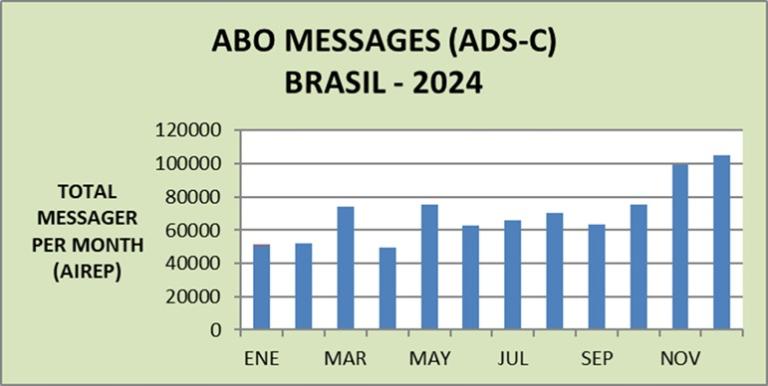
Figure 3: ADS-C messages collected by the Brazil ABO Programme during 2024. Source: DECEA/CISCEA.
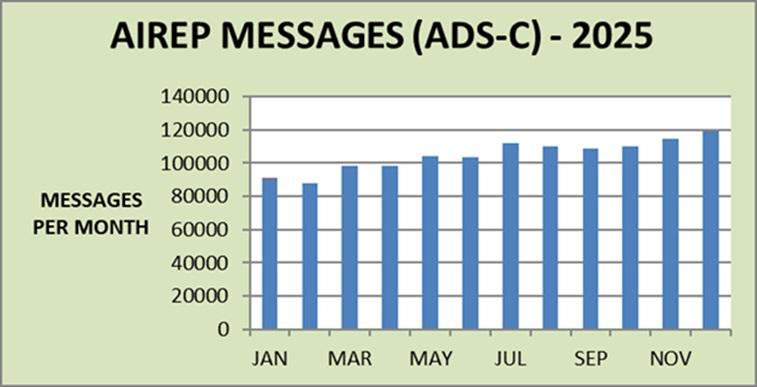
Figure 4: ADS-C messages collected by the Brazil ABO Programme during 2025. Source: DECEA/CISCEA.
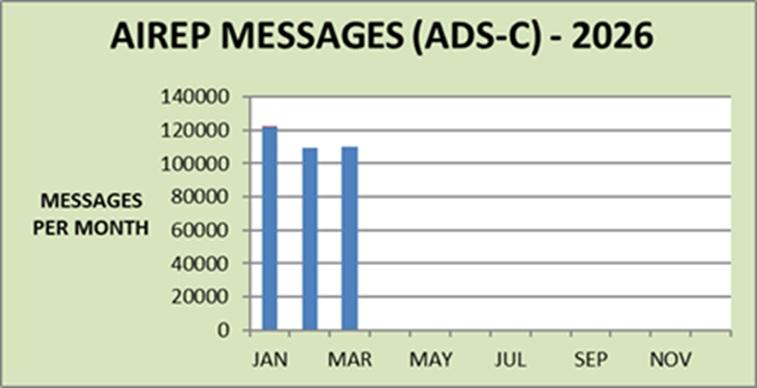
Figure 5: ADS-C messages collected by the Brazil ABO Programme during 2026. Source: DECEA/CISCEA.
In parallel, ICAO regional projects are promoting the implementation of ADS-B systems across the SAM Region. In this context, WMO is encouraged to advocate with ICAO for the regional implementation of ADS-B Version 3 (DO-260C), which includes the capability to receive meteorological messages and reports.
Advancing new ABO capabilities and emerging technologies, with a focus on UAS
Regional activities are also advancing initiatives to develop and implement new ABO capabilities and emerging technologies, with a particular emphasis on Uncrewed Aircraft Systems (UAS).
In Peru, both the National Meteorological Service (SENAMHI) and a private institution, Southern Peru, have acquired drones for meteorological purposes and are currently seeking operational permits from the Civil Aviation Authority. This has contributed to the launch of a broader regulatory, technical and strategic process around the use of RPAS/UAS, recognizing this technology as one of the fastest-growing trends in global aviation and a source of significant opportunities across multiple sectors.
Brazil has also reported progress in this area through the organization of a workshop on UAS, aimed at addressing the technical, operational and regulatory aspects required to incorporate this technology into the national upper-air meteorological observing system.
By fostering coordination among Members and stakeholders, the Region reaffirms its commitment to the implementation of aircraft-based meteorological observations in support of WIGOS implementation.
hrosadomtc [dot] gob [dot] pe (Hugo Rosado Soto) - Regional Focal Point WMO RA III / ABO RA III Lead
WMO Region IV Status- North and Central America Update
The RA-IV ABO program consists of: the USA with USA-based AMDAR-enabled airlines and FLYHT TAMDAR and AFIRS-AMDAR, Mexico with AeroMexico, and Canada with Canadian data sources from FLYHT. Additionally, the USA AMDAR program provides ADS-C en-route wind and temperature reports roughly every 14 minutes on transoceanic and long-haul routes around the globe.
As of May 2026, the USA continues to support the WMO Secretariat and RA-I members by potentially obtaining and providing AMDAR data from Kenya Airways. The WMO Secretariat has funded additional avionics capabilities for the Kenya Airways fleet.
The USA ABO and National Mesonet Programs have funds to continue to provide TAMDAR and AFIRS-AMDAR from FLYHT until further notice. Please see the water vapor report in this newsletter edition for an update on FLYHT TAMDAR. Additionally, the USA is working with FLHYT to fund the installation of thirty WVSS-II sensors on WestJet and other aircraft
The USA is now obtaining AFIRS-AMDAR (wind and temperature data) from 45 WestJet aircraft, via FLYHT. See route map (figure 6) and sounding count (figure 7) from a recent sample period in March 2026, after this provision began. The USA will continue to evaluate these data and take steps to provide it via the GTS in the near future.
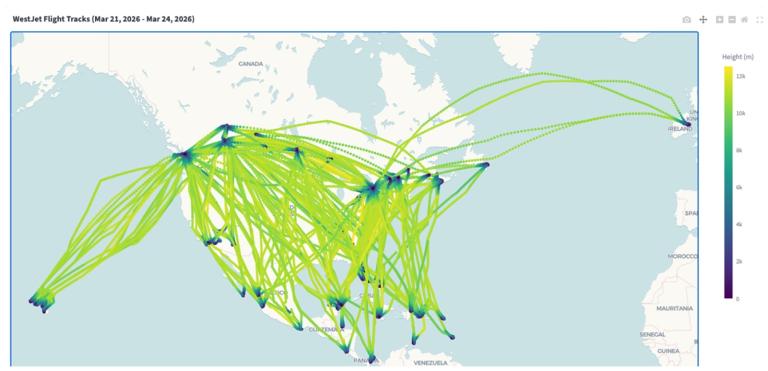
Figure 6. WestJet flight tracks for three-day period in March 2026
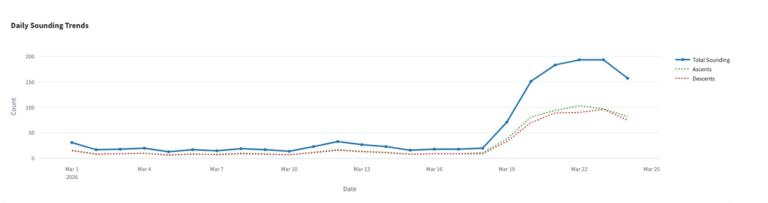
Figure 7. Number of daily soundings for March 1- 24, 2026
The USA continues its partnership with the Massachusetts Institute of Technology Lincoln Labs to prototype the Portable Aircraft-Derived Weather Observation System (PADWOS) for obtaining Mode-S wind and temperature observations at select locations in the USA.
Canada is working actively to expand its ABO capability through partnerships with data providers and airlines. Unfortunately, this complex task is taking more time than expected. As a mitigation for the recent decrease in aircraft participating in the ABO-Canada program as well as for sustaining the program itself, Environment and Climate Change Canada (ECCC) continue to develop a continuity plan targeting the capacity of Jazz’s CRJ-900 fleet in order to maintain the supply of ABO data across Canada. Discussions between ECCC, Jazz and Collins Aerospace have been underway since the summer of 2024. The expansion objective remains to prioritize the northern latitudes which are recognized as areas with poor ABO and upper-air data coverage. ECCC is exploring other sources of ABO data for its NWP ecosystem, including new data from FLYHT through its partnership with Air North.
curtis [dot] marshallnoaa [dot] gov (Curtis Marshall), ET-ABO Chairman, USA ABO Program Lead
frederic [dot] lenormandec [dot] gc [dot] ca (Frédéric Lenormand), Canadian ABO Program Manager / ABO RA-VI Lead
WMO Region V Update – South-West Pacific
Region V led/coordinated activity is currently paused while the relevant Expert Teams are re-constituted/constructed as part of their four yearly cycles.
douglas [dot] bodybom [dot] gov [dot] au (Douglas Body), Bureau of Meteorology, ET-ABO RA-V Focal Point / ABO RA V Lead
WMO Region VI Status - Europe
The EUMETNET ABO (E-ABO) programme is managed by the UK Met Office in partnership with KNMI and DWD. They focus on the EUCOS domain (figure 8) which covers most of WMO region VI, the north of region I and the southeast of region IV over the Atlantic. KNMI, through their European Meteorological Derived Data Centre (EMADDC) are responsible for the operation and development of derived ABO from Mode S EHS data over Europe and process global Mode S EHS data on behalf of the UK Met Office (see the derived and third party data section report of this newsletter).
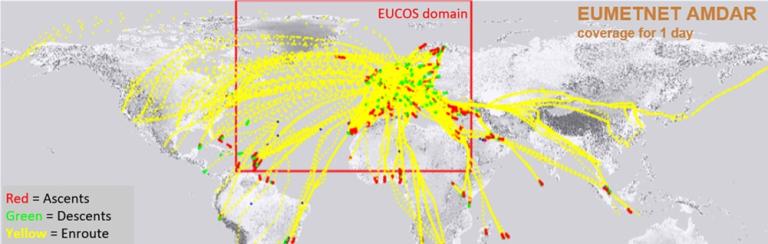
Figure 8. E-ABO AMDAR coverage for one day
The E-ABO programme priority is to maintain and improve coverage and data quality, particularly over data sparse areas, within the EUCOS domain. The AMDAR network has experienced a continued rise in data availability, driven by the recent increase in flight schedules. New reporting aircraft have been added to the Turkish Airlines AMDAR fleet, bringing improved coverage to Africa, the Mediterranean and eastern Europe (figure 9). Figure 10 shows the total monthly data for ABO in the EUCOS domain over the past 12 months.

Figure 9: Turkish Airlines AMDAR coverage for one week in December 2025 (left) and one week in March 2026 (right)
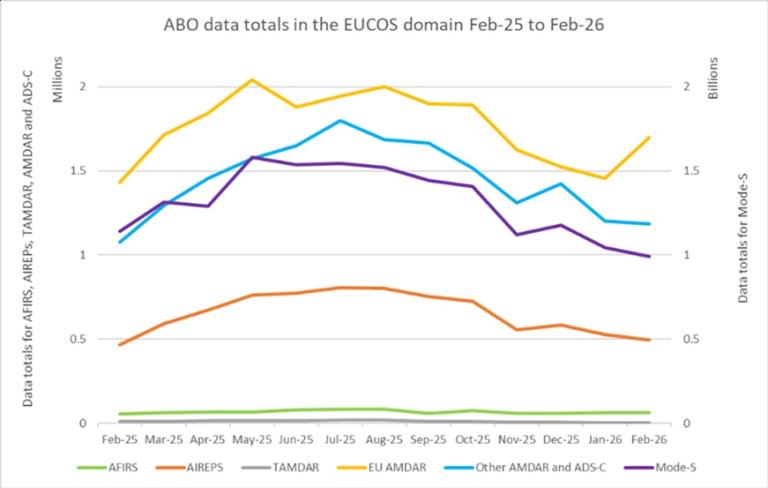
Figure 10. Monthly ABO totals in the EUCOS domain. Please note the different scales between ‘conventional’ systems and SSR Mode S datasets.
It is expected that ABO coverage over Scandinavia will be improved once Scandinavian Airlines have implemented AMDAR on their new fleet, which will provide enhanced data quality through higher-resolution locations and timestamps.
Also, it is important to note that there has been a reduction in EUMETNET AMDAR data over the Middle East due to commercial airlines avoiding parts of the air space (figure 11).
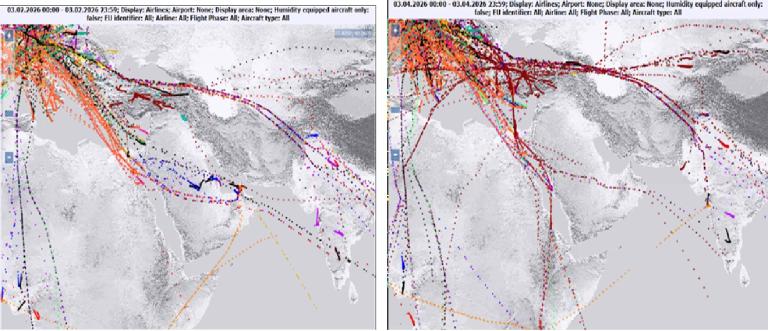
Figure 11. EUMETNET AMDAR coverage for 3rd February 2026 (left) and 3rd April 2026 (right).
A EUMETNET R&D project has started and is due to finish in the autumn of 2026, focusing on the impact of reducing AMDAR data over Europe, where there is already good coverage from Mode S EHS derived wind and temperature observations. This project will assess the impact on four global models operating in Europe and their nested regional models. This will help inform our decisions on the distribution of AMDAR data over the EUCOS domain.
The EUMETNET ABO expert team met online in March 2026 where the team discussed developments in AMDAR and Mode S EHS derived data and our plans for the rest of the year.
The E-ABO programme will continue to support the RTCA/EUROCAE joint working group on ‘Aeronautical Information and Meteorological Data Link Services’ and co-lead the sub-group writing an internal report on recommendations for standards development for ABO. The report will be submitted for approval in June 2026. The E-ABO programme manager has joined a working group of the ICAO Met Panel that is reviewing the requirements for ABO specified in Annex 3 to the Convention on International Civil Aviation (Meteorological Service for International Air Navigation).
The E-ABO technical co-ordinator will be taking over the chair of the ad-hoc task team on WIGOS tools for ABO (WMO TT-WTABO) which will review how ABO can be incorporated into the WIGOS Data Quality Monitoring System (WDQMS), describe how ABO metadata should be managed, develop incident reporting mechanisms and update relevant guidance documents.
martyn [dot] suntermetoffice [dot] gov [dot] uk (Martyn Sunter,) E-ABO programme manager, Met Office / ABO RA-VI Lead
david [dot] snookmetoffice [dot] gov [dot] uk (David Snook), E-ABO technical co-ordinator, Met Office
Progress on WMO UAS DC: Participants Meeting #10 and Preliminary Final Report
WMO Secretariat is pleased to announce the release of the Preliminary Final Report for the 2024 Uncrewed Aircraft Systems Demonstration Campaign. This report is now available for review by WMO Members and stakeholders ahead of its formal publication on July 2026. The campaign, which ran from March to October 2024, involved 44 operators from 13 countries conducting over 13,000 flights (figure 12). It successfully demonstrated that weather‑sensing UAS (wx‑UAS) can fill critical observational gaps in the planetary boundary layer, meeting WMO accuracy requirements for temperature, humidity, and wind.
On 26 May 2026, UAS DC campaign participants gathered online for the virtual 10th coordination with Operators and Data Users. Key discussions focused on the preliminary report’s findings, next steps, and regulatory advocacy. Main conclusions from this report include: accuracy – wx‑UAS observations meet WMO OSCAR requirements, confirmed by independent comparisons with radiosondes and lidar; reliability – very low outlier rates against NWP backgrounds, with technical issues affecting less than 2% of flights; forecast impact – observing system simulation experiments show regional forecast improvements from UAS data; and novel capabilities – first near‑operational use of drone swarms and balloon‑launched gliders. Challenges remain, notably lengthy airspace approvals for beyond visual line of sight (BVLOS) operations and altitudes above 120 metres, weather limitations such as strong winds and icing, and the need for standardized calibration procedures.
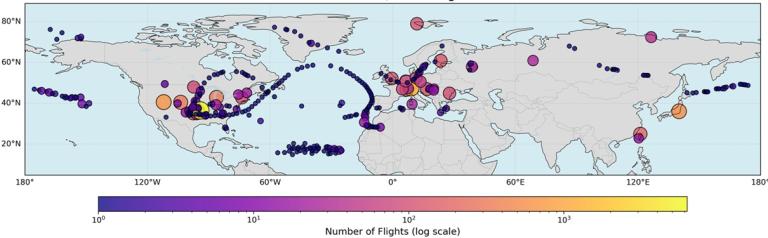
Figure 12. Coverage of WMO UAS DC March-September 2024.
A significant portion of the meeting was dedicated to ongoing efforts to update key WMO guidance documents. Specifically, two core documents are proposed to be updated during the 4th Commission for Observation, Infrastructure and Information Systems Meeting (INFCOM - IV) in November 2026: WMO Integrated Global Observing System (WIGOS), and Guide to Aircraft‑Based Observations, WMO‑No. 1200. The goal is to align WMO regulatory frameworks with the operational readiness of wx‑UAS, thereby supporting the WIGOS 2050 vision – particularly for observing the planetary boundary layer, and reduce the upper-air data gaps.
Regarding campaign documentation, two reports are being produced:
- The Preliminary Final Report (available now for review until 15 June 2026) is concise and targets WMO Members and high‑level management.
-A Comprehensive Final Report, aimed at technical managers at national meteorological and hydrological services and other stakeholders, will follow by early September 2026.
Finally, discussions at the meeting also covered recommendations raised by operators, including advocacy with aviation authorities and a proposed two-stage airspace approach to streamline approvals. This would involve flying up to flight level 100 (approximately 3 km) for routine boundary layer observations and up to flight level 400 (approximately 12 km) for advanced operators. For more information or to access the preliminary report, please contact the WMO Secretariat.
nrivabenwmo [dot] int (Nicolás Rivaben), WMO Scientific Officer
Status of Derived and Third-party Data – WMO ET-ABO SG-DTD
Aircraft Derived Data
KNMI, through their European Meteorological Aircraft Derived Data Centre (EMADDC) are responsible for the operation and development of derived wind and temperature observations from Mode S EHS data over Europe. The map below (figure 13) provides an example of the derived data coverage for the European area from EMADDC for a single day. This interactive map is available in the EMADDC web site along with statistics on the number and quality of the observations collected.
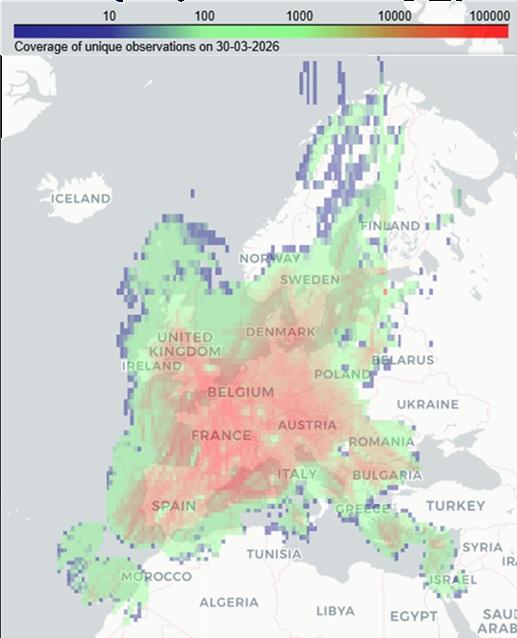
Figure 13. Number of derived data observations in 0.5x0.5° grid box from Mode S EHS for one day (EMADDC European coverage)
The Mode S EHS network has been expanded with the addition of data in January 2026 from the Czech Air Navigation Institute (CANI), figure 14. The system creates more than 2 million derived wind observations and more than 1 million derived air temperature observations per day. Data from NAV Portugal was added in March 2026 and this has improved coverage over the Portuguese mainland, Madeira and the east Atlantic (Figure 15). This has generated a similar increase in derived observations as the CANI data. At the same time, EMADDC is progressively expanding its coverage by enabling receivers through ADS-B Support, including in Switzerland and beyond Europe, to provide global data to additional stakeholders beyond NMHSs.
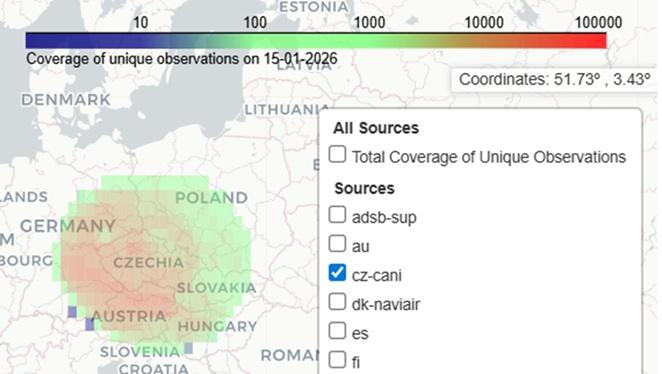
Figure 14. Number of derived data observations in 0.5x0.5° grid box from Mode S EHS from the Czech Air Navigation Institute (CANI) for one day.
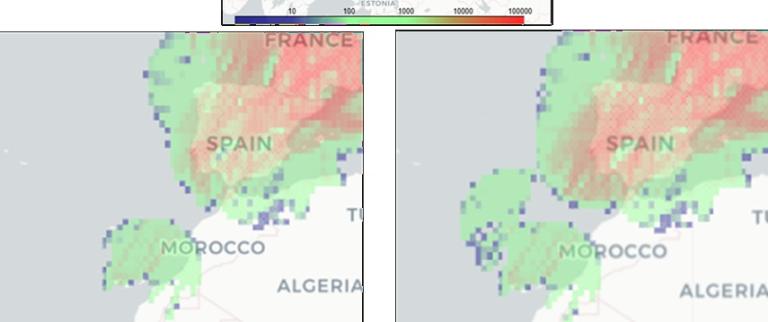
Figure 15. Number of derived data observations in 0.5x0.5° grid box from Mode S EHS before the addition of data from NAV Portugal (left) and after (right) for one day.
EMADDC processes the global Mode S EHS derived data in partnership with the UK Met Office and this data is available for use by NMHSs. The coverage for a typical day is shown in figure 16, below. Discussions have already taken place with Mexico and Brazil regarding the potential for Mode S EHS, as expanding the collection of such data in more countries could help improve ABO coverage in data-sparse areas. KNMI is developing an upgrade to the data processing for Mode S EHS (EMADDC 3.0) which will enable near real-time processing, improved scalability and robustness, and the ability to handle (near) real-time data streams. EMADDC 3.0 will no longer support FTP protocol, and users are advised to switch to the KNMI Data Platform. EMADDC is also recommending the use of NetCDF as the data format for Mode S EHS derived data and the future intention is to retire the BUFR format . Several discussions have been held with WMO Secretariat on updating relevant documentation and on KNMI establishing a WIS 2.0 node for Mode S EHS data.
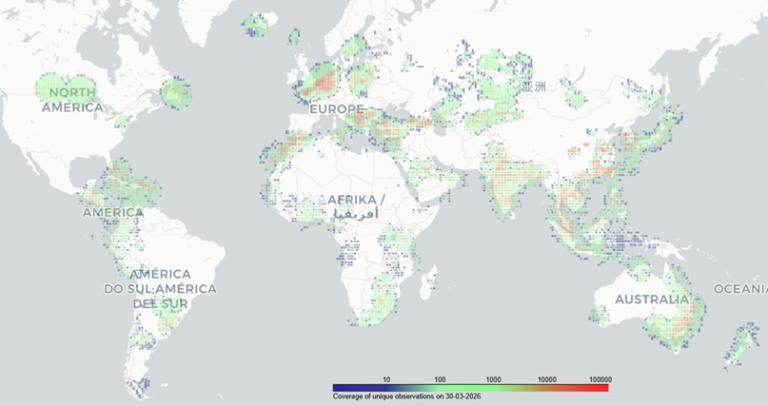
Figure 16. Number of derived data observations in 0.5x0.5° grid box from the global Mode S derived data set for one day.
There has been a reduction in ABO data over the Middle East due to airlines avoiding some regions due to air space disruptions. Figure 17 shows the impact on Mode S EHS derived data.
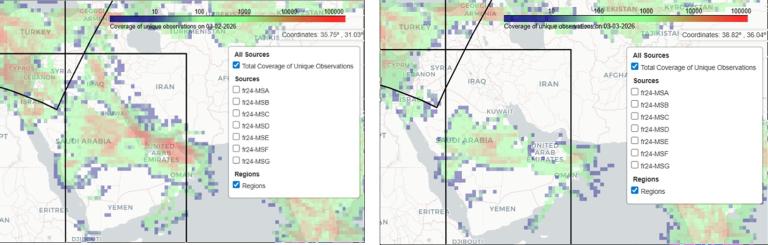
Figure 17. Mode S EHS coverage for 3rd February (left) and 3rd April (right)
Third-party Data
ABO continues to be available from other sources such as ADS-C (Figure 18), AIREP (Figure 19), AFIRS AMDAR, and TAMDAR (Figure 20). The AFIRS AMDAR from Uganda Airlines, for example, provides data over a sparse area. However, ADS-C data is not received from certain FIR regions, particularly over the Pacific and the southwest of the North Atlantic. Obtaining ADS-C weather reports from these regions would help fill large data gaps globally and contribute to improved forecast accuracy.
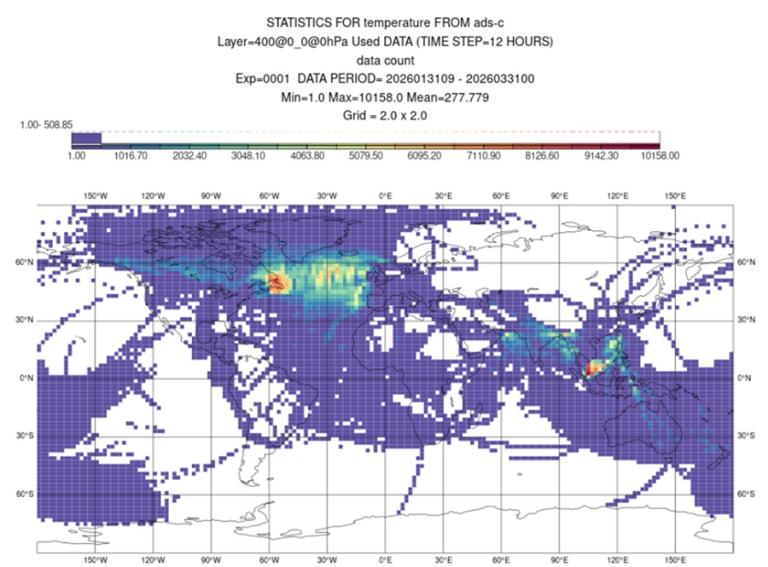
Figure 18. ADS-C Data for a twelve-hour period in January 2026.
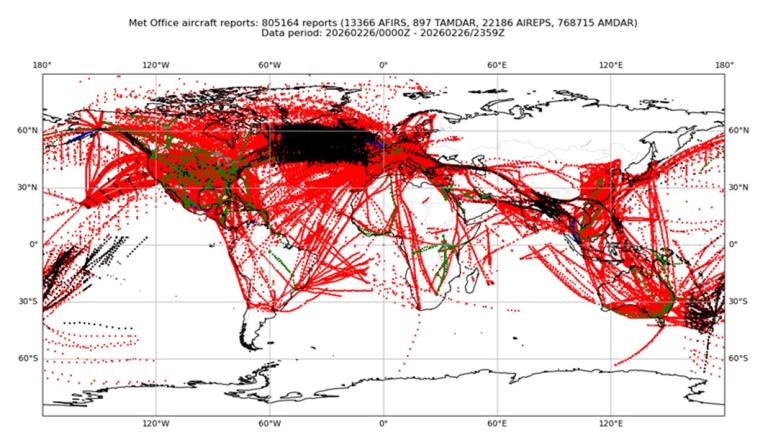
Figure 19. ABO Coverage for one day with AMDAR (red), TAMDAR (blue), AFIRS (green) and AIREPs (black). Source: UK Met Office.
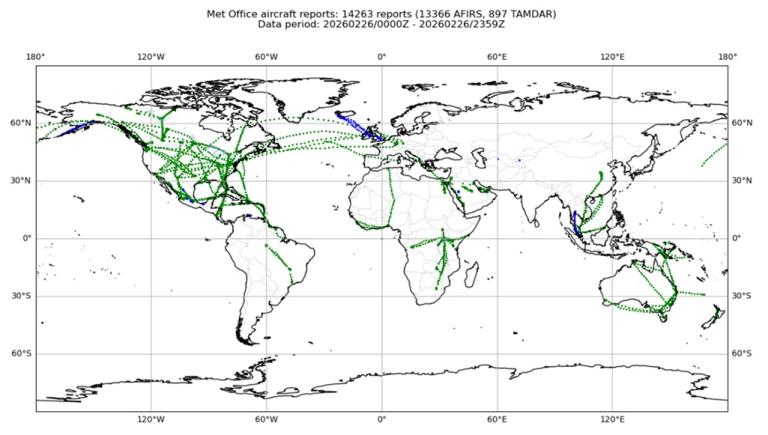
Figure 20. ABO Coverage for one day with TAMDAR (blue) and AFIRS (green) only. Source: UK Met Office.
Notes ADD:
- The Mode S EHS derived data is available to other National Met Services and the process to access the data can be found here: Data users | EMADDC
- KNMI have published a discussion paper, in preprint, on a novel technique to derive humidity information from aircraft Automatic Dependent Surveillance Broadcast (ADS-B) data, whenever an aircraft is descending or ascending. https://egusphere.copernicus.org/preprints/2026/egusphere-2026-717/
martyn [dot] suntermetoffice [dot] gov [dot] uk (Martyn Sunter), E-ABO programme manager / SG-DTD Co-lead (corresponding author)
Jan Sondij, KNMI / SG-DTD Co-lead
Paul de Jong, KNMI
Aircraft-based Turbulence Observations Status within AMDAR – WMO ET-ABO SG-TURB
There are two accepted atmospheric turbulence intensity metrics currently used by the AMDAR community. The first metric is eddy/energy dissipation rate (EDR). MacCready (1964) first suggested the use of EDR as a measure of turbulence intensity. It is particularly useful operationally since EDR along the vertical direction is proportional to the RMS (root-mean-square) vertical acceleration experienced by an aircraft for any given flight condition (MacCready 1964; Cornman et al. 1995). Further, EDR has been adopted as the standard metric for atmospheric turbulence reporting by the International Civil Aviation Organization (ICAO) (2001).
Figure 21 shows the locations of available EDR reports for April 2026. Currently, about 2,100 aircraft are reporting EDR worldwide with an average of about 145,000 observations per day. EDR reporting has increased globally but continues to be low across Africa, Asia, eastern Europe and South America.
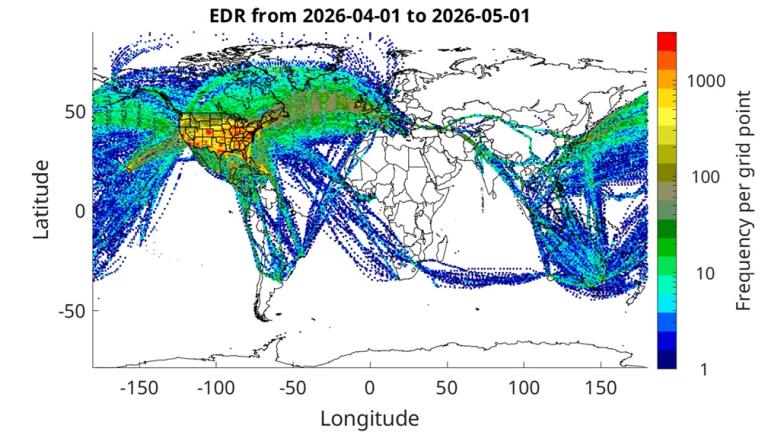
Figure 21: Counts of EDR reports for April 2026 using an approximately 50x50 km grid. The color scale is logarithmic.
Under sponsorship from the FAA’s Weather Technology in the Cockpit (WTIC) program and Aireon LLC, the U.S. National Science Foundation-National Center for Atmospheric Research (NSF-NCAR) is developing a novel method for observing atmospheric turbulence using Automatic Dependent Surveillance-Broadcast (ADS-B) data. The new technology utilizes existing aircraft broadcast infrastructure and ground-based processing to derive Eddy Dissipation Rate (EDR) estimates. Unlike other turbulence observations that require specialized on-board software or rely on subjective Pilot Reports (PIREPs), this system can estimate turbulence intensity using vertical rate (VR) data directly from standard ADS-B Out transmissions. This transforms the existing ADS-B equipped aircraft into a network of atmospheric turbulence sensors, providing near-real time, objective, and aircraft-independent turbulence information. Coverage relies on ADS-B receiver networks, e.g., terrestrial or satellite-based, but in principle, its reach is global.
The primary objective of the program is to improve airspace situational awareness, enhance flight safety, and operational efficiency through the utilization of these EDR measurements into forecast and nowcast systems, e.g. the NSF-NCAR developed Graphical Turbulence Guidance (GTG) and GTG Nowcast (GTGN) products. Currently, the ADS-B VR EDR system uses data from most large and heavy commercial aircraft; however, ongoing efforts include a phased rollout of more types, including business jets, commuter aircraft, and general aviation aircraft.
The second metric, derived equivalent vertical gust (DEVG), is defined as the instantaneous vertical gust velocity which, when superimposed on a steady horizontal wind, estimates the measured acceleration of the aircraft. The effect of a gust on an aircraft depends on its mass, aerodynamic characteristics as well as flight condition, but these factors are accounted for so that a gust's velocity can be calculated independent of the airframe*. As of May 2025, there were at least 150 aircraft reporting about 4,000 DEVG measurements per day. These numbers are based on an analysis of AMDAR data from The U.S. National Centers for Environmental Prediction’s (NCEP) Meteorological Assimilation Data Ingest System (MADIS). Figure 22 shows the locations of all DEVG reports for May 2025. There is software-based logic implemented on many aircraft that limit reporting of DEVG in some regions at certain altitudes (e.g., Europe). DEVG reporting had increased over North America but was still limited through Asia and the Southern Hemisphere. However, since mid-June 2025, DEVG data are, apparently, no longer included in the MADIS data. An investigation is continuing to track down the reasons for this.
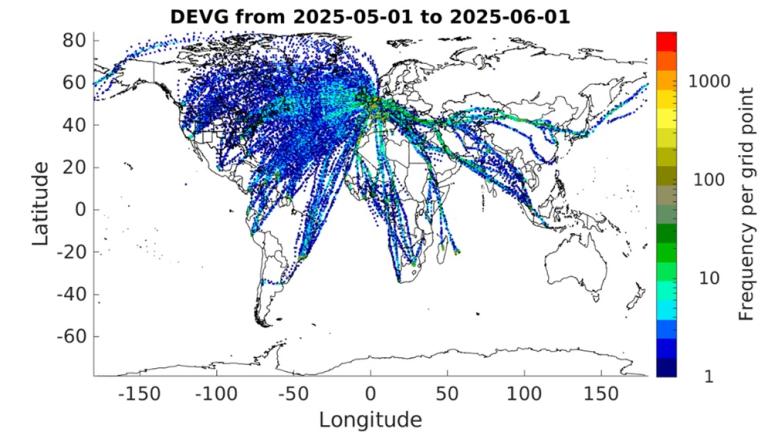
Figure 22: Counts of all available DEVG reports for May 2025 using an approximately 50x50 km grid.
These maps illustrate the need for expansion of aircraft-based turbulence observations in many areas of the globe. WMO continues to work with its members and their respective national airlines to increase aircraft-based turbulence observation coverage.
WMO and its Members express gratitude to our aviation industry and airline partners for their continued contribution to the WMO Aircraft-based Observing System and the AMDAR program. The data produced from this collaboration are utilized within many meteorological applications and forecasts benefiting aviation operations and safety, other application areas and the wider general public.
For more information on aircraft-based observations data statistics, visit the WMO website.
meymarisucar [dot] edu (Gregory Meymaris), National Center for Atmospheric Research / SG-TURB Lead
*From Guide to Aircraft-based Observations, WMO-No. 1200 https://library.wmo.int/doc_num.php?explnum_id=41
ABO Water Vapor Measurement Status – WMO ET-ABO SG-WVM
WVSS-II: Operational Backbone
Aircraft-based humidity observations continue to provide valuable high-resolution data for weather forecasting and aviation applications. The WVSS-II (Water Vapour Sensing System II), a laser-based hygrometer installed on commercial aircraft, remains the operational backbone. Around 130 aircraft are currently equipped in the United States under the National Oceanic and Atmospheric Administration (NOAA) programme, while in Europe the EUMETNET framework supports a stable fleet of nine aircraft.

Table I. Operational WVSS-II units in service to ABOP by WMO Region.
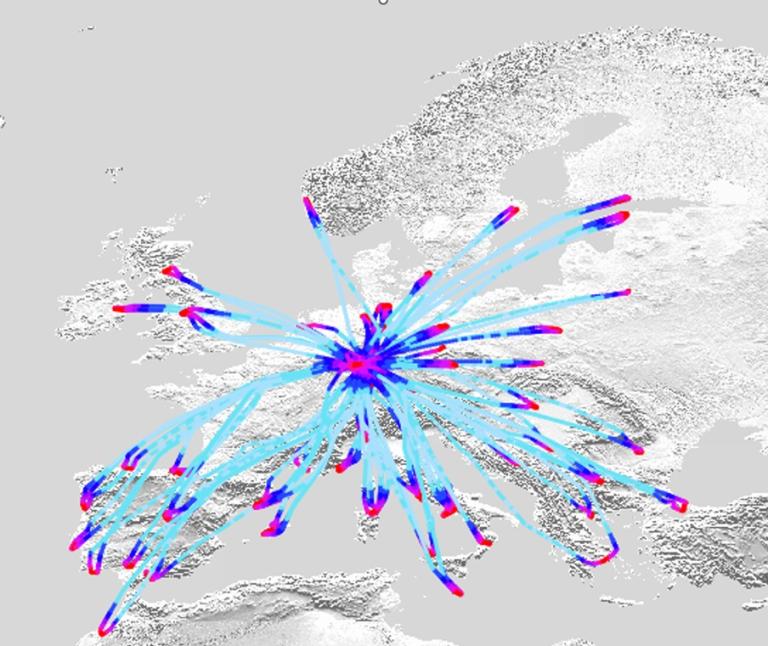
Figure 23. WVSS-II measurements over Europe from 20-26 April 2026, colors showing pressure altitude from red-lowest altitudes to turquoise-high altitudes (source: E-AMDAR portal, 29.04.2026)
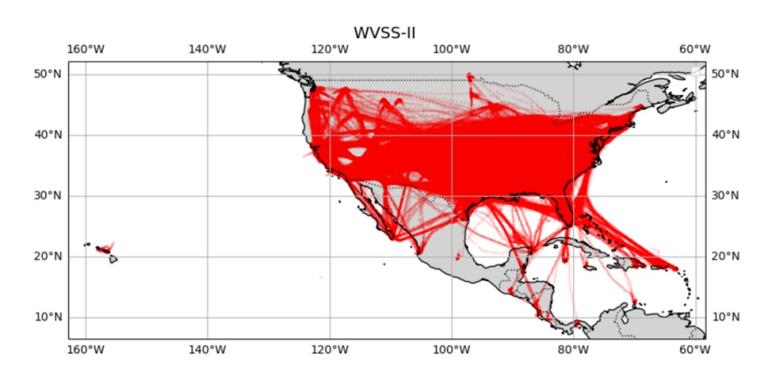
Figure 24. WVSS-II measurements from the NOAA AMDAR Program from 20-26 April 2026 (source: NOAA)
Expansion Efforts
Encouragingly, expansion efforts are ongoing. Additional WVSS-II installations within the NOAA programme, along with a dedicated initiative by the UK Met Office, reflect continued commitment to strengthening the observing network, even if implementation has been somewhat delayed.
FTG is actively engaged with NOAA and other government weather agencies to secure increased funding for the FLYHT-WVSS-II sensor and to install it on participating airlines. FTG has completed two kit installs on Loganair’s Embraer-145 aircraft. Once the Supplemental Type Certificate (STC) is approved, the FLYHT-WVSS-II sensors will be re-installed and activated, and data transmission will begin. FTG anticipates receiving the first data from Loganair over the summer.
In addition, FTG will be installing the FLYHT-WVSS-II on at least five WestJet aircraft this summer. The WestJet installations are part of a larger push to expand the NOAA WVSS-II program. FTG currently plans to install 30 FLYHT-WVSS-II sensors through the NOAA program.
TAMDAR: Complementary but Declining
The TAMDAR (Tropospheric Airborne Meteorological Data Reporting) system, which provides temperature, humidity, wind, and icing information from regional aircraft, remains operational. While its fleet size continues to decline, it still contributes useful supplementary observations in selected regions.

Table II. Operational TAMDAR units in service to ABOP by WMO Region
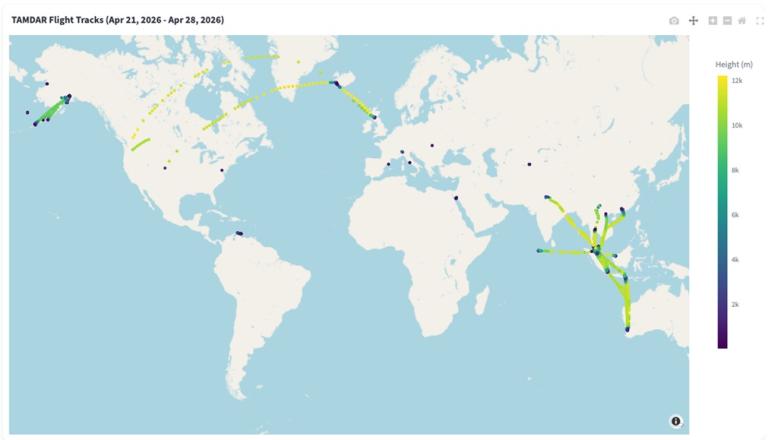
Figure 25. TAMDAR flights tracks for the period of 21-28 April 2026. Source: FLYHT
Emerging Focus: Contrail Avoidance
A growing area of interest is contrail avoidance. Several projects are exploring new or improved humidity sensors capable of better detecting ice-supersaturated regions, supporting efforts to reduce aviation climate impacts and pointing toward future enhancements in airborne observing capabilities.
Coverage and Outlook
Although coverage in data-sparse regions has not yet improved significantly, the combination of sustained core operations, planned expansions, and emerging applications provides a cautiously positive outlook for the continued evolution of aircraft-based water vapour observations.
cemmelexch [dot] dwd [dot] de (Carmen Emmel), Deutscher Wetterdienst (DWD), ABO Coordinator / SG-WVM Lead and ET-ABO Vice-chair
Status of ABO Metadata and Monitoring: The Ad-Hoc Task Team on WIGOS Tools for ABO (TT-WTABO)
Aircraft-based observations (ABO) are a critical component of the WMO Integrated Global Observing System (WIGOS), providing essential high-frequency, high-quality upper-air data for numerical weather prediction (NWP), weather forecasts and warnings, as well as aviation safety. The effective monitoring and management of these observations rely on specialized tools. However, unlike for other observation types, ABO-specific monitoring and metadata tools are underdeveloped.
To ensure these tools evolve to meet operational needs and align with the broader WIGOS framework, a dedicated, time-bound task team has been established. This team will provide technical guidance, streamline processes, and define the future of ABO monitoring and reporting, thereby enhancing the overall quality and utility of ABO data for all WMO members.
The team, chaired by David Snook (UK Met Office) comprises representatives from major ABO programs (E-ABO, US NOAA, BoM, KMD, CMA, DECEA), WMO Secretariat, and the expert team on WIGOS tools (ET-WTR). The primary objective of the task team is to review, refine, and provide strategic direction for the development and operational performance of WIGOS tools specific to ABO. Also, it will define the requirements for ABO monitoring tools and metadata from the perspective of ABO stakeholders. This will ensure the tools remain fit-for-purpose, support the operational ABO community, and fully integrate into the WIGOS regulatory and monitoring framework.
Key challenges facing the Task Team include the inherent complexity of ABO arising from moving platforms and multiple data sources such as AMDAR, Mode-S, and ADS-C; the absence of a defined structure for incident reporting, which has led to slow and informal processes for resolving issues; the lack of a defined list of minimal or critical metadata, coupled with inconsistent recording and sharing of metadata by ABO managers; difficulties encountered by ABO managers in uploading information to the previous version of the ABO Metadata Repository; and the involvement of multiple data centres in the processing and monitoring of ABO data
The task team has already met twice and has agreed the first step to overcoming these challenges is to survey all users of ABO data (including NWP centres, Operational Meteorologists, ABO Stakeholders). The survey will quantify which quality and performance metrics are currently being produced, which variables are being used, and will also capture the needs for metadata, visualisation, and quality flags. The survey has already released and all users and stakeholders of ABO are encouraged to take part.
The survey results, combined with the analysis and review of current documentation and procedures, will guide the team’s workflow to ensure that by December 2027, the Task Team delivers key outputs:
- documentation specifying minimal ABO metadata requirements for NWP monitoring, and recommendation for using the ABO Metadata Repository.
- a defined set of metrics and technical plan for the integration of ABO data into the WDQMS.
- documentation outlining the statistics to be monitored and reported for ABO programme performance under WDQMS procedure.
- a documented procedure for ABO incident reporting under WDQMS procedure.
- a review of guidance material, including the use of WIGOS Station Identifiers for ABO.
david [dot] snookmetoffice [dot] gov [dot] uk (David Snook), E-ABO Technical Co-ordinator / TT-WTABO Lead
Thirty Years of IAGOS in Operation – a Research Infrastructure for Global-Scale Atmosphere Monitoring by Passenger Aircraft
For thirty years, the European Research Infrastructure IAGOS (In-service Aircraft for a Global Observing System; www.iagos.org) has been equipping commercial aircraft with instrumentation to monitor the composition of the atmosphere on long-haul flights around the world. IAGOS responds to the increasing number of requests for long-term, routine in-situ observational data by using commercial passenger aircraft as measurement platforms. Utilizing global aviation for routine atmospheric observation is cost efficient and makes optimum use of the existing infrastructure.
By deploying a set of autonomous instruments aboard a fleet of passenger aircraft from internationally operating airlines, IAGOS collects crucial data throughout the troposphere including regions poorly or never sampled by other means and in the critical upper troposphere and lowermost stratosphere region at a global scale and high resolution. In addition, vertical profiles of trace species are gained during each single take-off and landing of instrumented passenger aircraft. By these means, IAGOS perfectly complements ground-based networks and satellites instruments. Because of that unique contribution, a WMO Strategy Paper published in the Bulletin of the American Meteorological Society (Carmichael et al., 2023) has identified IAGOS as one core contributor to global atmospheric composition observations.
Its value and contribution to WMO objectives have been described in detail in the WMO Bulletin 63 (2) on pages 19 – 21, published on its 20th anniversary in 2014. At that time, the fleet counted six aircraft operated by the supporting airlines Air-France, Deutsche Lufthansa, Cathay Pacific, China Airlines, and Iberia. Since then, Hawaiian Airlines, Discover Airlines, and Air Canada have joined, and the fleet extended to ten aircraft.
IAGOS follows an open data strategy meaning all data, including added-value products is freely and openly accessible through our data portal. The IAGOS data base contains more than 78,400 flights covering 457 million flight kilometres. This total distance corresponds to more than 11,000 times around the globe.
The in-situ data on chemical composition of the atmosphere provided by IAGOS in near-real-time is used in the routine validation of the forecasts and analyses of the Copernicus Atmosphere Monitoring Service (CAMS) operated by ECMWF. This evaluation using IAGOS data covers the CAMS global and regional forecasts for ozone and carbon monoxide, as well as the CAMS global greenhouse gas forecasts for CO2 and CH4. Observations on NOx, aerosol and dust particles, and clouds require more extensive quality assurance and are provided for scientific use with longer time delays than acceptable for near-real time applications.
Of paramount importance to the WMO Aircraft-Based Observation programme are the IAGOS data on water vapor and relative humidity with respect to ice (RHice), which have been collected since the programme’s start in 1994. Figure 26 shows a schematic of the IAGOS value chain of data on RHice. After collection of data during flight (left panel), the data are analysed and quality-checked automatically and forwarded to CAMS, where it is compared to results from the Integrated Forecast System (ECMWF IFS, mid panel). The observed undervaluation of RHice by IFS relative to observations (right panel) has initiated improvements in the handling of water vapour, RHice, and ice clouds in numerical weather prediction.
IAGOS aircraft-based RHice observations serve today as benchmark for the evaluation of modified humidity schemes in numerical weather forecast tools, or in the current work on reducing aviation non-CO2 climate effects by contrail management approaches; see e.g., www.contrails.org or www.easa.europa.eu/en/research-projects/ancen-nonco2. During the WMO Global Aviation Stakeholders on ABO Meeting from 15 to 17 September 2025, IAGOS presented its contribution to ABO in environmental monitoring. The role and relevance of IAGOS to this topic can be taken from the final report at https://wmo.int/events/global-aviation-stakeholders-meeting-abo-and-expert-team-aircraft-based-observations-et-abo-meeting.
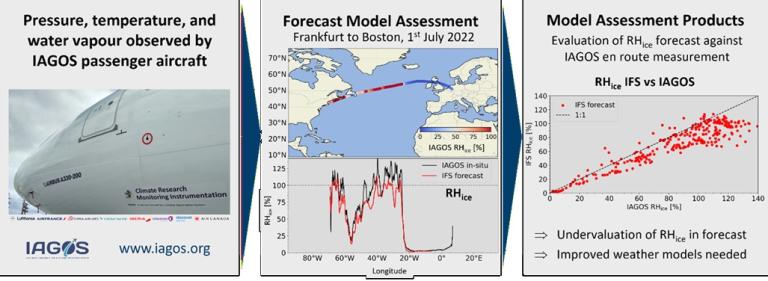
Figure 26: Schematic of the IAGOS value chain of data on relative humidity with respect to ice (RHice).
References
- Carmichael, G. R., Tarasova, O., Hov, Ø., Barrie, L., and Butler, J. H, 2023: Global Atmospheric Composition Observations: The Heart of Vital Climate and Environmental Action, Bull. Amer. Meteorol. Soc., 104, E666-E672, https://doi.org/10.1175/BAMS-D-22-0016.1
- Thouret, V., and Petzold, 2024: Observing the Global Atmosphere by Instrumented Passenger Aircraft - The Story of IAGOS, WMO Bulletin Vol. 63 Issue 2, Pages 19 – 21, 2014.
a [dot] petzoldfz-juelich [dot] de (Andreas Petzold) (Forschungszentrum Jülich GmbH)
Valerie Thouret (CNRS)
Hannah Clark (IAGOS AISBL)
Estimating the Impact of Assimilating Uncrewed Aircraft System Observations into Regional NWP
Weather-observing uncrewed aircraft systems (WxUAS) have received interest as a means of filling observational gaps in tropospheric measurements. This interest is exemplified by the 2024 WMO UAS Demonstration Campaign, which focused on the operational viability of WxUAS. While WxUAS are maturing as an observing platform, there are still questions regarding what benefits these observations could provide to regional numerical weather prediction (NWP) and how to optimally configure a WxUAS network. Observing system simulation experiments (OSSEs) can help shed light on these questions.
OSSEs can be used to evaluate the impact of assimilating observations into NWP from yet-to-be-deployed platforms. This is done by replacing the atmosphere with a high-resolution simulation known as a “nature run,” sampling the nature run in a manner consistent with current and future observations, and then assimilating these simulated observations into an NWP system. The impact of an observation type can then be determined by running the NWP system with and without that observation type and comparing the resulting forecasts.
The OSSEs reported here are designed to estimate the impact of WxUAS data on regional NWP. These OSSEs use a 1-km nature run covering the contiguous United States during a week in the winter with 3-km NWP systems like NOAA’s High-Resolution Rapid Refresh (HRRR) and the Rapid Refresh Forecast System (RRFS). WxUAS in these OSSEs perform hourly flights to 2 km above the surface and measure temperature, humidity, and winds. Two sets of OSSEs were performed that examined the impact of (1) varying the spatial density of WxUAS observations and (2) limiting WxUAS flights to winds < 20 m s-1 and non-icing conditions.
OSSE results show large benefits to NWP from assimilating WxUAS data (Figs. 27 and 28). This is true even when using a relatively coarse WxUAS network with 150-km spacing (Fig. 27). The benefits of assimilating WxUAS observations are reduced when applying meteorological limits (Fig. 28), but the benefits are still overwhelmingly positive. Future work is needed to further explore whether imposing these meteorological limits has an outsized negative impact on forecasts of high-impact events (e.g., severe convective storms).
These OSSEs add to a growing number of studies showing positive impacts from assimilating WxUAS observations. While promising, we should keep in mind that these are just theoretical estimates. Nevertheless, these results indicate that data from WxUAS has the potential to improve regional NWP, so continuing to move towards WxUAS operationalization is recommended.
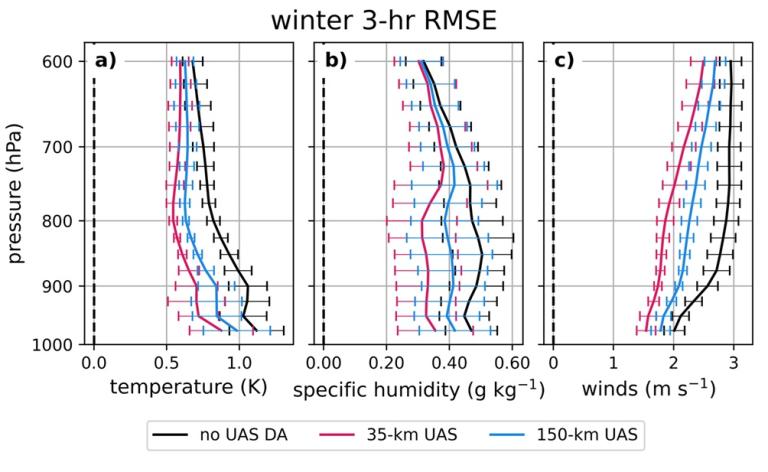
Figure 27. Three-hour root-mean-squared errors (RMSEs) from three NWP experiments that (1) do not assimilate WxUAS, (2) assimilate WxUAS with 150-km spacing (347 sites), and (3) assimilate WxUAS with 35-km spacing (6335 sites). WxUAS are not limited by high winds or icing in these experiments.
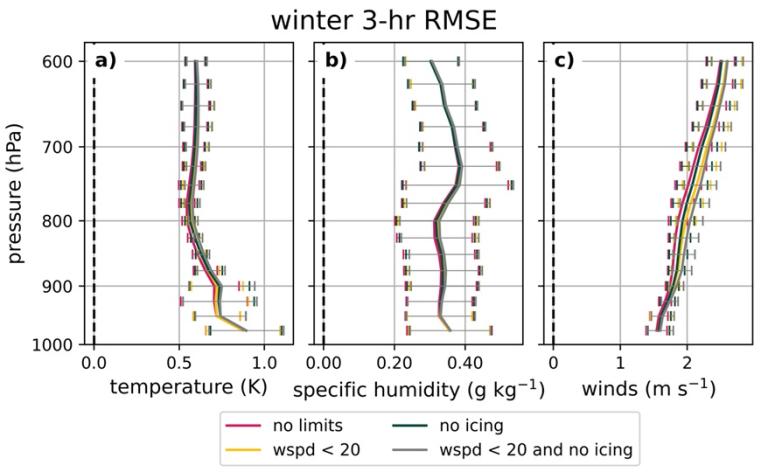
Figure 28. Same as Fig. 27, but for four experiments using the 35-km WxUAS network with limits applied to the WxUAS flights.
shawn [dot] murdzekcolorado [dot] edu (Shawn Murdzek), Cooperative Institute for Research in Environmental Sciences, University of Colorado Boulder
Overview of FLYHT/FTG Aircraft Based Observations Status and Expansion
Since acquiring FLYHT in December 2024, Firan Technology Group (FTG) has accelerated the expansion of aircraft-based weather observation programs on multiple fronts: growing the AMDAR network with new WestJet coverage, advancing FLYHT-WVSS-II installations on Loganair and WestJet fleets, and working with NOAA to scale water vapor sensor deployment across U.S. carriers. The following provides a status overview of each program and the path forward.
Water Vapour Measurement Programs Using FLYHT-WVSS-II and TAMDAR Sensors
FTG is actively engaged with NOAA and other government weather agencies to secure increased funding for the FLYHT-WVSS-II sensor and installation on participating airlines. FTG has completed two kit installs on Loganair’s Embraer-145 aircraft; and once the Supplemental Type Certificate (STC) is approved, the FLYHT-WVSS-II sensors will be activated, and data transmission will begin. FTG anticipates receiving the first data from Loganair over the summer.
In addition, FTG will be installing the FLYHT-WVSS-II on at least five WestJet aircraft this summer. The WestJet installations are part of a larger push to expand the NOAA WVSS-II program; FTG currently plans to install 30 FLYHT-WVSS-II sensors through the NOAA program.
TAMDAR sensors: Decline Due to Fleet Retirements
In contrast, the TAMDAR sensor program has experienced a notable decline over the past few years. This reduction is primarily due to the retirement of aircraft carrying TAMDAR sensors, which has led to a substantial decrease in data collected via this method. FTG expects that the growth of the FLYHT-WVSS-II program will begin to offset the decline in TAMDAR, which FTG no longer manufactures.
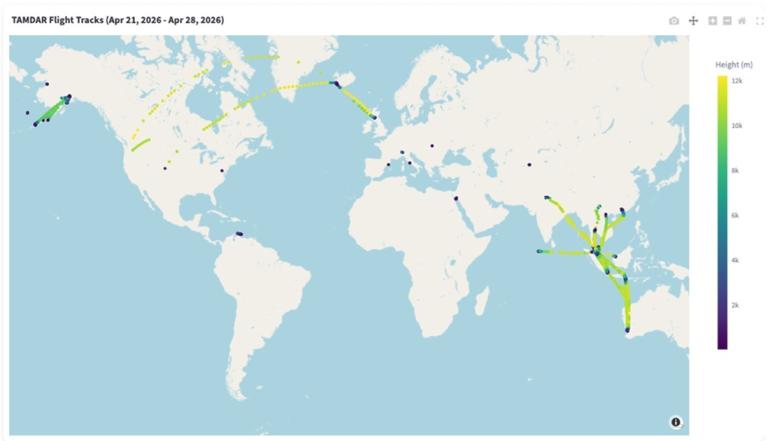
Figure 29. FTG TAMDAR flight tracks for April 21- April 28, 2026
FTG AMDAR-over-AFIRS and AMDAR Program
FTG continues to expand the AMDAR network. Recently, FTG began transmitting data from 62 WestJet aircraft, providing high-resolution data coverage across the continental United States, Hawaii, the Caribbean, and several flights per week to the U.K. FTG currently provides AMDAR data from 205 aircraft, yielding an average of 550-650 AMDAR soundings per day. FTG is working actively on expanding this network into South America.
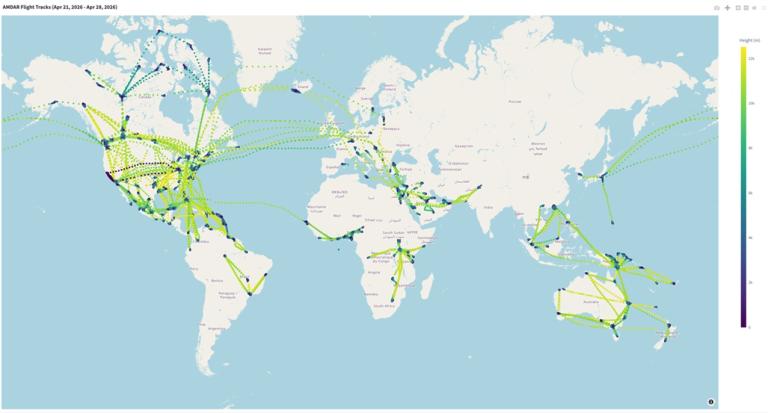
Figure 30. FTG AMDAR flight tracks for April 21- April 28, 2026
mbellflyht [dot] com (Meredith Bell), FLYHT Atmospheric program Manager
MADIS AMDAR Page Updates
Archive Function
ABO from the last 30 days is now available on the MADIS web page. This feature can be very useful in retrieving data for meteorological case studies, climate comparisons, and aircraft incident investigations. While the archive function can display up to 12 hours of data, it works best for smaller intervals, like a couple of hours at a time. To use the archive, simply click on the ‘Data Load’ tab on the lower right-hand side of the web page, and select the date, time and number of hours to load (see figure 31).
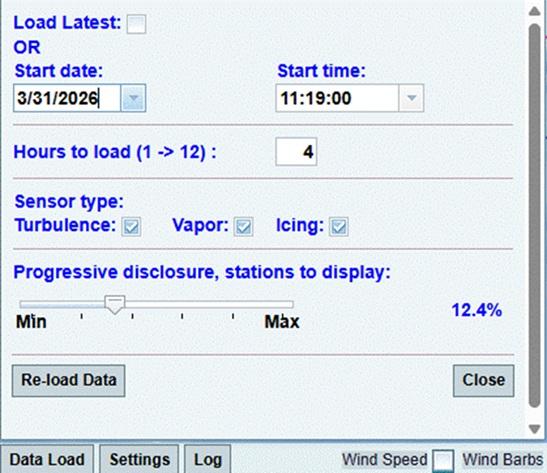
Figure 31. Archive selection via Data Load interface
The map below (figure 32) shows data from March 31, 2026, which was retrieved 28 days later on April 28, 2026.
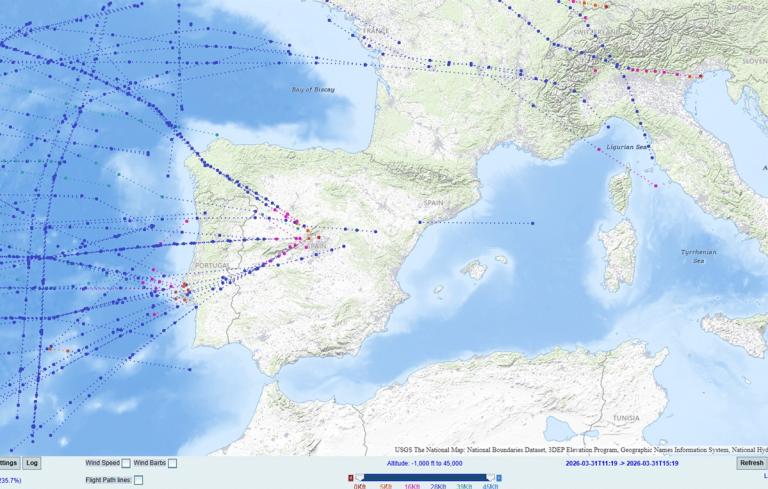
Figure 32. Archived data from March 31, 2026, retrieved 28 days later.
Sounding Selection Tool
The primary method to retrieve a sounding is simply to mouse over a flight track and click on ‘skew-t plot’. There is another way to access and display one (or several) soundings by utilizing the ‘s’ selection tool. It is easy to use. Simply touch and hold down the ‘s’ key, while using your mouse to drag out a box and then release the ‘s’ key. The web site should return a single sounding on the skew-t plot, with additional soundings in tabs below (figure 33 below).
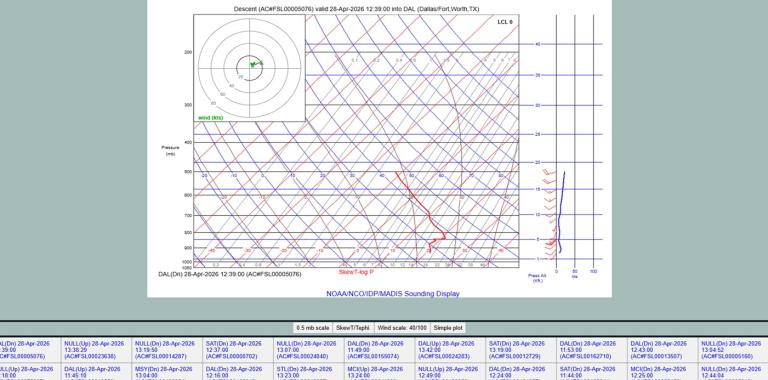
Figure 33. Single sounding with additional soundings available by clicking on tabs below
You may superimpose several soundings by holding down the ‘shift’ key and clicking on the tabs with the mouse. Figure 34 shows several soundings superimposed on the skew-t background.
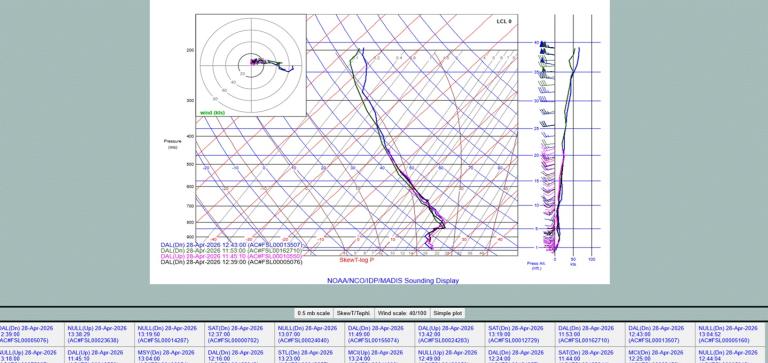
Figure 34. Multiple soundings superimposed on skew-t background
The ability to display multiple soundings together is a useful method to see how the atmosphere has evolved over time.
richmamroshgmail [dot] com (Richard Mamrosh) – ABO Newsletter Editor and NOAA Retired Meteorologist
Closing Thoughts: Looking towards the Future…
The future of ABO looks bright! From its beginning 100 years as voice PIREPs radioed to the ground, it has matured to an ever-expanding collection of meteorological observations transmitted by an increasing number of automated methods. While fiscal constraints will likely continue into the future, they will be mitigated by innovative, more efficient ways of collecting and transmitting data.
I appreciate the opportunity to edit the WMO ABO newsletter, and look forward to getting to know our many fine contributors.Thank You!
richmamroshgmail [dot] com (Richard Mamrosh) – ABO Newsletter Editor and NOAA Retired Meteorologist
Contacts
WMO Commission for Observation, Infrastructure, and Information Systems -INFCOM- / Standing Committee on Earth Observing Systems and Monitoring Networks (SC-ON) /Expert Team on Aircraft-Based Observing Systems (ET-ABO) 2024-2027
Chair
curtis [dot] marshallnoaa [dot] gov (Mr Curtis Marshall) (USA)
Vice-chair
carmen [dot] emmeldwd [dot] de (Ms Carmen Emmel) (Germany)
WMO ABO Observing System Newsletter Editor
richmamroshgmail [dot] com (Mr Richard Mamrosh) (USA)
Secretariat, Aircraft-based Observations
nrivabenwmo [dot] int (Mr Nicolás Rivaben) (WMO)
Subscription & Links
- Newsletter email subscription - complete form & subscribe to: wmo-aircraft-observations-news
- WMO Aircraft-Based Observations Programme
- WMO AMDAR Observing System (legacy)
- Newsletters