WMO Brings Weather, Climate and Water Expertise to the UN General Assembly
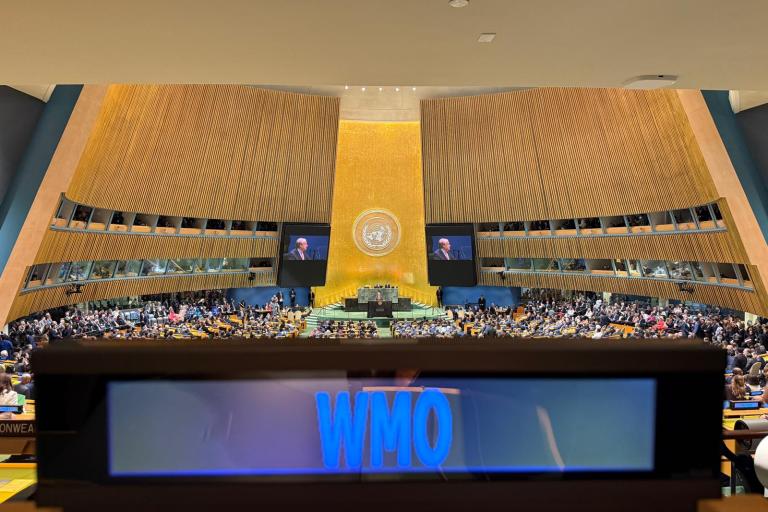
From finance and shared data to ocean observations and the impacts of El Niño, the World Meteorological Organization (WMO) brought weather, climate and water science to the heart of discussions during the High-Level Week of the 81st session of the United Nations General Assembly (UNGA81).
The WMO delegation led by WMO Secretary-General Celeste Saulo participated in a series of high-level events highlighting the value of turning hydrometeorological science into action to reduce societal risks and support economic prosperity.
Ocean observations take centre stage
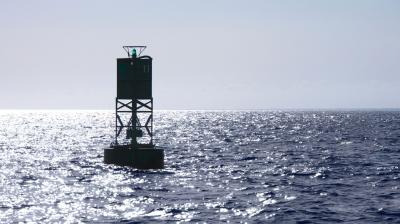
Ocean observations unlock the power to predict weather patterns on longer timescales, from weeks to months ahead. They are also a critical part of understanding how our climate system is changing.
On 23 September, the OceanEye International Alliance was launched at a high-level pledging event by Canadian Prime Minister Mark Carney and European Commission President Ursula von der Leyen. The event was organized in partnership with WMO and Intergovernmental Oceanographic Commission of the United Nations Educational, Scientific and Cultural Organization (UNESCO-IOC).
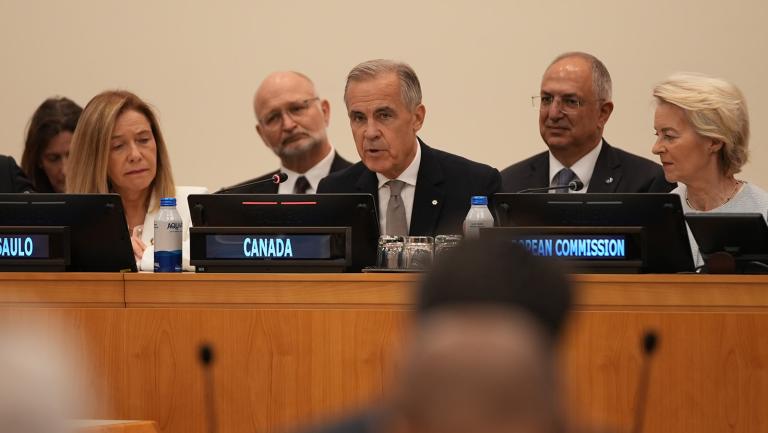
The Alliance brings together the European Union (EU) and 29 nations with the aim of strengthening the Global Ocean Observing System (GOOS). The EU reported that almost €220 million was pledged by the Alliance members to support the maintenance of existing observation platforms, the closure of critical data gaps, the strengthening of the GOOS Secretariat and the GOOS coordination hubs, and the reinforcement of the OceanOPS data-reporting centre. WMO Secretary-General Celeste Saulo highlighted the link between ocean observations, El Niño and seasonal predictability.
UN Declaration on Sea Level Rise
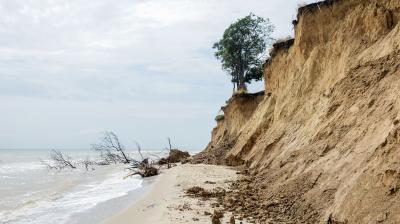
The UN General Assembly adopted the landmark UN Declaration on Sea Level Rise, recognizing that the cumulative, severe and irreversible risks of sea-level rise, demand stronger international cooperation and urgent, coordinated action. The Declaration covers four thematic areas for action: knowledge, data and science; adaptation, finance and resilience; livelihoods, socioeconomic challenges, culture and heritage; and the legal dimensions of sea-level rise.
The section on knowledge, data and science highlights the need to strengthen the science, observations, data and modelling needed to understand sea-level rise. This knowledge must then be translated into risk information and early warnings to support resilient planning and adaptation. It also emphasizes the importance of building national capacity and ensuring global data systems are interoperable, accessible and sustained.
The Declaration recognizes the role of WMO in this space: “We note with appreciation the essential coordination on sea-level rise-related data provided by the UN Specialized Agencies, particularly the World Meteorological Organization and the UNESCO Intergovernmental Oceanographic Commission”. It also calls for improved tools for data coherence and uptake to overcome capacity constraints.
The Declaration marks the culmination of a three-year process in New York and demonstrates Member States' appreciation of WMO’s work in this field and the growing need for improved multi-hazard early warning systems, climate information services, and systematic observations as risks related to sea-level rise continue to increase.
Financing early warning systems a critical step for climate action
In his last UNGA High-Level Week as the incumbent United Nations Secretary-General, António Guterres convened a Climate Summit 2026 to bring countries and partners together to overcome barriers, close gaps and deliver greater progress towards limiting global warming and protecting people and livelihoods.
The Summit included six side-event ‘Solutions Dialogues’ including one on financing adaptation, during which WMO organized a panel on financing early warning systems. The session underscored the value of early warnings and heard commitments from several countries spanning the full chain from observations and science to early warnings, preparedness and action.
Advancing the WMO Commons
On 21 September, WMO convened a closed-door leadership roundtable on the WMO Weather, Climate and Water Intelligence Commons, bringing together senior representatives from business, finance, insurance, technology and philanthropy.
The WMO Commons is a collaborative financing mechanism designed to strengthen the global systems underpinning weather, climate and water intelligence. The roundtable explored how different sectors depend on this global system, where it needs to be strengthened, and what opportunities exist for partnership.
The discussion covered the growing importance of trusted and interoperable information for decision-making across sectors, from finance and infrastructure to agriculture, health and emerging artificial intelligence (AI)-enabled services.
El Niño predictions, heat impacts and new technology
The WMO Secretary-General also participated in several interviews and media facing UNGA moments, highlighting the work of the WMO community and connecting it to the broader UNGA conversations on development, resilience and prosperity.
In a GZERO discussion on El Niño and AI, she explained how ocean observations help scientists track changes in the tropical Pacific and improve El Niño forecasts months in advance. She also discussed the potential of AI to process large volumes of weather and climate data and improve the speed and usefulness of forecasts and warnings.
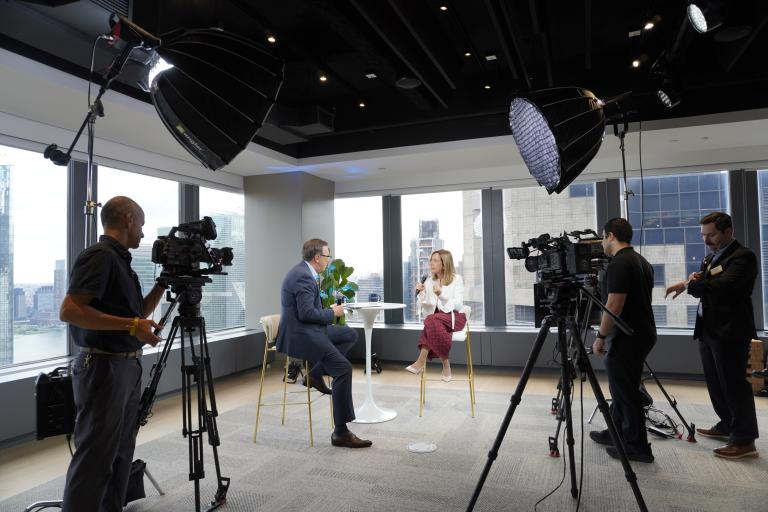
During an SDG Media Zone discussion, she stressed that El Niño affects regions differently, with consequences for rainfall, heat and climate-sensitive sectors and the importance of translating global forecasts into locally relevant information that can support early action.
At the UN Goals Lounge, she discussed the interaction between El Niño, rising global temperatures and extreme heat in cities. She highlighted the importance of impact-based warnings and closer coordination between meteorological services, health authorities and emergency managers.
The work continues in New York
WMO’s engagement in New York continues beyond High-Level Week, showcasing the work and expertise of National Meteorological and Hydrological Services (NMHSs) to issues high on the international agenda. Upcoming engagements include negotiations on the UNGA Second Committee resolution on disaster risk reduction, which will address El Niño and Early Warnings for All, as well as planned briefings on El Niño and the conclusion of the International Year of Glaciers’ Preservation 2025 (IYGP25).
The WMO New York office will continue to bring WMO expertise and the perspectives of its Members into these discussions.