

OceanEye International Alliance and funding global ocean observations
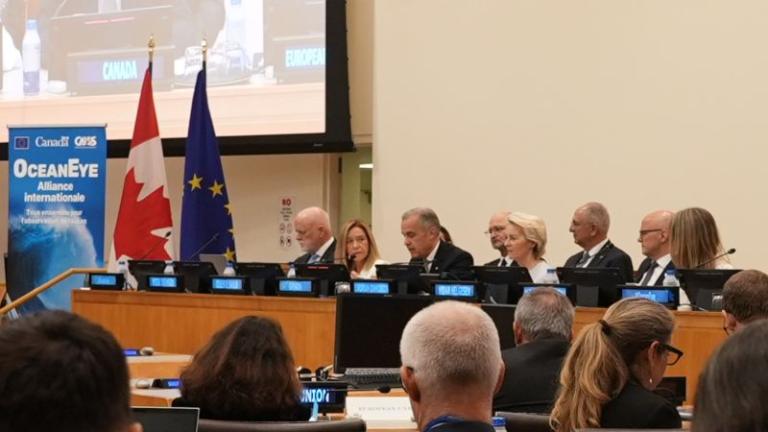
Prime Minister Carney, President von der Leyen,
Excellencies, colleagues,
Let me start by thanking Canada and the European Union for bringing us together to strengthen the Global Ocean Observing System, GOOS. WMO, the United Nations agency for weather, climate and water, is proud to be one of its main sponsors.
The scientific reality is clear: Ocean observations shape our understanding of the climate system. They give us time to prepare. They give us measurements, far out at sea, which help countries anticipate conditions that affect food production, water supplies and people’s safety.
To give you an example of what’s at stake - this month, WMO warned that El Niño is expected to become very strong, raising the risks of drought, floods and extreme heat into 2027. But predicting El Niño depends on ocean observations, without which we are flying blind.
Today, there are no near-equatorial moored buoys operating west of 165 degrees East in the tropical Pacific. We no longer have our fixed observing presence across a critical part of the western Pacific warm pool. This is the region that helps shape El Niño and La Niña and, consequently, rainfall and drought patterns around the world. Restoring three priority sites would begin to close this major gap. But keeping them operational requires sustained ship time and contributions from more than just a few countries. We cannot continue to be dependent on the resources of only one or two nations.
And it is not just El Niño, operational forecasts and warnings – of tropical cyclones, severe precipitation, extreme heat – depend on real-time observations of ocean variables. The atmosphere and the oceans are inseparable – each one drives change in the other.
WMO works through GOOS to identify which observations are needed, and where gaps have the greatest consequences. Governments and funders should know which essential networks need sustained support, which gaps are most urgent, and what their contributions will achieve.
Support for GOOS must cover the continuing work of deploying and maintaining instruments. It must also support data quality and international exchange. Expanding participation will make this system stronger, enabling more countries to contribute observations and use the information they provide. Ocean observations are a global public good, and our investment priorities should reflect that shared benefit.
Let us tap into this Alliance and the political commitment we have here to speak with one voice about the observations the world needs, secure lasting commitments to GOOS, and give people better information and more time to prepare for a world of extremes. Let us not only listen to the sea gods, but act as well.
Thank you.
Related resources
Statement by