

Services for Aviation Newsletter Issue 2/2025 (December 2025)
Newsletter Issue 2/2025 (December 2025)
Jump to:
- Foreword by the Chair of the WMO Standing Committee on Services for Aviation (SC-AVI)
- SC-AVI-4 meeting outcomes - achievements and key decisions
- Outcomes of the SERCOM-MG-3 meeting and next steps
- AeroMetSci-2024 conference Proceedings and next steps (recommendations)
- Communicating about impacts of climate change on aviation
- The WMO Aviation Training Repository gets a fresh upgrade
- Outcomes of the AvRDP2-SSC-4 meeting and closure of project
- Advancing Volcanic Hazards in Early Warnings for All
- News from the ICAO Secretariat
- News from the WMO Secretariat
- Upcoming WMO meetings and events
- Coming up next time
Foreword by the Chair of the WMO Standing Committee on Services for Aviation (SC-AVI)

Dear colleagues,
As we approach the end of 2025, we reflect on a year of resilience and progress within the global aviation meteorology community.
Preparations are underway for a significant reorganisation of the WMO Secretariat, effective 1 January 2026. This strategic reform responds to evolving global challenges and aims to strengthen integration across weather, climate, water, and environmental services through an Earth-system approach. These changes will bring new expectations for efficiency, providing an opportunity for the Standing Committee on Services for Aviation (SC-AVI) to demonstrate adaptability and agility, ensuring that the integrity of our deliverables to the global aviation community remains steadfast.
We take this opportunity to acknowledge the outstanding contributions of Greg Brock. His decades of service have left an enduring legacy in international aviation meteorology. Greg’s expertise, dedication, and camaraderie have shaped countless initiatives and inspired colleagues worldwide. We extend our heartfelt thanks and wish him the best as he embarks on his next chapter.
We also recognise Claudia Ribero and Gaborekwe Khambule for their years of dedication and service to SC-AVI and its predecessor, the Commission for Aeronautical Meteorology (CAeM). Both have been instrumental in advancing aeronautical meteorological standards globally and in making careers in aviation attractive to women. While they are no longer members of the SC-AVI, their legacy will continue to inspire future generations. You can read more about their respective journeys here.
As this newsletter attests, the SC-AVI continues to deliver remarkable outcomes. From advancing competency frameworks and training resources to promoting guidance on climate impacts and the outcomes of research studies, these collective efforts enhance aviation safety and efficiency globally. The recent SC-AVI-4 meeting reaffirmed our commitment to these priorities, even as we navigate resource constraints and organisational change.
Looking ahead, 2026–2027 will demand focus and innovation. By working together across expert teams, advisory groups, and partner organisations, we will ensure that aeronautical meteorology remains a cornerstone of safe and sustainable air transport. Thank you for your continued engagement and support.
Warm regards,
Andrea Henderson
Bureau of Meteorology, Australia
Chair of WMO Standing Committee on Services for Aviation (SC-AVI)
SC-AVI-4 meeting outcomes - achievements since SC-AVI-3 and key decisions
Submitted by Andrea Henderson, Chair of SC-AVI
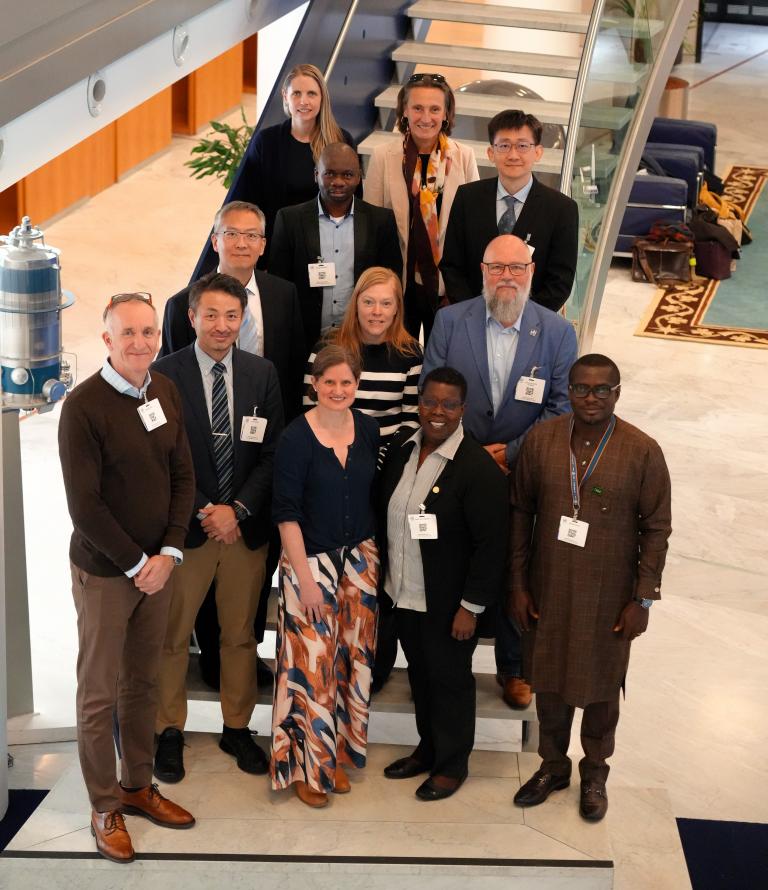
The fourth meeting of the WMO Standing Committee on Services for Aviation (SC-AVI) convened in Geneva from 4–6 November 2025, bringing together experts and Secretariat representatives to review progress, address emerging challenges, and set priorities for the next biennium, taking into consideration cost containment activities with WMO. The agenda, the final report and associated documents are available through the SC-AVI-4 web page.
Achievements since SC-AVI-3
Over the past two years, SC-AVI and its subsidiary bodies have delivered or supported a wide range of outputs that strengthen global aeronautical meteorology. These include:
- Summary of the SERCOM-3 side-event on service delivery transformation in aeronautical meteorology
- Summary of the AeroMetSci Webinars 2023 (RAs II & V | RAs I & VI | RAs III & IV) and the report on the Proceedings of the AeroMetSci-2024 Conference (AeM SERIES No. 10), which advanced scientific dialogue and innovation
- Publication of the Compendium of findings on the effects of climate change on weather hazards and analysis of the impacts of climate change on aviation operations (AeM Series No. 9)
- New and updated testimonies from women in leadership roles and contributions to a SERCOM Gender Action Plan, reinforcing diversity and inclusion
- Updated frequently asked questions (FAQs) on the 2026 amendment to WMO’s qualification and competency requirements for aeronautical meteorological personnel
- Proposed updates to Basic Instruction Package (BIP) resources, including compliance mapping guides and workflows
- Updated Aerodrome Reports and Forecasts: A Users’ Handbook to the Codes (WMO-No. 782)
Contributions to ICAO updates, including the Manual on Volcanic Ash, Radioactive Material and Toxic Chemical Clouds (Doc 9691) and the Handbook on the International Airways Volcano Watch – Operational Procedures and Contact List (Doc 9766) - Proposed updates to key WMO guidance:
- Long-term Plan for Aeronautical Meteorology (LTP-AeM)
- Guide to Competency (WMO-No. 1205) to address personnel rated as ‘not yet competent’
- Compendium of WMO Competency Framework (WMO-No. 1209) to introduce a new competency framework for volcanic ash advisory centre forecasters
- Guide to Meteorological Observing and Information Distribution Systems for Aviation Weather Services (WMO-No. 731)
- Refreshment of the Services for Aviation Moodle training portal, now retitled the WMO Aviation Training Repository, launching in December 2025
Key decisions at SC-AVI-4
The meeting focused on the implications of the WMO Secretariat reorganisation, effective 1 January 2026. After considering a two-body model, SC-AVI agreed to retain its four-body structure: SC-AVI with its three subsidiary bodies (ET-ETC, ET-WCS, AG-VSA), while exploring options for future resilience. A light-touch revision of the Terms of Reference was endorsed to align with updated priorities and outputs for 2026–2027. These will be submitted to SERCOM-4 for consideration.
To manage reduced Secretariat support, SC-AVI agreed to pause development of specialised competency frameworks and defer large-scale events such as the International Workshop on Volcanic Ash (IWVA) over the 2026-2027 timeframe. Shared responsibilities were agreed between SC-AVI and the Secretariat for the convening of meetings, publications, ICAO engagement, and development and promotion of scientific and training resources.
The Committee highlighted risks associated with limited availability of experts in the WMO database, which makes it challenging to maintain balanced gender and regional representation across SC-AVI and its subsidiary bodies. In addition, many experts who do commit to WMO activities face increasing pressures from domestic workloads within their home organisations. Succession planning therefore remains a priority, with targeted actions to strengthen representation across Regional Associations and ensure diversity.
Following the discussions at SC-AVI-4, the Committee has prepared proposals for updates to Technical Regulations No. 49, Vol I to align with ICAO PANS-MET (Doc 10157), the Guide to Competency (WMO-No. 1205) to address personnel rated “not yet competent”, the Compendium of WMO Competency Frameworks (WMO-No. 1209) introducing a new framework for volcanic ash forecasters, an update to the Guide to Meteorological Observing and Information Distribution Systems for Aviation Weather Services (WMO-No. 731), and a revised Long-term Plan for Aeronautical Meteorology (LTP-AeM). These recommendations were presented to the Services Commission Management Group (SERCOM-MG-3) in Cape Town earlier this month to determine which will advance for endorsement. The agreed proposals will be submitted to SERCOM-4 in October 2026 for formal consideration.
Despite resource constraints, SC-AVI remains committed to delivering high-impact outputs that enhance global aviation safety and efficiency. Collaboration and innovation will be key to sustaining progress through 2026-2027.
Outcomes of the SERCOM-MG-3 meeting and next steps
Submitted by Andrea Henderson, Chair of SC-AVI
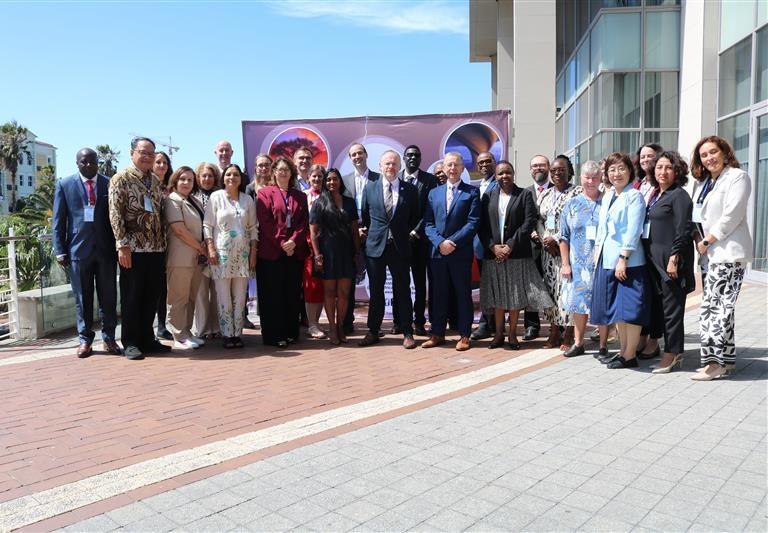
The third face-to-face meeting of the Services Commission (SERCOM) Management Group, held in Cape Town from 1–5 December 2025, marked a pivotal step in shaping WMO’s service delivery priorities for 2026–2027 and beyond.
The meeting brought together representatives from all SERCOM Standing Committees and Study Groups, along with the SERCOM President, Vice-Presidents, and Management Group members. Regional Associations (RA I–VI) were represented through their designated focal points, ensuring regional priorities were reflected in discussions. The Research Board (RB) and Scientific Advisory Panel (SAP) contributed insights on emerging science, including AI and hydrology research. INFCOM representatives participated to address infrastructure and regulatory linkages, while the Capacity Development Panel (CDP) and private sector partners (via HMEI) provided perspectives on resource optimization and innovation. Secretariat staff supported governance, technical coordination, and strategic planning sessions.
Against the backdrop of Secretariat restructuring and cost-containment measures, the meeting focused on refining the SERCOM Work Programme and subsidiary structures for the 2nd half of the 2024-2027 intersessional period, aligning with the forthcoming WMO Strategic Plan (2028–2031), and ensuring that Members’ needs remain central to global service development.
The meeting reaffirmed the importance of impact-based forecasting (IBF) and multi-hazard early warning systems (MHEWS) as cross-cutting priorities. Retaining probabilistic approaches to warnings was strongly supported to ensure consistency in hazard communication and decision-making. Artificial intelligence (AI) and digital transformation were identified as key enablers for future service delivery, with discussions across all service domains on opportunities and challenges.
Aviation was commended for being the only service area to have completed all approved publications, a benchmark for delivery discipline.
For the 2026–2027 period, the Services for Aviation work programme will prioritise:
- Updating WMO Technical Regulations and guidance materials (including amendments to WMO-No. 49).
- Advancing and promoting the Long-Term Plan for Aeronautical Meteorology (LTP-AeM).
- Strengthening Quality Management System (QMS) implementation across regions.
- Exploring AI-enabled capabilities for real-time hazard detection, forecast automation, and training simulations, while maintaining rigorous safety validation.
Presentations from all six Regional Associations revealed shared priorities that resonate with aviation needs, including:
- Accelerating EW4All implementation, including Common Alerting Protocol (CAP) compliance and IBF integration.
- Strengthening observation networks and access to high-resolution NWP data.
- Enhancing climate services, such as State of Climate reports and seasonal outlooks.
- Expanding capacity development through technical training and digital platforms.
- Improving coordination and interoperability to ensure seamless data exchange and harmonized standards.
Preparations for SERCOM-4, scheduled for October 2026, will focus on consolidating these priorities and translating them into actionable plans for the next intersessional period. Members should expect discussions on impact-based forecasting, multi-hazard early warning systems, AI-driven innovation, governance adjustments, resource optimization, and mechanisms to strengthen regional and global coordination. SERCOM-4 will also review progress on technical regulations and initiatives supporting modernisation across all service domains. Active engagement during intersessional work will be essential to ensure that proposals reflect Member needs and position WMO services to deliver authoritative, fit-for-purpose solutions in a rapidly evolving operating environment.s
AeroMetSci-2024 conference proceedings and next steps (recommendations)
Submitted by Stéphanie Wigniolle, WMO Secretariat, in coordination with Piers Buchanan and Ping Cheung, Co-Chairs of the SC-AVI Expert Team on Weather and Climate Science for Aviation Applications (ET-WCS)
The World Meteorological Organization (WMO) convened, under the auspices of the Commission for Weather, Climate, Hydrological, Marine and Related Environmental Services and Applications (SERCOM), the Aeronautical Meteorology Scientific Conference (AeroMetSci-2024). The conference was held at the WMO Headquarters in Geneva, Switzerland from 21 to 25 October 2024.
The main objectives of the conference were to showcase scientific and technological advances in meteorological observations and forecasts, expand focus on the integration of meteorological information decision-support services into the global air traffic management system, and examine further the impacts of climate change and variability on aviation and the science to understand some of the aviation environmental issues. The conference programme was composed of three sessions, each addressing one of these objectives.
It provided a forum for representatives of the scientific research community (including research institutes and other academic institutions), aeronautical meteorological service providers, aviation users and industry representatives to raise awareness of the most recent innovations in aeronautical meteorology science and to discuss the need for further research and technological advancements in support of current and future air transport needs, in line with the appropriate strategy.
The theme of the conference was: “Aviation, weather and climate: scientific research and development for enhanced aeronautical meteorological services in a changing climate.” The conference comprised a blend of presentations, national and regional case studies and panel discussions, taking into account leading scientific/academic research and aviation industry best practices and developments. Poster sessions also took place throughout the week. Presentations made at the conference are now available under the conference website, for Session 1, Session 2 and Session 3.
Further to the previous announcement here, WMO is pleased to announce that the Proceedings of the 2024 WMO Aeronautical Meteorology Scientific Conference (AeM SERIES No. 10), have been available under the WMO e-Library since 31 July 2025.
This report with the Proceedings includes a set of recommendations to guide domestic, regional and/or global strategies on scientific and technological advancement in support of meteorological service for international civil aviation. The proceedings of the conference will comprise these recommendations as well as extended abstracts of each presentation and summaries of panel discussions.
In view of their international significance, these recommendations have been submitted by SC-AVI to SERCOM-MG, for consideration at the SERCOM-MG 3rd meeting in December 2025 (see above). SERCOM-MG-3 approved that the recommendations could go onwards to the Executive Council (EC-80) in June 2026. Such exposure would ensure that WMO, its Members and their service providers as well as partner international organizations and other bodies concerned can appropriately respond to the recommendations.
The AeroMetSci-2024 recommendations will also be submitted to the fourth session of the Services Commission (SERCOM-4) to be held in October 2026, as information only, to help further raise awareness amongst all SERCOM members.
Communicating about impacts of climate change on aviation
Submitted by Stéphanie Wigniolle, WMO Secretariat
Acknowledging the success of the two recently held Aeronautical Meteorological Scientific conferences, in 2017 and 2024 (read article on the Proceedings of the AeroMetSci-2024 conference above), in particular their sessions about the effects of climate on aviation weather hazards and impacts on aviation operations, the Standing Committee on Services for Aviation (SC-AVI) through its expert team on weather and climate science for aviation applications (ET-WCS) committed to communicate further on this topic. The whole aviation community including airlines, pilots and airport operators has demonstrated a growing interest to the impact of climate change and has expressed a need for the best available scientific advice and meaningful, understandable information on the potential impact of climate change on aviation operations. With WMO’s support, the aeronautical meteorology community is working towards strengthening its support to the International Civil Aviation Organization (ICAO) and other aviation industry partners to help their efforts to adapt, mitigate, and build resilience, as a response to a changing climate.
In March 2025, WMO published as an AeM-SERIES No. 9 the 2024 edition of a Compendium of findings of the latest assessments of effects of climate change and variability on weather hazards and extreme events, and consequential impacts on aviation. Since then, WMO has been considering opportunities for communicating and promoting this Compendium, as part of the scientific advice provided by WMO to support ICAO and other aviation stakeholders. Several events such as meetings of regional or international organizations’ working groups, conferences, workshops were organized in 2025 where WMO has been invited to communicate about impact of climate change on aviation operations.
On 7 May 2025, the European Aviation Climate Change Adaptation working group of Eurocontrol held its 9th meeting (EACCA/9) and invited WMO to provide a talk about these latest assessments of effects of climate change on weather hazards and extreme events, and consequential impacts on aviation. In October 2025, a presentation about the Compendium was done at the meeting of the Expert Network on Impacts of Climate Change on Aviation (EN-ICCA) of the European Union Aviation Safety Agency (EASA). In both cases, talks were given by experts from SC-AVI ET-WCS with the support of WMO Secretariat, and received a very positive reception.
In November 2025, the French Air and Space Academy (AAE) convened an international conference which dealt with managing the impact of weather on air and space launch operations: as climate change drives an increase in the frequency and intensity of certain weather hazards, air operations must account for these evolving risks. Ms Henderson, Chair of SC-AVI, kindly provided a talk about the effects of climate change on meteorological hazards and impact on aviation, presenting the main findings collated into the Compendium. Here again, the presentation was highly appreciated and raised many questions.
SC-AVI continues considering opportunities for communicating and promoting the main findings collated into the Compendium, as part of the scientific advice provided by WMO to support the aviation community and will aim at updating this document as resources at WMO permit to do. In parallel, WMO keeps supporting and contributing, where resources permit, to the work of the ICAO Committee on Aviation Environment Protection (CAEP) working group 2, especially its Task 6 about climate change adaptation.
The WMO Aviation Training Repository gets a fresh upgrade
Submitted by Kathy-Ann Caesar and Karine Dumas, co-vice-chairs of ET-ETC
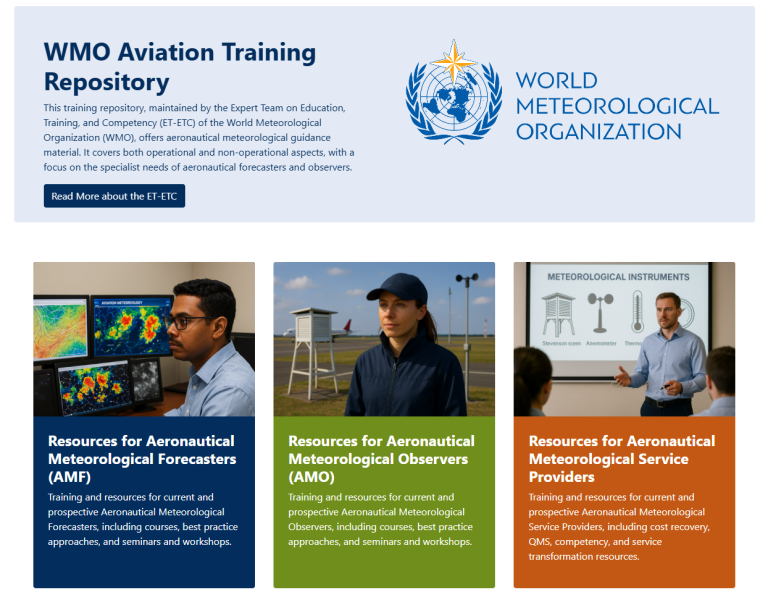
The WMO Standing Committee on Services for Aviation (SC-AVI) Moodle training portal has a new name and new look: the WMO Aviation Training Repository.
The repository has recently undergone a major upgrade, making it easier than ever for aviation meteorologists, observers, and service providers to access high-quality training materials. Whether you're a forecaster, observer, trainer, or manager, the refreshed platform is designed to help you find what you need—faster and more intuitively.
All previously available resources remain accessible, but they’ve been reorganized into three streamlined categories:
- Resources for Aeronautical Meteorological Forecasters (AMF)
- Resources for Aeronautical Meteorological Observers (AMO)
- Resources for Aeronautical Meteorological Service Providers
The new structure makes it much easier for users to find what they need quickly and confidently. Every page now follows a consistent layout and design, creating a familiar and seamless experience across the entire site and all courses. Navigation has been simplified, and the repository has been refreshed with updated content and working links, so users can trust that the information they’re accessing is current and aligned with the latest standards in aeronautical meteorology. Because this field is constantly evolving, new materials will be added regularly as they become available. If you have any resources or suggestions you'd like to see included, we welcome your input—please reach out and let us know. This collaborative approach helps ensure the repository remains relevant, useful, and up to date for everyone.
If you have any questions about the updated site or need help finding specific resources, the discussion forum is open and monitored by the WMO Expert Team on Education, Training and Competency (ET-ETC). They’re ready to assist with any queries you may have.
Explore the upgraded repository here: aviationtraining.wmo.int
Outcomes of the AvRDP2-SSC-4 meeting and closure of project
Submitted by Stéphanie Wigniolle, WMO Secretariat, in coordination with Dr Piers Buchanan and Dr Chris Davis, co-chairs of AvRDP2 SSC and Hellen Msemo and Estelle de Coning, WWRP, WMO Secretariat
2025 is the final year of AvRDP2, the second phase of an Aviation Research and Development project of the World Weather Research Program (WWRP), led by the WMO Research Board with the support of SERCOM/SC-AVI. AvRDP2 aims at demonstrating the benefits of a gate-to-gate use of advanced meteorological information for aviation operations, with a focus on scientific advancement in observation, nowcast and deterministic and probabilistic forecast of significant convection. The AvRDP2 Scientific Steering Committee (SSC) held its fourth and final meeting (AvRDP2-SSC-4) at the Met Office premises in Exeter, UK, from 24 to 26 September 2025.
In the first part of the AvRDP2-SSC-4 meeting, participants considered work progress and latest results of developments over the two air routes chosen by the SSC for the project, namely London to Johannesburg and Hong Kong to Singapore, and results of trials and experiments conducted since October 2024. The project also explored options for the translation of meteorological data into actionable operational intelligence, such as making use of an impact-based metric. Feedback from several user groups (pilots, air traffic controllers, dispatchers) gathered during trials has been presented, and the outcomes of the verification and validation phase, both objective and subjective, have been considered (figure 1). Additionally, the meeting considered the results of the use of a statistical trajectory prediction system with convection avoidance as an example of an impact-based forecast information system. In addition to seamless-in-time blended deterministic and probabilistic forecast products, the project has also been looking at the blending of two convection nowcast products for an end-to-end (seamless in space) nowcast prototype product for the London-Johannesburg route.
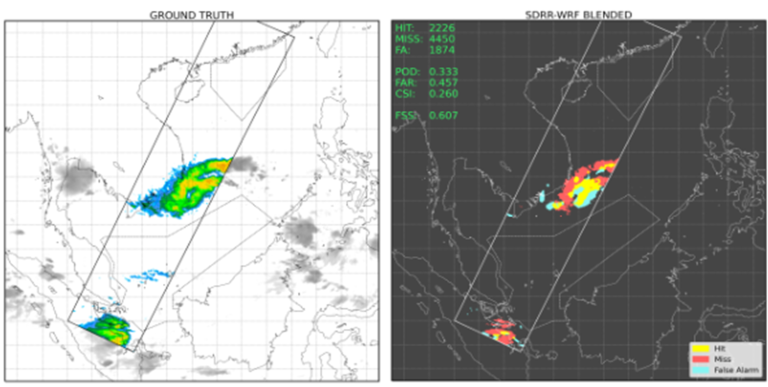
The other half of the AvRDP2-SSC-4 meeting was dedicated to writing the final project report, which is expected to be delivered in late December 2025. It will include a summary of the main results of developments and outcomes of trials over the two air routes, as well as a full report in annexes to the report. Moreover, the AvRDP2 SSC intends to include a set of conclusions and recommendations for WMO Members on research and scientific developments in observation and forecasting of significant convection and their linkage with the ICAO Hazardous Weather Information System (HWIS). The final report will also include a section about a scientific research project supported by AvRDP2 and led by the Hong Kong University of Science and Technology (HKUST), which focused on predicting convection-induced turbulence (CIT). The research addressed topics such as how to predict CIT using convection-permitting simulations, probabilistic prediction of CIT using ensemble simulations and deep learning-based nowcasting using satellite imagery.
AvRDP2-SSC-4 also reviewed the next steps toward the project’s closure, including the approval process for the final report through the WWRP SSC, SERCOM/SC-AVI, SERCOM/MG and the WMO Research Board in the first half of 2026. The meeting further recognised that the methods and lessons learned from AvRDP2 could inform future initiatives to enhance aviation weather forecasting services globally, particularly by strengthening collaboration between the meteorological community and the aviation sector.
Advancing Volcanic Hazards in Early Warnings for All
Submitted by Matthew Hort and Costanza Bonadonna, AG-VSA
The Advancing Volcanic Hazards in Early Warnings for All workshop, hosted by WMO in Geneva (7–9 July 2025) alongside the International Association of Volcanology and Chemistry of the Earth's Interior (IAVCEI) Scientific Assembly, brought together over 100 experts from volcano observatories, meteorological centres, UN agencies, regional authorities, and civil society. The workshop aimed to enhance global efforts to integrate volcanic hazards into the UN Early Warnings for All (EW4All) initiative and global early warning and disaster risk reduction frameworks.
WMO has a long history of working with volcanologists on volcanic hazards though SERCOM and the risk that volcanic ash posses to aviation safety. This work is led by the Advisory Group for Volcanic Science for Aviation Applications (AG-VSA), of which Matthew is Co-Chair and Costanza a member and which draws members from both the meteorological and volcanology communities. However, volcanoes pose much more diverse hazards, including lava, ash, pyroclastic flows, gases, lahars, and tsunamis, affecting aviation, agriculture, health, and infrastructure. The weather, climate change and uneven monitoring exacerbate the risks, particularly in Small Island Developing States and least-developed countries. Over 800 million people live within 100 km of active volcanoes, and eruptions cause an estimated USD 1 billion in annual losses globally.
The workshop reviewed progress across EW4All’s four pillars: risk knowledge, monitoring and forecasting, warning dissemination, and preparedness and response. Key recommendations, captured in a consensual report, include strengthening hazard and risk assessments, expanding monitoring and AI-supported forecasting, implementing inclusive multi-channel warning systems, integrating volcanoes into multi-hazard frameworks, and promoting anticipatory action and preparedness.
The workshop catalysed concrete collaborations across disciplines and institutions. Volcanology experts committed to advancing EW4All roadmaps, engaging in UN/IO communities of practice (e.g., CAP, AI, GDACS), and strengthening the coordination role of IAVCEI and WOVO (World Organization of Volcano Observatories – IAVCEI Network). EW4All pillar leads are urged to formally embed volcanic hazards into national and global frameworks, including WMO hazard categories. By translating scientific advances into actionable risk management, the volcanology community and UN agencies can ensure volcanic hazards are fully integrated into multi-hazard early warning systems, protecting lives, infrastructure, and livelihoods worldwide.
News from the ICAO Secretariat
Submitted by Jun Ryuzaki, Technical Officer, Meteorology, ICAO
The Forty-Second ICAO Assembly Sets Strategic Direction for Aviation Safety
The forty-second Session of the ICAO Assembly (A42) took place from 23 September to 3 October 2025 at ICAO Headquarters in Montréal, Canada. Representatives from 192 Member States adopted significant updates to global and regional frameworks for aviation safety, security, cybersecurity, air navigation, and innovation, aligned with ICAO’s Strategic Plan for 2050.
The Assembly reaffirmed its commitment to the highest levels of safety, unanimously endorsing the 2026-2028 Global Aviation Safety Plan and the eighth Global Air Navigation Plan. Together, these plans provide the structure and guidance needed to support States in strengthening regulatory frameworks, advancing capacity-building efforts, and accelerating progress toward ICAO’s long-term goal of zero fatalities.
Recognizing the growing impact of hazardous meteorological events (HMEs) on aviation operations, the Assembly emphasized the need to enhance the resilience of air navigation services and infrastructure. It noted the critical work of the ICAO Meteorology Panel (METP), in coordination with expert groups and the WMO, in developing advanced meteorological services, including the emerging Hazardous Weather Information Service (HWIS).
Amendment 82 to Annex 3 and New PANS-MET Become Applicable on 27 November 2025
Amendment 82 to ICAO Annex 3 – Meteorological Service for International Air Navigation, together with the newly introduced Procedures for Air Navigation Services – Meteorology (PANS-MET, Doc 10157, 1st Edition) will become applicable on 27 November 2025.
As outlined in AVI Newsletter 2025/1, this major amendment package, developed following the fifth meeting of the ICAO Meteorology Panel (METP/5, June 2021), restructures ICAO provisions and procedures into Annex and PANS-MET, clearly defining the roles and responsibilities of meteorological authorities and service providers. It also contains further advancement of aeronautical meteorological service in the following domains:
• the introduction of quantitative volcanic ash concentration information (QVA) and further enhancement of the International Airways Volcano Watch (IAVW);
• continued development of the World Area Forecast System (WAFS); and
• expanded use of IWXXM to support System-Wide Information Management (SWIM).
These changes mark a significant step toward more precise, integrated and information-oriented meteorological services for international aviation.

News from the WMO Secretariat
Submitted by Adriana Oskarsson, Services for Aviation Section, WMO
As 2025 draws to a close, the global aeronautical meteorology community can reflect on a year marked by resilience, innovation, and collaboration. While in the midst of a comprehensive WMO Secretariat reorganization, from advancing scientific research to strengthening training and competency frameworks, the Standing Committee on Services for Aviation (SC-AVI) and its partners have delivered impactful outcomes that enhance aviation safety and efficiency worldwide.
Early in the year, WMO convened an extraordinary session of its Services Commission (SERCOM-Ext. 2025), endorsing a proposed regulatory framework for early warning services and updated guidance on hazardous event cataloguing—key steps toward the UN’s Early Warnings for All initiative.
March saw the third meeting of the Expert Team on Education, Training and Competency (ET-ETC-3), which refreshed training resources and identified future skills for aeronautical meteorological personnel, including AI understanding, data manipulation and decision support.
Scientific advancement remained a priority. The publication of the Compendium of Findings on the Effects of Climate Change on Weather Hazards and Analysis of the Impacts of Climate Change on Aviation Operations underscored the growing need for climate resilience in aviation.
Equally significant was the release of the Proceedings of the 2024 WMO Aeronautical Meteorology Scientific Conference (AeroMetSci2024), which captured cutting-edge research and recommendations to guide future strategies for aeronautical meteorological services in a changing climate.
Meanwhile, the final year of the Aviation Research and Development Project Phase II (AvRDP2) , after five years of research and trials, delivered valuable insights into convection forecasting and impact-based decision support.
November’s SC-AVI-4 meeting reaffirmed commitments to competency frameworks and updates to WMO Technical Regulations as well as key WMO guidance, while addressing resource constraints and planning for 2026–2027. The launch of the upgraded WMO Aviation Training Repository in December capped a year of capacity-building efforts.
As we look ahead to 2026, challenges such as organizational restructuring and evolving industry needs will demand agility and innovation. Yet, the achievements of 2025—rooted in collaboration across expert teams, advisory groups, and partner organizations—provide a strong foundation for continued progress.
Upcoming WMO meetings and events
Note: All information given here is subject to change.
- WMO/UKMO Aviation Meteorology Training Seminar, 11 to 15 May 2026, Alanya, Türkiye.
- Eightieth Session of the Executive Council (EC-80), 22 to 26 June 2026, Geneva, Switzerland.
- Second meeting of the Expert Team on Weather and Climate Science for Aviation Applications (ET-WCS-2), TBC
- Fourth Session of the Services Commission (SERCOM-4)), 19 to 23 October 2026, location TBC.
Coming up next time...
In the next issue of the newsletter readers can look forward to:
- Highlights of the WMO/UKMO Aviation Training Seminar and the ET-WCS-2 meeting
- Expectations for EC-80 and SERCOM-4
...and more!
CLICK HERE to read previous newsletters
CLICK HERE to return to our homepage