COP31: Protecting health in an era of extreme heat
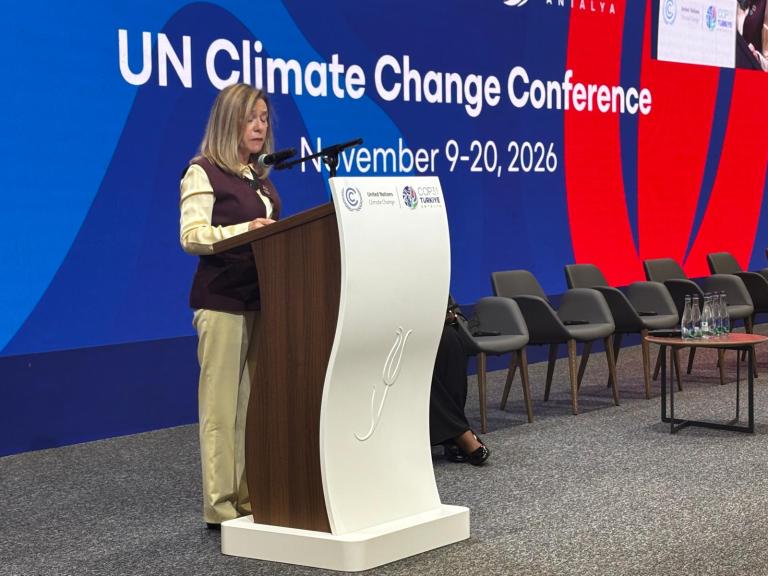
Excellencies, colleagues, friends,
We have entered a new era of heat. The evidence is clear.
The past 12 years were the 12 warmest ever measured. As the planet has warmed, heatwaves have become about 200 times more likely than before the industrial age.
No other kind of extreme weather kills more. And yet it is among the most predictable.
Heat is also getting harder for the body to cope with. Extreme humid heat has more than doubled since 1979.
Heat is now an escalating threat to our health, our societies and our economies.
Every year, it kills around 546,000 people.
It fills our hospitals. It wilts our crops. And when the power fails in a heatwave, the cooling stops.
It hits the least protected the hardest, like people living in informal settlements. Under a metal roof, without proper ventilation or insulation, a home can be hotter inside than the street outside.
And the elderly, pregnant women and those suffering from cardiac, kidney, mental or metabolic diseases all suffer more in the heat.
It also hits the economy. In 2024, extreme heat cost the world more than one trillion dollars in lost productivity.
But here is the hopeful part. Much of this harm can be prevented if we put science, climate information and early action at the centre of decision-making.
That’s because we can see it coming and we can act before heat arrives.
Days ahead, national weather services can forecast a heatwave and know how hot it will be and how long it is likely to last. When these forecasts are linked to health systems and local authorities, they become life-saving tools.
Months ahead, we can see a hot season building. This year, what will be the strongest El Niño since 1950 is releasing heat from the warmest ocean ever measured. Because we know it’s coming, health systems and power grids can prepare.
Decades ahead, climate projections show what temperatures a city will face in 2050. So the hospitals, homes and cities we build today can stand up to the heat of tomorrow.
And we know what works. In European cities with heat–health warning systems, heat deaths are about a quarter lower. These warnings, and the plans behind them, could save around 100,000 lives a year.
In medicine, that would be a dream: a condition we can detect early, and a treatment that works. But we’re not reaching every patient who needs it.
Why not? Because of three gaps.
The first gap is information. Too many warnings stop at the thermometer. They don’t say who is at risk, or who should do what. Climate information has to become clear, local advice that reaches people who need it most.
The second is implementation. Policymakers often don’t know which solutions work best, for whom, and under what conditions. And local community partners often lack the resources they need to act.
The third is in governance. When floods and storms hit there is usually someone in charge. Heat affects everyone, but too often it falls between mandates and agencies. Coordination across sectors and levels of government is usually lacking.
Closing these gaps is the work of this room.
Let’s connect weather services with city leaders, employers, emergency managers and communities, so warnings say who is at risk and what to do.
And let’s strengthen cross-sectoral coordination. This way, risk information is translated into decisions that protect people before a crisis unfolds.
We are not starting from scratch.
In 2024, the United Nations Secretary-General's Call to Action on Extreme Heat helped elevate awareness and mobilize key actions.
At COP30 last year, WMO and UNDRR launched the Extreme Heat Risk Governance Framework and Toolkit, a joint initiative that provides practical guidance for strengthening governance, heat planning, and coordinated action on extreme heat.
We have strong foundational partnerships.
We have the Global Heat Health Information Network, which WMO leads with WHO.
Last month, the network brought together scientists, practitioners, philanthropies, multilateral development banks and policymakers from across sectors at the Global Heat Forum.
The aim was to outline a roadmap of priorities and practical pathways for accelerating action on extreme heat and to provide answers to burning questions that decision-makers have.
And we have Early Warnings for All, which aims to protect everyone with early warnings by 2027, including from heat.
All of this needs investment that lasts longer than a single project, and policies that can help deliver lasting solutions.
We can’t stop the heat. But we can protect people from it. We already have the science, the forecasts and the solutions.
The momentum is there. The science is there. The partnerships are growing.
Now we must scale them. Let us use climate information intelligently, strengthen partnerships across sectors, and ensure that every warning becomes action and every action saves lives.
Thank you.
Statement by