

One step closer to the Fifth International Polar Year
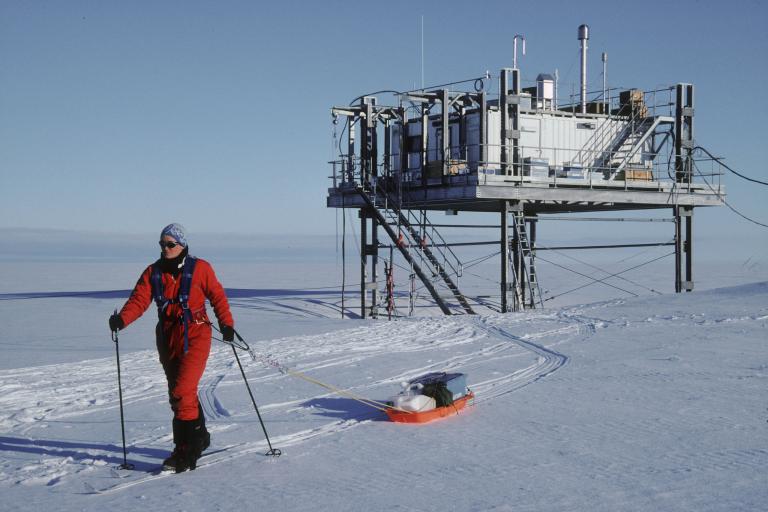
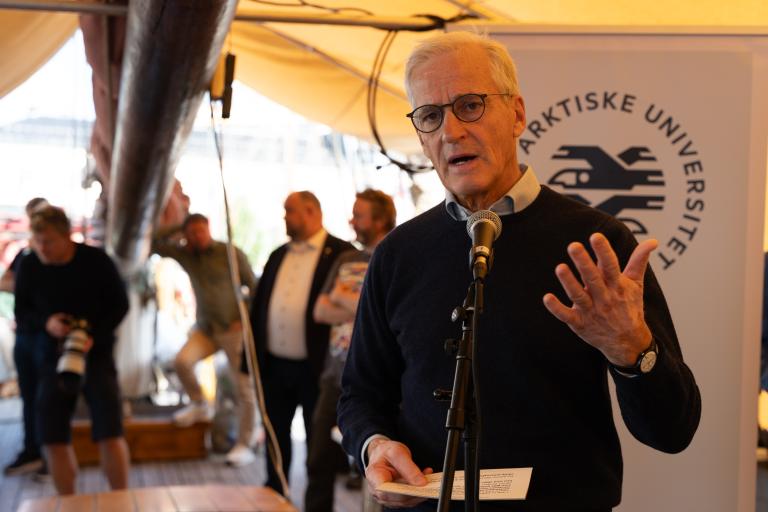
Norwegian Prime Minister Jonas Gahr Støre announced that Tromsø will host the International Coordination Office for the Fifth International Polar Year (IPY-5). The World Meteorological Organization (WMO) is among the organizations leading preparations for the initiative, which aims to advance understanding of the polar regions and their influence on the global climate.
UiT The Arctic University of Norway will lead the office, working closely with the Norwegian Polar Institute. The Korea Polar Research Institute and the Chilean Antarctic Institute will run regional offices, creating a four-institution consortium that connects Arctic and Antarctic research communities across Europe, Asia and South America.
The three offices will operate as a single coordinating body. They will support the IPY-5 Executive Committee and Planning Group, coordinate international activities and communications, facilitate project endorsement and connect participating countries, organizations and communities. The office has a US$ 10 million budget over nine years, beginning on 1 January 2027.
Camilla Brekke, Director of the Norwegian Polar Institute, highlighted the role of international cooperation: “International collaboration contributes with different perspectives and ensures that IPY-5 becomes a unifying and inclusive platform for research and knowledge development”.
The office will also work to ensure the meaningful participation and leadership of Indigenous Peoples and the inclusion of Indigenous knowledge systems throughout IPY-5. It will promote open science and participation by early-career researchers.
A global effort
IPY-5 will bring together researchers, governments, Indigenous Peoples and local communities, operational agencies, funding organizations and other partners in an international effort focused on the Arctic and Antarctic.
WMO, the International Arctic Science Committee (IASC), the Scientific Committee on Antarctic Research (SCAR) and the International Science Council jointly lead preparations. IPY-5 builds on more than 140 years of international polar cooperation, beginning with the first International Polar Year in 1882 – 1883.
Organizers launched the IPY-5 vision and priorities at the SCAR Open Science Conference in Oslo in August 2026. The vision sets out five imperatives: global science for global challenges; a transformational leap in knowledge; knowledge without borders; diverse knowledge systems; and more resilient societies.
IPY-5 aims to combine advances in observing systems, satellites, artificial intelligence, modelling and digital infrastructure with scientific, Indigenous and traditional knowledge. Its priorities include ice-sheet change and sea-level rise, climate feedbacks, water and food security, biodiversity and extreme events, as well as the effects of environmental change on communities and economies.
“IPY-5 is a unique opportunity to transform our ability to observe, understand and anticipate change across the Earth system”, said Dr Narelle van der Wel of WMO.
National plans take shape
Countries are establishing IPY-5 National Committees to bring together scientific institutions, government agencies, operational services, funding bodies, Indigenous and local knowledge holders, early-career researchers and other stakeholders.
IPY-5 expects to open its first call for project endorsements in late 2026. The system will connect research, observing, education, outreach and other initiatives contributing to the preparatory period, the intensive phase in 2032 – 2033 or the longer-term legacy of IPY-5.
WMO prepares its contribution
WMO has begun to define how its observing, research and operational work will contribute to IPY-5. In 2025, the WMO Executive Council endorsed the Organization’s participation through Resolution 2 (EC-79). In 2026, Resolution 1 (EC-80) asked the WMO Panel on Polar and High-mountain Observations, Research and Services (PHORS) to prepare an IPY-5 Action Plan for consideration by the Executive Council in 2027.
The plan will set out WMO’s distinctive contribution, the expected benefits for Members and opportunities for National Meteorological and Hydrological Services to participate. Potential priorities include future sea-level information, near-term prediction, observations in data-sparse regions, data exchange and the transition of mature research into operational products and services.
The Global Cryosphere Watch Implementation Plan 2027 – 2031 will provide an important foundation for this work. Polar research priorities under the World Weather Research Programme, World Climate Research Programme and Global Atmosphere Watch will also address critical knowledge gaps, improve prediction across timescales and connect research advances with WMO observing, data and operational service systems.
These preparations will shape what IPY-5 can deliver during its intensive phase in 2032 – 2033 and what observing systems, partnerships and services endure afterwards.