

Mauritius Meteorological Service validates five-year Strategic Plan to strengthen weather, climate and early warning services
- Supporting regional cooperation to strengthen seamless operational forecasting and multi hazard early warning systems at national level in the South-West Indian Ocean (CREWS SWIO)
- Technical Assistance to the Indian Ocean Commission (IOC) - Building Regional Resilience through Strengthened Meteorological, Hydrological and Climate Services in the Indian Ocean Commission Member Countries
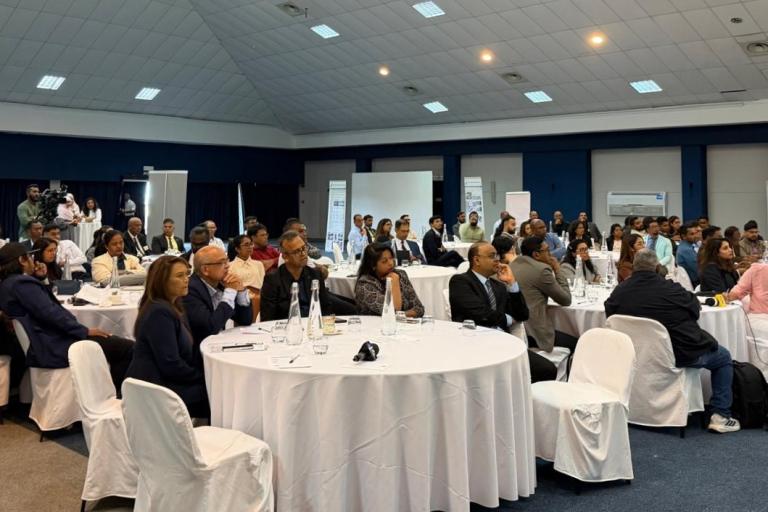
The plan was validated on 23 September 2026 at a stakeholder workshop in Balaclava, bringing together representatives from government institutions, disaster management agencies, development partners, academia, the private sector and users of weather and climate information.
The Mauritius Meteorological Services (MMS) Strategic Plan 2027–2031, together with its accompanying Operational Plan, provides a framework for strengthening the country's meteorological services and translating strategic priorities into activities, investments and measurable results.
Both plans were developed with support from the CREWS South-West Indian Ocean (SWIO) and Technical Assistance to the Indian Ocean Commission (TA IOC) projects, with the World Meteorological Organization providing technical support and coordination.
As a Small Island Developing State, Mauritius is exposed to a range of weather, climate and ocean-related hazards including tropical cyclones, intense rainfall, flash floods, droughts, heat stress and coastal hazards. The Strategic Plan provides a roadmap for transforming the Mauritius Meteorological Services into a modern, digitally enabled and future-ready institution capable of delivering high-quality weather, climate, ocean and hydrological services that protect lives, support economic development and strengthen national resilience
The Strategic Plan aligns with the Government Programme 2025–2029, Mauritius Vision 2030, the Global Framework for Climate Services and the United Nations' Early Warnings for All (EW4All) initiative. It recognizes that meteorological services are no longer limited to forecasting the weather but are essential providers of risk and resilience intelligence that support disaster risk reduction, climate adaptation, aviation and maritime safety, agriculture, tourism, water management, energy planning and public health.
A central pillar of the Strategic Plan is the strengthening of the National Multi-Hazard Early Warning System (MHEWS). It supports an end-to-end approach encompassing risk knowledge, observations, forecasting, warning dissemination, preparedness and last-mile communication. Planned measures aim to ensure universal access to timely, accurate and impact-based warnings, while expanding the use of digital technologies and Common Alerting Protocol (CAP)-compatible dissemination systems to reach communities quickly and effectively.
The plan supports Mauritius' contribution towards the global Early Warnings for All initiative, which aims to ensure that everyone is protected by effective early warning systems. As the national authority responsible for weather, climate and warning services, MMS plays an important role in the observation, monitoring and forecasting pillar of EW4All, contributing to the shared objective of ensuring that every person is protected by effective early warning systems. The Strategy will further strengthen coordination with disaster management institutions, emergency responders and other national stakeholders to ensure that warnings are translated into timely action and preparedness measures.
Beyond early warning systems, the Strategic Plan outlines ambitious measures to modernize meteorological infrastructure and forecasting capabilities.
These include strengthening the national observation network, upgrading automatic weather stations, radar and satellite systems, improving forecasting technologies, enhancing marine and aviation meteorological services, and expanding hydrometeorological forecasting capabilities. Together, these investments will improve forecast accuracy, increase warning lead times and support more effective decision-making across weather-sensitive sectors of the economy
As Mauritius confronts growing climate and weather-related risks, the implementation of this Strategy represents a significant step toward building a safer, more resilient and climate-smart nation. By strengthening early warning systems, modernizing meteorological services and expanding climate information for decision-making, Mauritius Meteorological Services is positioning itself at the heart of national efforts to protect lives, safeguard livelihoods and support sustainable development for generations to come.
- WMO Member:
- Mauritius
- Region:
- Region I: Africa