COP31: El Niño, extreme events and the science behind the headline
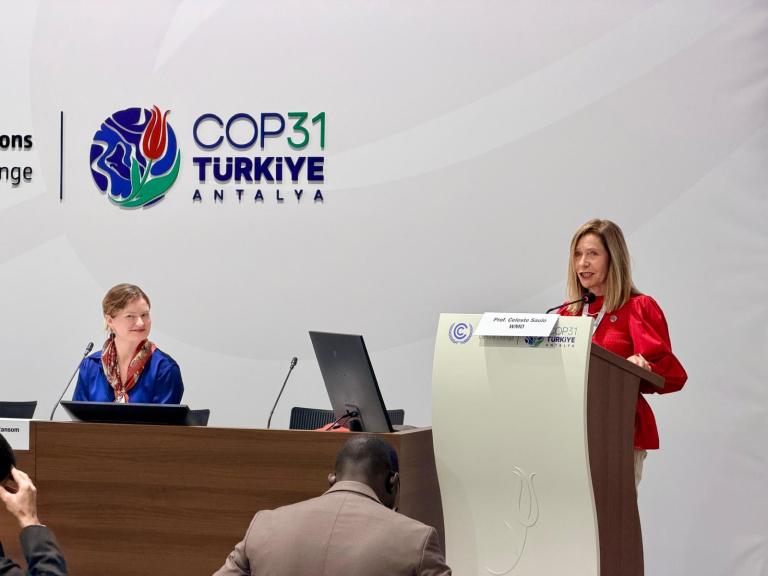
Excellencies, colleagues, friends,
Headlines often reduce complex events to a single word. “Super.” “Disaster.” “Godzilla.”
But a forecast isn't a dramatic headline that can be summed up in one word. It comes with odds and with a range. And with how sure we are.
Every meteorologist learns this early in their career: you can be right about the storm, and still be wrong about exactly where the rain falls.
Take this El Niño.
In June, we said there was an 80 per cent chance of one happening.
In September, we said the chance it would last until February was nearly 100 per cent.
WMO has never spoken with that much certainty before.
That isn’t one model talking. Thirteen forecasting centres, from Washington to Tokyo, Exeter to Pune, now agree.
They watch a stretch of the Pacific nearly twice the size of India. By August, that stretch of ocean was 2.5 degrees warmer than normal. By the end of the year, we believe it could reach 3.8. That would make this the strongest El Nino since at least 1950.
This is the science behind the headline.
But what it will do -what will be the consequences- in each country is far harder to predict.
El Niño doesn’t flick a switch. It’s more like a dial that shifts weather patterns around the world. Drier here. Wetter there. Hotter almost everywhere.
No two El Niño events are the same. What each one does depends on the season and location – and, more and more on how human activities are affecting the climate.
Getting all of that right is hard. And even a perfect forecast is only the first test.
What matters next is whether the right warning reaches the right person, at the right time.
Is it delivered in words they understood and trusted? Does it change a decision or inspire action?
That is the journey we’re on this evening. From reading the signal, to understanding the risk, to taking action. And then back again to the start, armed with what we’ve learned, so the path is even clearer next time.
The stakes are real. A very strong El Niño will hurt. For many people, it’s already hurting. You’ll hear more about that later this evening.
But not everything is decided. The peak is still weeks away, and its effects will last well into 2027. So there is still time to act on what we know.
And so I have one request for everyone in this room.
Tell us where the chain is still breaking. Where information arrives too late or is too vague to act on. Just as important, tell us how you used that information to prepare and protect, to anticipate and to act. This is work we must do together.
That’s why WMO works with national weather services, regional centres, UN agencies and humanitarian partners. Our job is to turn a global forecast into national plans.
When we work together, and build on science, people can act with confidence.
This is the idea behind Early Warnings for All.
COP31 is built on dialogue, consensus and action. On El Niño, the science has already given us the consensus. It’s a foundation we can all stand on. Now let’s use tonight for dialogue. And the days ahead for action.
Thank you.
Statement by