Protect the Global Climate Observing System
The Global Climate Observing System is crumbling as a result of fragile funding and critical gaps. Without sustained long-term financing and coordination, the ability to forecast extreme weather, monitor the ocean and predict and track climate phenomena such as El Niño is in jeopardy.
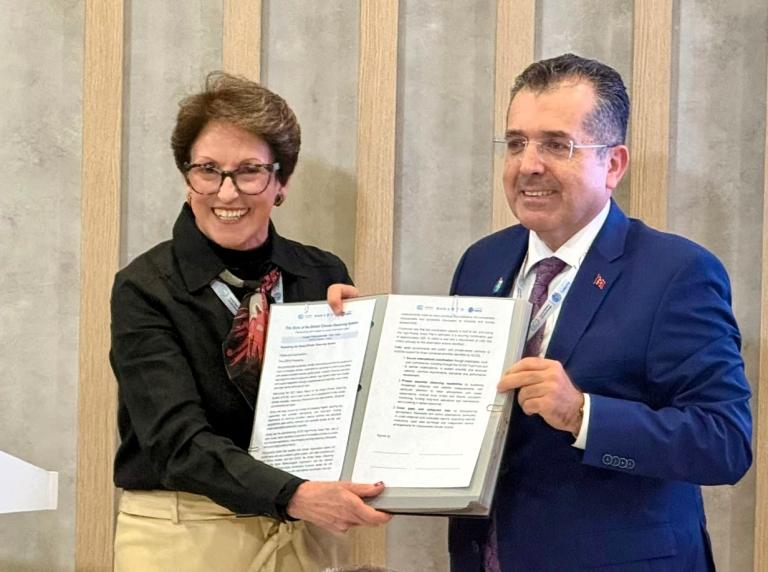
COP31 Co-Presidents Türkiye and Australia announced an unprecedented call to action at a packed high-level event at the UN climate conference, COP31, on 10 November 2026, amid unanimous declarations of support to protect the observing system which protects us.
“It is vital we keep taking the planet’s pulse,” WMO Secretary-General Celeste Saulo told the high-level event.
The Global Climate Observing System, which is co-sponsored by WMO and other partners, t measures Earth’s vital signs – there are more than 50 essential climate variables, spanning the atmosphere, the ocean, the cryosphere and terrestrial domains. Its underlying principle is simple – no country can do this alone.
The world spends close to 10 billion dollars a year on climate observations. Whilst there are welcome advances in satellite capabilities and improvements in data integration, there are persistent and emerging gaps that threaten the continuity of many systematic observations.
“For decades, we have expanded our ability to observe the planet. But now, that progress is at risk of slipping away. Across the air, ocean, ice, and land, the lights are starting to go out,” explains a new video premiered by GCOS Chair Thelma Krug at the high-level event.
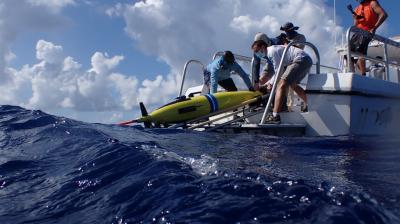
Of particular concern is the degradation of key components of the Global Ocean Observation System, she said. This jeopardizes the historical continuity and global coverage of critical ocean climate observations, directly threatening our ability to predict and track key climate phenomena, such as El Niño.
Last year at COP30, many Parties voiced concern at the falling support for these networks. Some key measurements have already declined. Others could be interrupted, from networks on the ground to individual satellite missions.
“Records built over decades currently rest on short-term grants. On a single satellite. On a few specialists. On one copy of the data. We are funding long-term records with short-term money,” she said.
“Coverage is uneven too, from parts of Africa to the deep ocean. The basic weather network the world agreed on is less than 40 per cent in place. Across a large part of the western Pacific, no moored buoys are operating near the equator. That region helps shape the El Niño we’re facing now,” said Celeste Saulo.
The Global Ocean Observing System Status report released ahead of COP31 outlined progress in marine and ocean monitoring as well as gaps and risks.
A draft GCOS High-Priority Action Plan defines a small set of actions to address the most urgent gaps and shortcomings.
Three connected priorities have been identified:
- Protect essential observing capabilities, including in the ocean and high mountains;
- Close gaps and safeguard data through initiatives such as the Systematic Observations Financing Facility. Many least developed countries and small island developing States lack the funds to keep enough weather stations running. Weather crosses borders. Gaps in any one country weaken us all.
- Sustain international coordination to assess priorities, identify gaps, and guide collective action. This includes financial support for the continued operation of the GCOS Secretariat, hosted at WMO.
“Securing the coordination costs about 10 million dollars a year. That is a tenth of a cent for every dollar the world already spends on observations. Protecting the observations and closing the gaps costs 500 million a year,” said Celeste Saulo.
“For what they tell us and what they protect, these are small sums,” she said.
The High-Priority Action Plan is currently out for public review, as is the forthcoming GCOS Status Report. Publication of both is scheduled for February 2027 to directly inform the UNFCCC’s Global Stocktake information process and related activities under the Convention.Global Stocktake information process and related activities under the Convention.
Read the presentations at Earth Information Day at COP31 here.