COP31: Protect the Global Climate Observing System
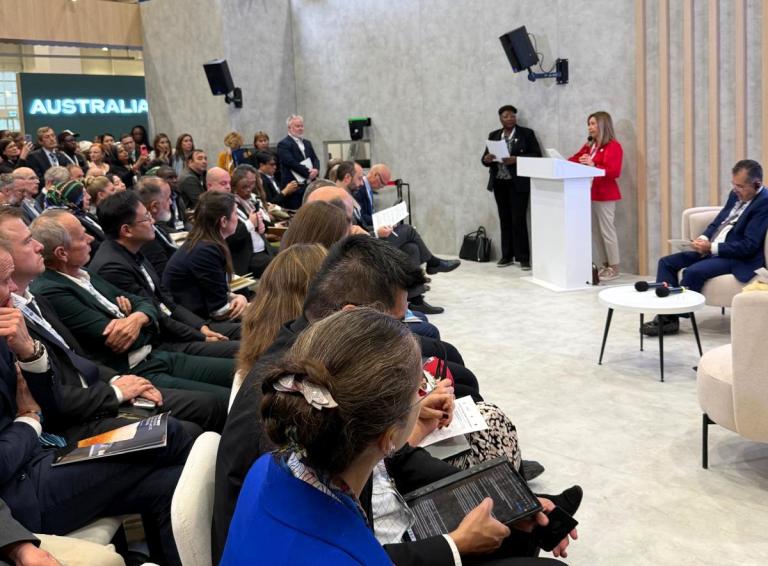
Excellencies, colleagues, friends,
Thank you to the UNFCCC secretariat, to GCOS, and to the technicians who repair buoys at sea and keep stations running through the night.
Every year, the planet gets a check-up. As we do when we go to the doctor. Yesterday, WMO shared the latest results.
From January to September, the planet was 1.47 degrees warmer than before the industrial age. The ocean holds more heat than we have ever measured. Sea level is the highest on record.
These results are how the world knows where it stands. Every plan made at this conference depends on them.
But a check-up like this is only as good as its tests.
GCOS is where the world agrees on those tests. It writes the list of the planet’s vital signs, more than fifty of them. It sets what a good reading looks like, so readings from every country and every decade can be compared. And it checks which tests are still being done, and which are at risk.
These readings are the diagnosis behind this conference. They feed the IPCC, the Global Stocktake, and every climate service. And they test what we think we know.
In the last El Niño, heat and drought meant forests and soils took in less carbon. So carbon dioxide in the air rose by a record amount.
Now a very strong El Niño is under way, and we expect the same again, this time from an even higher level. How big a jump? Only our measurements will tell us.
There is real progress. Satellites see more than ever. Some countries have invested in new networks on land and at sea. The world spends close to 10 billion dollars a year on climate observations.
And we saw this El Niño coming months away because of these measurements. Kenya has prepared its health system for the expected shocks. Papua New Guinea has approved a national support package. Our observations buy us the time we need to protect ourselves from disaster.
Yet the planet’s check-up is getting patchy. GCOS’s draft Status Report confirms it.
Last year, you, the Parties, voiced concern at falling support for these networks. Some key measurements have already declined. Others could be interrupted, from networks on the ground to individual satellite missions.
Records built over decades currently rest on short-term grants. On a single satellite. On a few specialists. On one copy of the data. We are funding long-term records with short-term money.
Coverage is uneven too, from parts of Africa to the deep ocean. The basic weather network the world agreed on is less than 40 per cent in place.
Across a large part of the western Pacific, no moored buoys are operating near the equator. That region helps shape the El Niño we’re facing now.
Gaps in a medical history can hide an illness.
Every gap weakens the Global Stocktake, how we track adaptation, and our warnings, including for this El Niño.
The good news: we know the treatment. GCOS has set out three priorities.
First, secure the coordination that holds the system together: shared standards, data and expertise. That coordination is itself under threat.
Second, protect the observations we cannot afford to lose.
Third, close the gaps where we see least: in carbon, in freshwater, in the regions most at risk.
Securing the coordination costs about 10 million dollars a year. That is a tenth of a cent for every dollar the world already spends on observations.
Protecting the observations and closing the gaps costs 500 million a year.
For what they tell us and what they protect, these are small sums.
It is vital we keep taking the planet’s pulse. For every record we protect today is a tool the next generation will use to change the course of history.
Thank you.
Statement by