COP31 - Climate information at the heart of health decisions
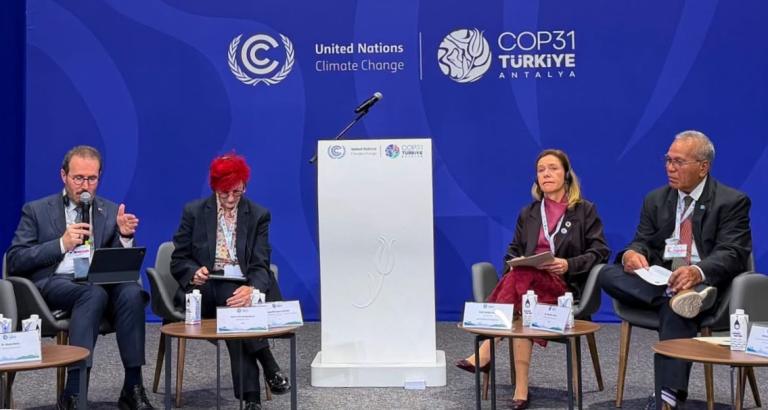
Thank you, Türkiye, for opening COP31 with health and launching the Antalya Initiative for Health Resilience. Countries learn fastest from each other, and this gives them a place to share what works.
You asked how data, AI and early warning can help health systems protect people. My answer: start with the warning, and plan it with health authorities, from the first alert to a hospital’s response.
- Our forecasters can say tomorrow will reach 44 degrees. A hospital needs to know something else: who is at risk, how many patients may come in, and what to do.
- We speak in degrees. You speak in patients. A good warning speaks both languages.
Heat is the deadliest weather hazard. Most heat deaths can be prevented.
- Extreme heat kills more people than any other weather extreme: around 546,000 a year in 2012--2021. That is 63% more than in the 1990s, even allowing for population growth.
- WHO estimates around 100,000 of these deaths a year could be avoided with heat--health warning and response systems.
- That is from the first global evidence review on heat and health, by the network WMO leads with WHO, where weather and health experts work as one.
A warning protects health only when weather and health services agree when it goes out and what it triggers.
- Too many warning systems still stop at the temperature. No health advice, no link to a response plan. That same review calls this the single most correctable weakness.
- And temperature alone can mislead. Extreme humid heat has more than doubled since 1979. Warnings must measure what the body feels.
- What works is known: thresholds set for the people most at risk, actions agreed in advance, and regular data sharing between the weather service and health authorities. This is what saves lives.
- Most warnings only look outside. But people can spend as much as 90% of their time indoors, where heat builds up overnight, just when the body needs to recover. Germany’s warning system is one of the few that accounts for this.
Hospitals and clinics must be ready for the heat that is coming.
- Heatwaves bring sharp rises in admissions and can overwhelm a health system. When electricity demand peaks, the power can fail and the cooling can stop.
- Many hospitals and care homes have little protection against heat. England's NHS reports facilities that pass 28 degrees indoors, so it knows where to act first.
Digital tools then make the whole chain faster, and reach further.
- The data is already there. Three in four national weather services share climate data with the health sector. But fewer than one in four health ministries use weather information in their disease surveillance.
- Digital health can close that gap. Forecasts can flow straight into the systems health workers already use. An epidemiologist can see dengue risk weeks ahead and send mosquito control where it matters most. A hospital manager can see a flood coming, move supplies and reroute ambulances before the roads close.
- But an app or an AI model is only as good as the observations and institutions behind it. A perfect forecast is a scientific achievement. It only becomes a health intervention when it’s built around a health decision. And it must keep working when the power fails.
So my message is simple: let's put climate information at the heart of health decisions.
- Heat warnings that health systems can act on, designed with health authorities and issued by the national weather service as the trusted source.
- Hospitals ready for tomorrow's temperatures.
- As you design your national digital health strategies, bring your national weather service in from the start, so weather information flows into your health system as routinely as lab results.
- And Early Warnings for All means everyone, including the regions and small island states still underserved by heat--health plans.
- So that when the forecast says 44 degrees, every health system knows: who is at risk, and what to do.
Statement by