

WMO Infrastructure commission oversees the global forecasting backbone
The WMO Infrastructure Commission meets from 23-27 November to discuss how to strengthen the crucial global forecasting backbone – from satellites to ocean and cryosphere observation and data sharing – to ensure the delivery of reliable, science-based weather, water and climate services.
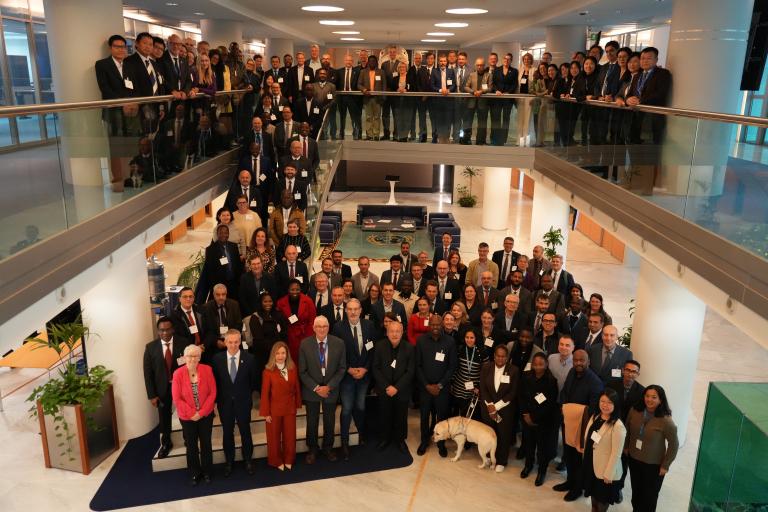
The Infrastructure Commission oversees observing systems and standards, instrumentation, data processing and exchange, forecasting systems and information management. It meets at a time when Artificial Intelligence, satellite technology, big data and supercomputing is transforming weather forecasts, but huge gaps remain in basic observations.
“WMO's technical cooperation is one of the most tangible achievements of multilateralism. Every observation shared across borders, every common standard implemented, demonstrates that cooperation,” said WMO Secretary-General Celeste Saulo.
“The standards you agree on here are WMO’s common language. And you write that language together, through cooperation built on science, technical expertise and shared goals. That is WMO’s DNA. It has guided our data diplomacy for more than 75 years – and it will continue to,” she said in an opening statement.
The Infrastructure Commission will discuss streamlined technical regulations, updating competency frameworks, capacity development and new guidance material.
Specific areas of focus include:
- The WMO Integrated Global Observing System (WIGOS). Vision 2050 sets a shared direction for an integrated, intelligent and inclusive observing system. It brings together observations from space and across the Earth system. And it helps to guide the investments Members make today. Putting this vision into motion will be INFCOM’s work for years to come.
- Measurements and data standards. Behind trustworthy observations are common standards and skilled people. INFCOM’s work to update measurement guidance and strengthen staff competencies will keep measurements comparable and traceable. The proposed unified framework for Regional Instrument Centres will strengthen calibration, traceability and training.
- Data exchange. The WMO Information System, WIS 2.0, connects 89 Members, nearly triple the number in 2023. WIS is now moving beyond data exchange and reaching the first mile, from observing stations to national systems. First-mile standards developed with the Hydrometeorological and Environmental Industry Association will help standardize this link. Networks will be simpler and cheaper to build as a result.
- Enhanced earth system observing system. There is a need to close the gaps in the Global Basic Observing Network and expand it to other domains, including the ocean, hydrological cycle and cryosphere.
- The WMO Integrated Processing and Prediction System (WIPPS) is evolving, with a focus on how to build a prediction strategy around artificial intelligence, which recognizes that the hardest part of using AI is giving Members fair access to well-governed data, not the models themselves.
"This Commission deals with technical and regulatory material – the standards, practices and systems that allow every Member to observe, exchange and use Earth system data for the benefit of all. Whatever political considerations may arise on specific national grounds, they should not stop the technical work of the Commission at the global level from making progress," said INFCOM President Michel Jean.
INFCOM will also consider fine-tuning its work to a more streamlined structure and work programme that fits the Executive Council’s tighter budget priorities and focuses work on the highest-priority outputs.