

Western Pacific faces drier months as El Niño strengthens

Below-normal rainfall is likely from Palau to the Marshall Islands and from central and southern Papua New Guinea to southern French Polynesia, according to the WMO Pacific Regional Climate Centre Network. Along the equator, a wetter season than usual is expected from Nauru to eastern Kiribati.
Papua New Guinea, Solomon Islands, Vanuatu, Fiji and Tonga reported water shortages linked to persistently low rainfall between May and October. Higher temperatures could worsen drought in areas where El Niño typically brings less rain.
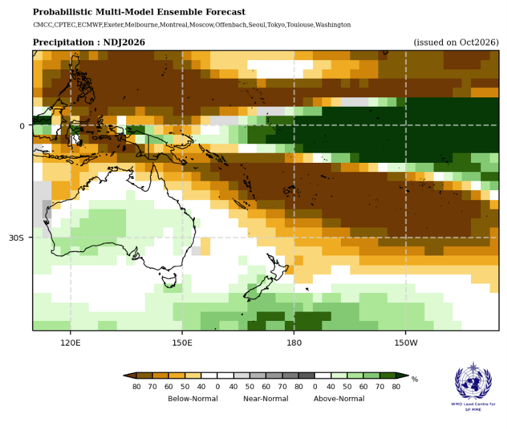
There is a high chance that this El Niño will be the strongest recorded since 1950. It is expected to persist into the March to May 2027 period, and some countries are likely to feel its effects after the event ends.
Above-normal air temperatures are likely across most of the western and central tropical Pacific and from Papua New Guinea south-east to New Caledonia. Cooler-than-normal conditions are expected between Fiji and southern French Polynesia.
Strong to extreme marine heatwaves are forecast around eastern Kiribati. Coral reefs in central and eastern Kiribati are at risk of bleaching through February 2027.
Normal to above-normal tropical cyclone activity is expected in the south-west Pacific from November 2026 to April 2027. A more active season than usual is likely near and east of the International Date Line. Farther west, normal or below-normal activity is forecast, although severe cyclones are still possible.
The network issued the outlook on 23 October following the 19th Pacific Islands Climate and Ocean Forum (PICOF-19). The event also reviewed the impacts of extreme weather between May and October.
National weather services reported more than 57 deaths in disasters at sea in Solomon Islands, Vanuatu and Fiji. Tropical cyclones damaged homes and infrastructure in Micronesia, with nine deaths in Chuuk State in the Federated States of Micronesia.
Several western Pacific countries reported dengue outbreaks, while Vanuatu recorded more cases of respiratory and gastrointestinal infections. Lower sea levels were linked to fish deaths in the Federated States of Micronesia, Papua New Guinea and Solomon Islands over the same period.
PICOF-19 brought together national meteorological and hydrological services, regional partners and humanitarian and food security agencies on 20 - 21 October in Port Moresby, Papua New Guinea. Participants included the World Food Programme, the UN Office for the Coordination of Humanitarian Affairs and the Food and Agriculture Organization of the United Nations.
- Region:
- Region V: South-West Pacific