

MeteoGate Opens the Door to Europe's Weather Data
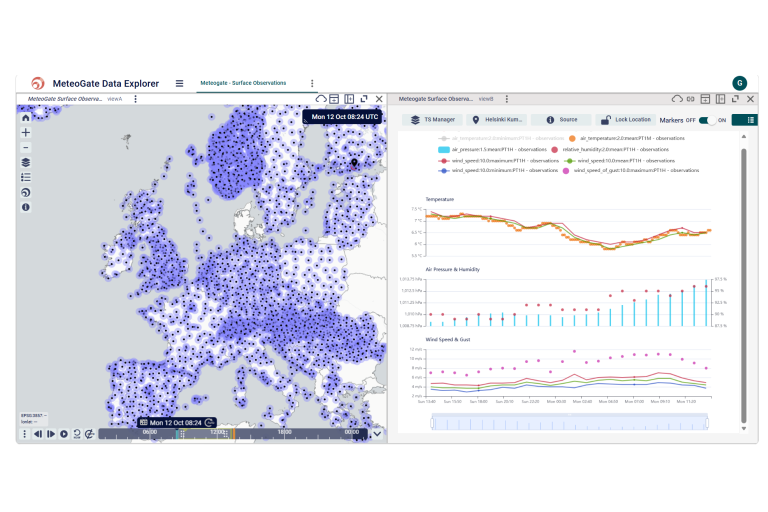
The World Meteorological Organization (WMO) Members produce an enormous amount of valuable meteorological data. In Europe, National Meteorological Services (NMSs) have been working hard to make their high quality, authoritative datasets and products open to all. But there is still a fundamental problem. Having data available does not necessarily mean that people can easily discover, access or use it.
Users often have a long and tedious journey. They might struggle to know the data even exists. If they do, then they need to navigate one of many bespoke websites to access yet another bespoke database. If they’re lucky, the data is in a format they can use. If they’re very lucky, it’s the data they actually need. Only then can they finally start creating value from the data.
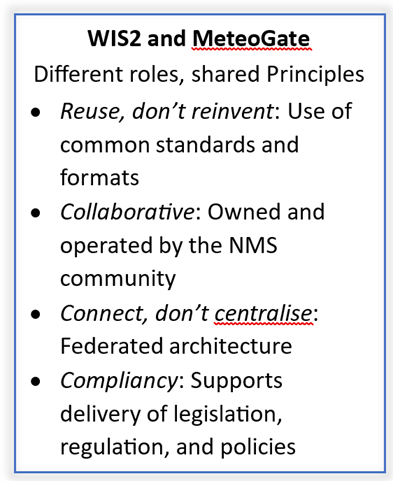
To fix this problem, WMO and the European Meteorological Network (EUMETNET), a collaborative group of 33 NMSs, have been working together on developing complementary systems: the WMO Information System 2.0 (WIS2) and MeteoGate. With WIS2 focusing on the global infrastructure for international exchange, and MeteoGate building on this with discovery and access layers, together they provide a one-stop shop for European open data.
Both systems use common international data formats and standards, interoperable metadata, modern application programming interfaces (APIs) and federated architectures. Interoperable metadata is standardized information that describes each dataset. APIs allow different systems to exchange data, while federated architectures connect data held by different providers without moving it into a single central system. These features make NMSs’ meteorological data and products in Europe discoverable, accessible and usable.
The growing WIS2 club
WIS2 has been operational since January 2025. Its 15 Global Services are enabling WMO Members to migrate from point-to-point file exchange between institutions, a model dating back to the 1970s, to open, web-based data exchange that is accessible to all.
As of September 2026, there are 122 institutions publishing data on WIS2. Each dataset is described using "discovery metadata", which is published in Global Discovery catalogues so users can search for the data they need and find out how they can access it. When it comes to rapidly changing data, users can subscribe to Global Brokers for real-time notifications when new data becomes available. Users can download it either directly from the data provider or from a Global Cache.
The system is also set up for machine-to-machine access with discovery through standardized metadata.
Getting more value from data with MeteoGate
WIS2 gives a foundation for accessing data. But…
- Many users are not machines. They are people who like to see the data on a map.
- Many developers don’t want the complexity of fetching real-time data and managing it locally. They prefer to integrate an API into the service they’re building.
- Many users don’t want just one country’s data. They want cross-boundary datasets all together in one API, or with one bulk download.
- And nobody likes lots of passwords and API keys.
To help address these problems, EUMETNET, with co-funding from the European Union, has been developing a solution since 2023 that is now up and running: MeteoGate.
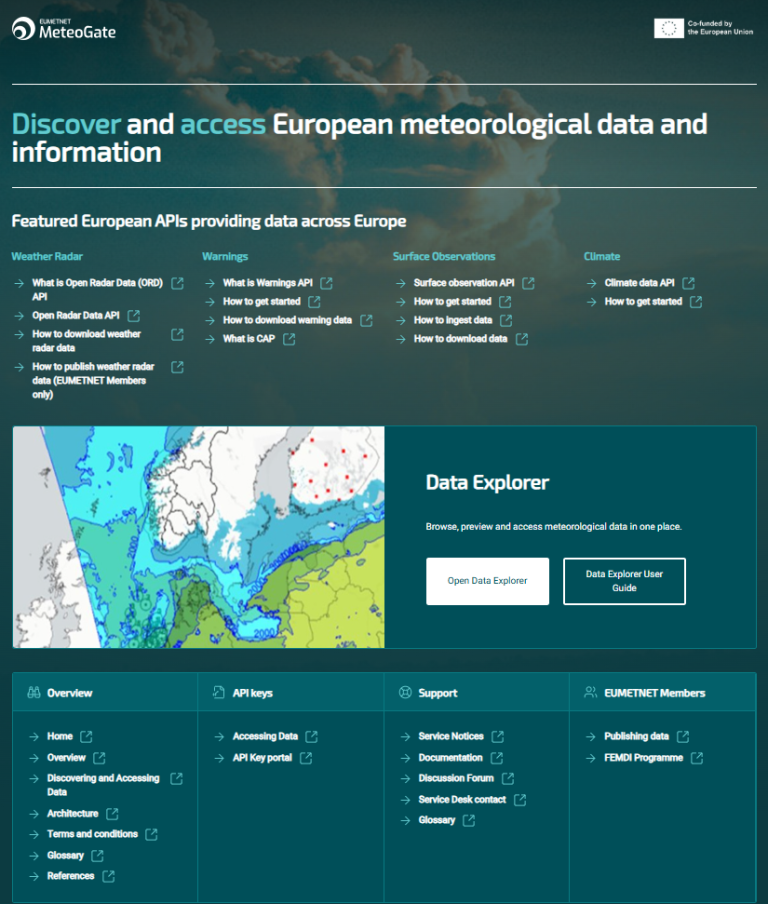
MeteoGate.eu is a user-friendly website that makes it easy to discover, preview, and access data from across Europe and beyond. Initially focused on meteorological data and products, it has been designed to also be able to include hydrological data and other WMO datasets.
The MeteoGate Data Explorer is an access layer built on top of the WIS Global Discovery Catalogue, allowing users to discover and preview datasets.
The MeteoGate API Gateway and key portal provide access to all the data through a single API key.
Behind the scenes, all the data stays where it is, with the data owners. Commonly agreed API standards mean that data from each European Met Service can be accessed in the same way. MeteoGate is there to connect, not centralize. It helps users navigate and access data that remains with its authoritative providers.
What’s next?
WIS2 creates the conditions for global interoperability while MeteoGate shows how that infrastructure can be used by a regional community and drive wider adoption across Europe.
By making NMS data easier to discover and use, MeteoGate can strengthen recognition of NMSs as authoritative data providers. It also makes it easier for participating services to share information and products with one another, reducing duplication, effort and cost.
Together, WIS2 and MeteoGate help ensure that the growing amounts of meteorological data are not only exchanged more efficiently but create greater value where they are needed. The same approach could be replicated around the world, creating an ecosystem of interoperable services tailored to different communities while relying on common global foundations.
- Region:
- Region VI: Europe