
Activities
Observing today, protecting tomorrow - campaign submissions
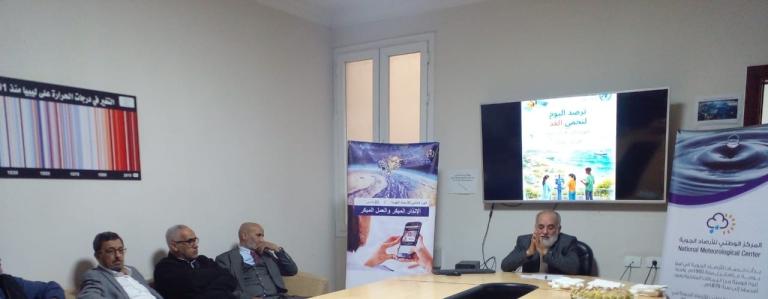
The National Meteorological Centre (NMC) of Libya celebrated the World Meteorological Day 2026 on 24 March due to Eid El-Fiter holiday. The celebration was held at the temporary headquarters of the NMC and was attended by the President, along with several departments/offices directors and some of the NMC staff.
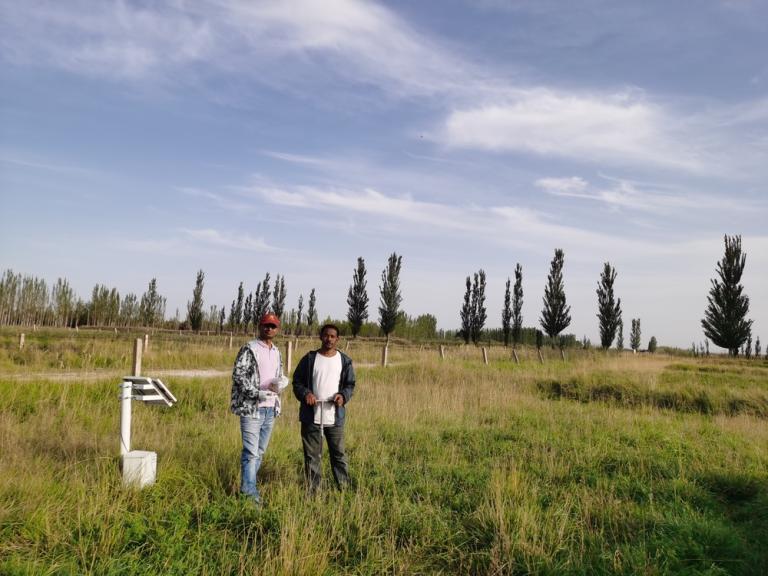
Dr. Adnan Arshad, from Pakistan, with his PhD student Eltayyab al Hasaan, from Sudan, researching grassland restoration and improving production by using advanced meteorology equipment to train youth to help us observe today and protect tomorrow.
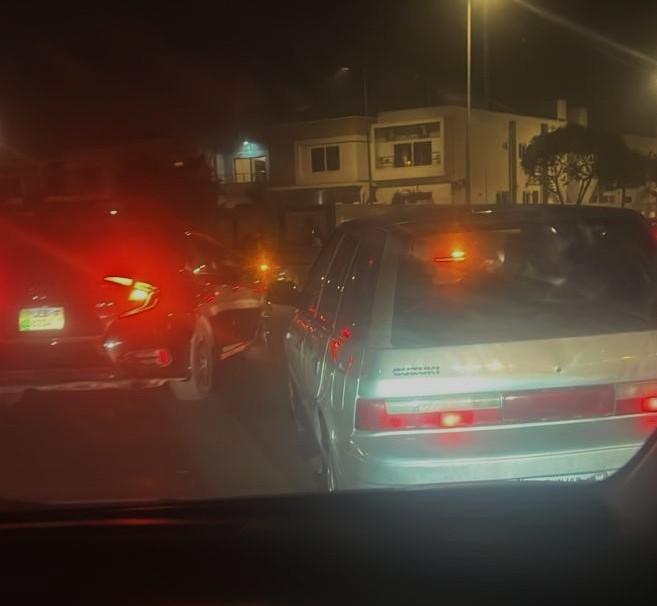
There is a lot of traffic with smoke from cars in Cantt (Lahore, Pakistan). It's a problem that affects school timings.
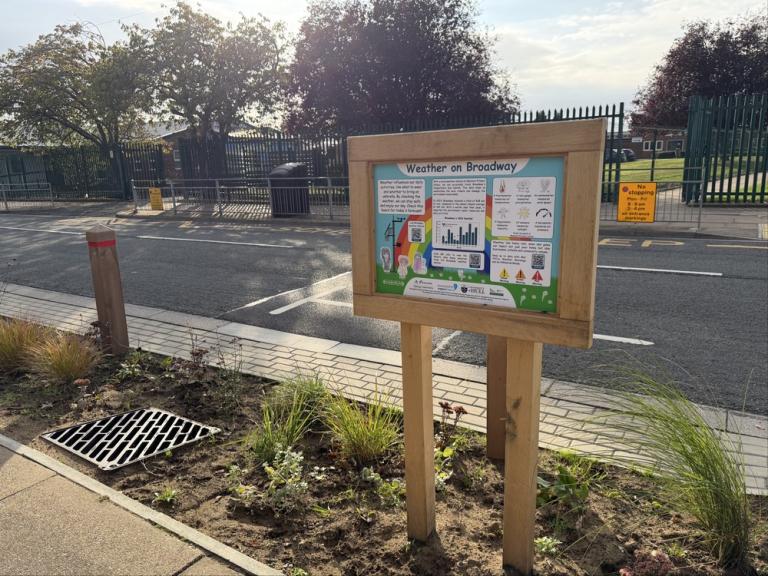
Our research applies a "Rain to Drain" approach, following rainfall from the moment it lands through each stage of the drainage process. This requires a network of hyperlocal weather stations to capture rainfall data at the street scale, soil moisture probes placed through the depth of the rain gardens to record infiltration and storage behaviour, and flow monitors in the sewer network to detect surcharge events. Access to this data is not limited to researchers. Along Broadway, lecterns and posters give residents and visitors a way to see results for themselves. Co-designed with Western Primary School, they make SuDS visible in the street rather than hidden infrastructure. The posters are also interactive, providing both access to live data and opportunities for residents to contribute observations through PuddleWatch, a tool that records when and where water appears.
____________________
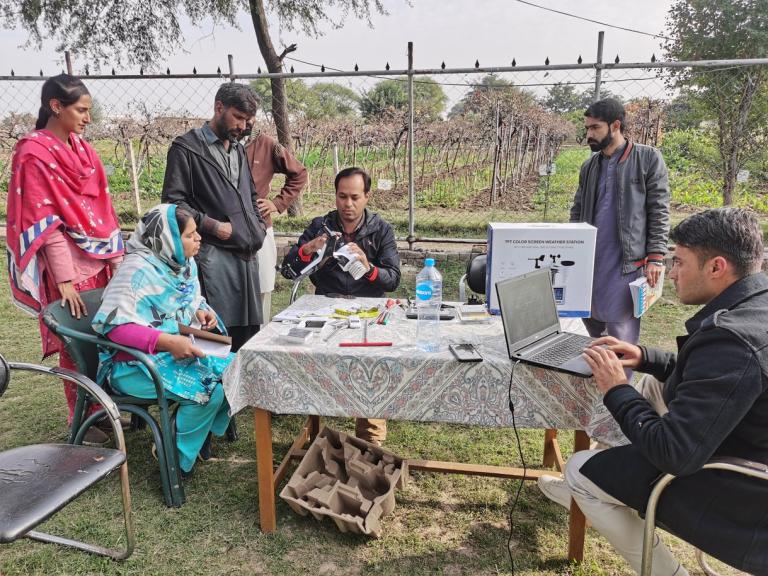
Dr. Adnan Arshad and his team, in collaboration with PODA-Pakistan and the Pakistan Meteorological Department, are building the technical capacity of rural youth engaged in agriculture. The initiative involves installing mobile automatic weather stations at multiple locations to collect site-specific data and provide real-time updates. This enables young farmers to make informed decisions for planning their field operations and management practices - especially critical in the rainfed region of Punjab, Pakistan, where rainfall is the sole source of water for agriculture.
____________________
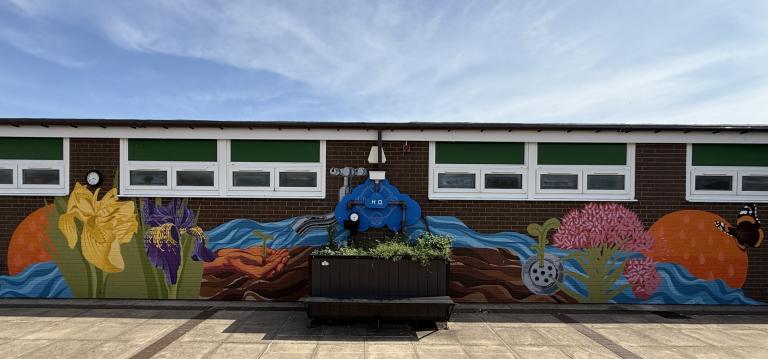
Led by the University of Hull, Water Data for People uses creative methods to help communities engage with local hydrological data and consider how it can shape future places and decisions. The project builds on the DIG Surface Water Resilience Project, a partnership between North East Lincolnshire Council, City of Doncaster Council, Anglian Water, and Yorkshire Water. Both projects are funded by Defra through the £200 million Flood and Coastal Innovation Programmes, managed by the Environment Agency.
Reflecting the ideas and experiences of the pupils, the mural shows how knowledge of rainfall, flooding, water use, and environmental processes connects directly to everyday life and to the spaces around the school. Guided by Garness’s distinctive approach to environmental themes and community identity, these insights were brought together in a vibrant piece of visual storytelling.
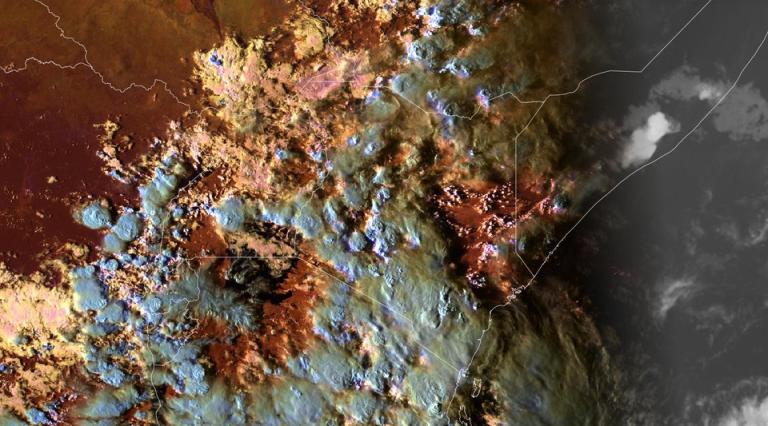
Nairobi Impact: Nairobi is situated in the central region currently obscured by dense cloud cover. The presence of these deep convective cells suggests high potential for intense, short-duration downpours. In an urban environment like Nairobi, this type of concentrated rainfall often leads to rapid flash flooding due to saturated soils and strained drainage infrastructure.
Moisture Influx: The brownish-orange background indicates the warmer land surface, while the varying shades of blue/cyan highlight moisture-rich air masses moving across the region, creating the "perfect storm" for the flooding events seen in early March 2026.
___________________
___________________
Observing Today, Protecting Tomorrow 🌍📡
My journey into meteorology started with a simple childhood curiosity, watching airplanes fly across the sky and wondering how something so heavy could stay in the air. I knew there had to be something behind it. As I grew older, I discovered that weather plays a critical role in aviation safety, and that discovery changed the direction of my life.
That curiosity led me to study Meteorology at Enugu State University of Science and Technology. During my industrial training in 2022, I had the privilege of working with the Nigerian Meteorological Agency (NIMET) as a Weather Observer. That experience transformed my understanding of meteorology from theory into real responsibility.
Standing at the station in the early morning hours, carefully observing and recording weather elements, wind direction and speed, visibility, temperature, pressure (QNH), cloud formations, and other atmospheric conditions, I realized something powerful: Pilots depend on these observations to make safe decisions before take-off and landing. Knowing that the information I recorded could directly contribute to flight safety and the protection of human lives gave me a deep sense of purpose. It was one of the most meaningful experiences I have ever had.
Weather can change in seconds. I have witnessed calm skies suddenly transform into thunderstorms, heavy rain, and strong winds. I have seen how weather events can cause flooding, damage property, affect farmers and agriculture, and even lead to flight delays or cancellations for safety. These experiences reinforced an important truth: observing the atmosphere is not just data collection, it is life protection.
Beyond aviation, weather observations also support farmers, emergency responders, and communities who depend on accurate information to prepare for extreme weather. Every observation contributes to early warnings that help reduce risk and protect lives. My dream is to continue growing in aviation meteorology and atmospheric research, contributing to better forecasting systems, improving early warning services, and inspiring younger generations to understand the importance of weather and climate science.
Ezeala Emmanuel, Early-career meteorologist, Nigerian Meteorological Agency
___________________
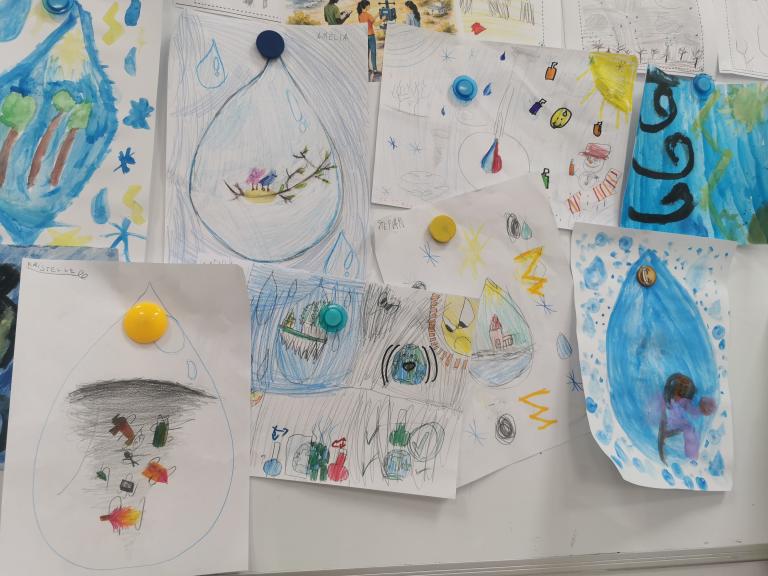
Today, the students of Class I B, guided by their dedicated teacher, Mrs Florentina - Daniela Georgescu, took part in a meaningful and engaging activity to celebrate World Meteorological Day at Ana Lugojana Secondary School in Bucharest, Romania 🇷🇴.
Through interactive discussions and creative moments, the children explored the fascinating world of weather and meteorology ☁️🌦️. They learned about different weather phenomena, what meteorology means, and how it helps us understand and protect our environment 🌱. With curiosity and enthusiasm, the students shared their own weather observations, asked thoughtful questions, and discovered how closely their daily lives are connected to nature 🌈.
This activity encouraged not only knowledge, but also awareness and respect for the environment, inspiring young minds to care for our planet 💙. We are proud to celebrate this important day by nurturing curiosity, learning, and a deeper connection with the world around us 🌍✨.
Florentina and their kids
___________________