
Эль-Ниньо/Ла-Нинья (ноябрь 2025 г.)
- ВМО прогнозирует 55%-ную вероятность развития слабых условий Ла-Нинья в ближайшие три месяца
- С середины ноября развились пограничное явление Ла-Нинья
- Сезонные прогнозы имеют жизненно важное значение для секторов, чувствительных к климату
- Информационный бюллетень ВМО об Эль-Ниньо/Ла-Нинья используется для предоставления информации для проведения гуманитарных операций
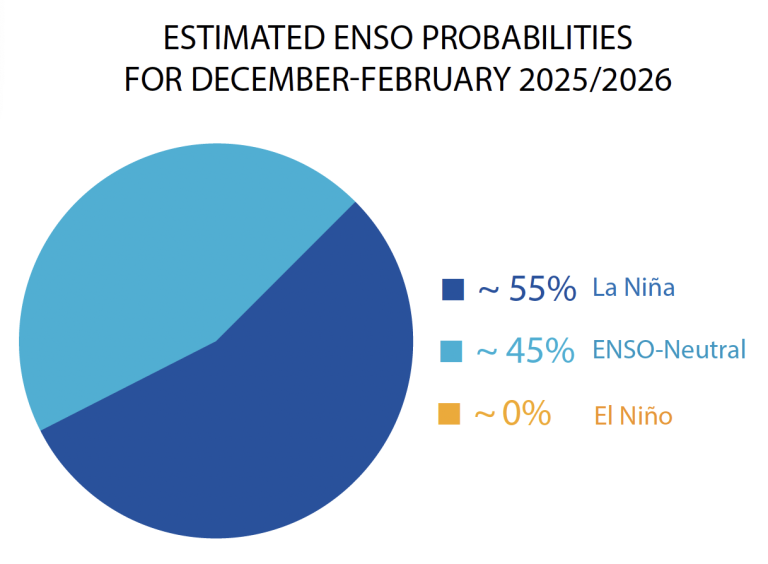
As of mid-November 2025, oceanic and atmospheric indicators reveal borderline La Niña conditions across the equatorial Pacific.
Согласно последнему Бюллетеню Всемирной метеорологической организации (ВМО), существует 55-процентная вероятность того, что слабая Ла-Нинья повлияет на погодные и климатические режимы в течение ближайших трех месяцев. Несмотря на то, что Ла-Нинья оказывает временное снижающее воздействие на среднюю глобальную температуру, во многих регионах все равно ожидается более теплая погода, чем обычно.5
С Ла-Ниньей связано периодическое широкомасштабное охлаждение поверхности океана в центральной и восточной экваториальной части Тихого океана в сочетании с изменениями тропической циркуляции атмосферы, включая режимы ветра, давления и осадков.