

В бюллетене ВМО отражены успехи и проблемы в области восстановления озонового слоя
Согласно новому докладу Всемирной метеорологической организации (ВМО), в 2025 году антарктическая озоновая дыра была одной из самых маленьких за последние десятилетия, что свидетельствует о неизменном успехе международных усилий по защите озонового слоя Земли, который защищает нас от вредного воздействия ультрафиолетовых солнечных лучей.
- В 2025 году озоновая дыра над Антарктидой была одной из самых маленьких за последние десятилетия
- Несмотря на долгосрочную тенденцию к восстановлению, наблюдаются ежегодные колебания
- Международный день охраны озонового слоя проводится в ознаменование успехов Монреальского протокола
- Ультрафиолетовое излучение по-прежнему представляет угрозу для здоровья
- Мониторинг атмосферы играет важнейшую роль в разработке политики
Согласно обнадеживающим новостям, опубликованным в Бюллетене ВМО по озону, озоновая дыра в прошлом году была четвертой или пятой по размеру с момента начала резкого истощения озонового слоя в 1992 году. Второй год подряд глубина и площадь озоновой дыры значительно ниже среднего показателя за период с 1990 по 2010 год.
На межгодовые колебания влияют крупномасштабные метеорологические процессы переноса, которые приводят к весеннему истощению озонового слоя — явление, наблюдаемое практически после каждой зимы в Южном полушарии над Антарктикой и каждые 5–10 лет в Северном полушарии.
В Северном полушарии общее содержание озона в столбе атмосферы в 2025 году было ниже среднего (отрицательные аномалии) на обширной территории, простирающейся от Гренландии и Европы до Центральной Азии, северной части Японии и полуострова Камчатка в Российской Федерации.
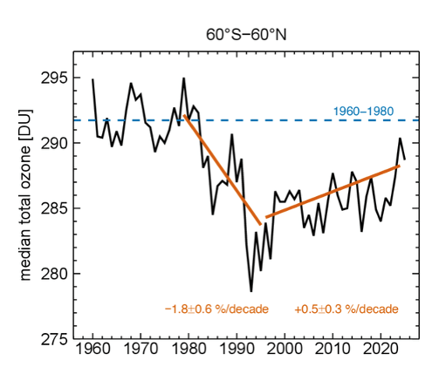
Эти колебания происходят в рамках долгосрочной тенденции к восстановлению озонового слоя, что свидетельствует об успехе Монреальского протокола по веществам, разрушающим озоновый слой, в рамках которого был произведен поэтапный вывод из производства и потребления таких химических веществ, как хлорфторуглероды, которые ранее применялись в холодильном оборудовании, противопожарной пене и других широко используемых веществах.
«Это история успеха в области защиты окружающей среды. С 2000 года озоновый слой восстанавливается, и мы можем ожидать его полного восстановления в течение нескольких десятилетий», — заявила Генеральный секретарь ВМО Селеста Сауло.
Сеть Глобальной службы атмосферы ВМО (ГСА) обеспечивает проведение важнейших высококачественных наземных наблюдений за общим содержанием озона в столбе атмосферы, необходимых для точного мониторинга озона и понимания долгосрочных изменений.
Ультрафиолетовое излучение
Около 90 % атмосферного озона находится в верхней стратосфере. Если бы весь этот озон спустился на поверхность Земли, толщина образовавшегося слоя чистого озона составила бы всего около 3 миллиметров. Тем не менее этот тонкий слой блокирует почти все опасное коротковолновое ультрафиолетовое (УФ) излучение Солнца и защищает жизнь на Земле.
Несмотря на значительный прогресс, достигнутый в борьбе с истощением озонового слоя, измерения, проводившиеся в последние десятилетия, показывают, что количество дней с высоким УФ-индексом значительно увеличилось. УФ-индекс был разработан для отслеживания истощения озонового слоя и в настоящее время служит международным стандартом защиты от ультрафиолетового излучения.
С середины 1990-х годов уровень ультрафиолетового излучения в некоторых регионах Европы вырос на целых 20 %. Наземные измерения показывают, что это произошло в основном из-за уменьшения облачности и, как следствие, увеличения продолжительности солнечного сияния в течение года. Более интенсивное воздействие ультрафиолета повышает риск развития рака кожи и других заболеваний, связанных с ультрафиолетом.
«В свете этой тенденции целенаправленные и эффективные меры защиты от ультрафиолета приобретают первостепенное значение», — отмечается в Бюллетене.
Международный день охраны озонового слоя
Бюллетень ВМО по озону был выпущен к Международному дню охраны озонового слоя 16 сентября, который отмечается в честь Монреальского протокола 1987 года, обеспечившего успешный поэтапный отказ от озоноразрушающих веществ. Тема этого года — «Глобальные действия для охлаждения планеты» — приурочена к десятой годовщине Кигалийской поправки, расширившей сферу действия Монреальского протокола.
Кигалийская поправка 2016 года предусматривает поэтапный отказ от гидрофторуглеродов (ГФУ), мощных парниковых газов, которые используются для замены озоноразрушающих веществ. Эти химические вещества широко используются в повседневных технологиях охлаждения, таких как холодильники, кондиционеры, изоляционные материалы, а также в некоторых видах медицинского и промышленного оборудования.
Некоторые ГФУ не разрушают озоновый слой, но удерживают в тысячи раз больше тепла, чем углекислый газ, хотя и остаются в атмосфере гораздо более короткое время.
За последние четыре десятилетия атмосферные измерения продемонстрировали значительное снижение концентраций контролируемых озоноразрушающих веществ. Однако имели место и непредвиденные выбросы, например ХФУ-11 (до 2018 года) и ГФУ-23. Вот почему мониторинг атмосферы по-прежнему крайне важен для поддержки целенаправленных регулирующих действий национальных властей.
Бюллетень по озону обращает внимание на состояние системы наблюдений, которая традиционно опиралась в основном на спектрофотометры Добсона и Брюера. Количество действующих станций постепенно сократилось со 130 в начале 2000-х годов до 110 на сегодняшний день, при этом станции часто закрываются в тех регионах, где наблюдения проводятся реже всего. Быстро набирают популярность многоканальные спектрометры нового поколения, но они предназначены для измерения качества воздуха, а не для мониторинга стратосферного озона.
Всемирная метеорологическая организация — авторитетный источник информации в системе Организации Объединенных Наций по вопросам погоды, климата и воды.
За дополнительной информацией, пожалуйста, обращайтесь:
- Clare Nullis пресс-секретарь ВМО cnullis@wmo.int +41 79 709 13 97
- WMO Strategic Communication Office Media Contact media@wmo.int